


Game & Wario
Wario’s most ambitious scheme yet — 16 minigames built entirely around the Wii U GamePad, and somehow it mostly works.
Game & Wario is the WarioWare series’ big Wii U debut — a collection of 16 minigames that are less about the frantic microgame blitz of traditional WarioWare and more about showing off what the Wii U GamePad can actually do. Released as a launch window title in 2013, it was one of the first games to really demonstrate the GamePad’s touchscreen, gyroscope and asymmetric multiplayer in a focused way.
The name itself is a nod to Nintendo’s classic Game & Watch handheld LCD games from the 1980s — the logo deliberately echoes the old Game & Watch branding, and several of the minigames take inspiration from that series’ simple-but-addictive single-screen gameplay. So it’s Wario doing what Wario does best: stealing someone else’s good idea and making it his own.


The game sits in an interesting middle ground. It’s not quite a traditional WarioWare title — the minigames here are longer and more developed than the usual five-second microgames — and it’s not quite a dedicated party game in the Nintendo Land sense either. What it is is a showcase of creative GamePad ideas, each hosted by a different WarioWare character. Some are brilliant. Some are a bit of a stretch. But as a whole it’s a charming, funny and genuinely inventive use of hardware that didn’t get nearly enough games this good.
Wario is at home watching TV when he spots a news report about a new games console — one with a revolutionary touchscreen controller. Being Wario, his first thought isn’t “that looks fun” but “that sounds profitable.” He immediately starts designing games for it, determined to become fabulously rich off the back of this new platform.
“It’s me, Wario, charming leader of WarioWare Inc., and creator of the best Wii U game ever! GAME & WARIO is an action-platform-sketching-puzzle-shooting-design-rhythm-sports game, and it is so amazing that I want to share it with the world! THE WORLD, I SAY! WAHAHAHAHA”
His friends and colleagues in Diamond City hear about the console too and start making their own games — each character developing a minigame that reflects their personality. Mona turns it into a photography chase. Jimmy T makes a skiing game. Ashley makes a game where she’s been turned into a broom. The narrative thread is light but charming, playing out between minigames with brief animated cutscenes that lean into the WarioWare cast’s long-established characters.
Wario’s own game — Pirates — becomes a hit in the toy shop Toy Express, which naturally inflates his ego to dangerous levels. The story doesn’t have grand stakes, but it’s a lovely excuse to spend time with one of Nintendo’s most underrated casts of characters.
Game & Wario is built entirely around the Wii U GamePad. Every single one of its 16 minigames uses the GamePad in a different way — gyroscope, touchscreen, asymmetric play where one player uses the GamePad while others watch the TV. It’s a genuine tech demo in game form, but a fun one.
Unlike traditional WarioWare where you’re blitzing through dozens of five-second microgames, each game here is a longer, more developed experience — think 2–5 minutes of focused gameplay rather than a frantic sprint. You earn medals and achievements by completing challenges within each game, giving incentive to replay and improve.

The asymmetric multiplayer is the most inventive part. In the multiplayer modes, one player holds the GamePad (seeing a different view from everyone else) while up to four others watch the TV and try to respond to what they can see. The GamePad player might be the thief, the artist, or the DJ — genuinely funny in a group setting.
Twelve single-player minigames, each built around a different GamePad mechanic and hosted by a different WarioWare character.


The four multiplayer modes are where Game & Wario really shines. One player holds the GamePad with a fundamentally different role to everyone watching the TV — brilliantly designed for groups and genuinely funny to play.


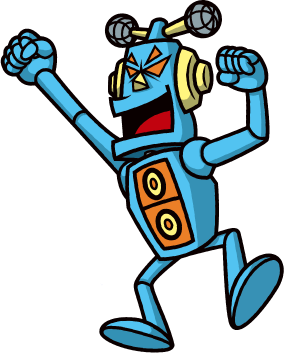
Game & Wario brings back the full WarioWare cast, each hosting a minigame and starring in their own animated intro. This is one of Nintendo’s most underrated ensembles — funny, weird and full of personality.







Game & Wario received a mixed-to-positive reception on launch. Critics appreciated the creativity and quality of the best minigames, but felt the overall package was too thin compared to a full WarioWare title or Nintendo Land. It sits at 61 on Metacritic.
Praised for
- Creative GamePad use throughout
- Gamer — one of Wii U’s best minigames
- Asymmetric multiplayer modes — genuinely funny
- WarioWare cast — charming and well-written
- Fruit mode — surprisingly tense social deduction
- Solid production values throughout
Criticisms
- Only 16 minigames — feels thin at full price
- Missing WarioWare’s frantic microgame energy
- Several solo games feel underdeveloped
- Lacks depth to sustain long solo sessions
- Better suited to groups than solo players
Gamer in particular is genuinely special — it perfectly captures the universal panic of gaming when you shouldn’t be, in a brilliantly simple mechanic. Even critics who were lukewarm on the overall package praised it as one of the most inventive Wii U minigames made.
- The name and logo are a deliberate nod to Nintendo’s Game & Watch LCD handhelds from the 1980s — the font and layout mirror the classic branding almost exactly.
- The game was a launch window title for the Wii U in Japan (March 2013), making it one of the earliest dedicated GamePad showcase titles.
- For the North American launch, Nintendo ran a “Crowdfarter” campaign — a parody of Kickstarter where fans donated tweets and Facebook likes instead of money to unlock wallpapers, ringtones and trailers.
- For the European launch, Nintendo ran a drawing contest on Miiverse. The best entries were compiled into a digital Masterpiece Collection available online.
- Gamer features 9-Volt’s mother 5-Volt as the main threat — her appearances are timed randomly, so every session plays differently. She became one of the most memorable characters in the game.
- The Cluck-A-Pop machine rewards players with over 200 unlockable items including character profiles, concept art, music tracks and cutscenes from across WarioWare history.
- Game & Wario is part of the WarioWare series but is sometimes described separately because it replaces the signature rapid-fire microgame format with longer, more deliberate minigames.
- The Bird minigame is a direct callback to the original Pyoro game from WarioWare, Inc.: Mega Microgame$! on GBA — itself inspired by the Game & Watch title Fire.
- A Miiverse Sketch game was added post-launch as a free update, letting players share drawings through Nintendo’s social platform.
- The game features the most WarioWare characters assembled in one title at that point — essentially a full Diamond City reunion.
Three videos from our channel covering Game & Wario: