
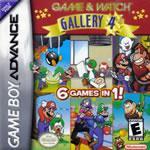

Game & Watch Gallery 4
Overview

Game & Watch Gallery 4 is a compilation of classic Game & Watch handheld titles released for the Game Boy Advance in October 2002. It is the 5th and final entry in the Game & Watch Gallery series, and the only one to release on the Game Boy Advance — a fitting send-off for the series that began on the original Game Boy in 1995.
The Title Confusion
The game has three different regional names:
- North America: Game & Watch Gallery 4 (the “4” refers to the title’s position only in the West, where Gallery 1, 2 and 3 were also numbered)
- Europe and Australia: Game & Watch Gallery Advance (named after the platform)
- Japan: Game Boy Gallery 4 (the JP names always referenced the Game Boy line)
What’s Inside
Game & Watch Gallery 4 contains 11 main games (each with two modes — Classic and Modern) and 9 Museum games (Classic-only, no scoring), plus extensive unlockables tied to a deep star-collection system. The compilation showcases the original LCD Game & Watch titles that ran from 1980 to 1991 alongside the Mario-cast Modern remakes that introduced these classics to a new generation.
Critically well-received as a respectful archive but viewed by some reviewers as light on content compared to other GBA releases. The Modern modes were the consistent highlight, with their Mario-themed reimaginings providing genuine new gameplay value beyond the historical preservation angle.
How It Plays

Game & Watch Gallery 4’s structure is simple but rewards deep play. From the main menu, you select a game; for each main game, you pick Classic or Modern mode; then within each mode, you pick Game A (easy) or Game B (hard) difficulty.
The Core Loop
- Play one of the 11 main games in Classic or Modern mode
- Survive as long as possible — each game has a unique objective (catching, dodging, hitting, cooking)
- Earn points for successes; lose lives or hit “Misses” for failures
- Achieve high scores to unlock Stars (every 200 points = 1 star)
- Collect stars to unlock new games, Museum titles, and the Gallery Corner features
Controls
Each game uses minimal inputs — typically just the D-Pad and one or two buttons — reflecting the original Game & Watch units’ simple button layouts. Specific controls vary per game.
Game A vs Game B
Every game has two difficulty modes:
- Game A: Easy. Slower pace, fewer threats, more recovery time. The introductory mode
- Game B: Hard. Faster pace, more enemies/objects on screen simultaneously, less margin for error. Scoring is also adjusted to reward Game B play
Classic vs. Modern
The defining feature of every Game & Watch Gallery entry is the dual-mode design: every main game ships in both a faithful Classic recreation and a Mario-themed Modern remake.

Classic Mode
- Faithful LCD recreations of the original 1980–1991 Game & Watch handhelds
- Monochrome / segmented LCD appearance preserved
- Original gameplay timing and difficulty curves
- Original sound effects — beeps and clicks intact
- Cannot earn Star Mode — maximum 4 stars per Classic game (not 5)
- Critics described Classic mode as preserving “pure, classic Nintendo gameplay”
Modern Mode
- Mario-themed reimaginings of the same game mechanics
- Colour graphics with detailed sprite work
- Original soundtracks composed for each Modern remake
- Cast features Mario, Luigi, Peach, Toad, Yoshi, Bowser, Donkey Kong, Donkey Kong Jr., Waluigi, Wiggler, Big Boo, and more
- Earn 5 stars in a Modern game to unlock Star Mode — a brutal hard difficulty (except Donkey Kong 3 and Boxing)
- Modern modes are universally praised as the highlight of the compilation
The Star System
The compilation’s deepest progression system. Every main game has a star meter — fill it by scoring well and you unlock the next layer of content.
How Stars Work
- Every 200 points in a game’s high score earns 1 star
- Maximum 5 stars per game mode (so 5 in Classic + 5 in Modern = 10 per main game)
- 11 main games × 10 stars + 9 Museum games × (varies) = up to 220 stars total across the compilation
- Stars are cumulative across all games — they don’t carry over to other games but the total unlocks new content
Star Mode
Reaching 5 stars in a Modern game unlocks Star Mode — a brutal hard difficulty exclusive to that game. Star Mode features faster speeds, more enemies, and tighter timing windows. The mode is the ultimate endgame challenge for each main game.
Exceptions: Donkey Kong 3 and Boxing do not have Star Modes — these two Modern games cap at 5 stars without an additional hard mode unlock.
11 Main Games (Classic + Modern)
The 11 main games each ship with Classic and Modern modes. The first 5 are playable from the start; the next 5 are unlocked through star collection; the final game (Fire Attack) is the last Modern unlock.
Primary Games (Playable from Start)
Fire
Default
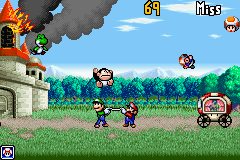
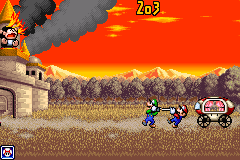
Classic (1980): Two firemen catch pedestrians jumping from a burning apartment with a trampoline and bounce them to safety. Miss any pedestrian and you lose a life. Modern: Mario and Luigi rescue their friends from Princess Peach’s burning castle. Time-of-day cycles (daytime, sunset, nighttime) add variety. One of the most iconic Game & Watch concepts.
Boxing
Default
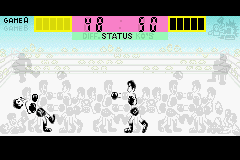

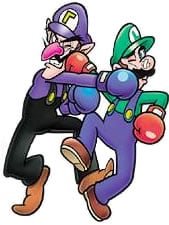
Classic: Punch out opponents before they KO you. Modern: Luigi steps into the ring against three opponents — Wiggler, Big Boo, and Waluigi. A star is earned for every three KOs. Note: Boxing is one of two Modern games without a Star Mode (the other being Donkey Kong 3).
Rain Shower
Default

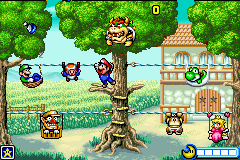
Classic: A boy keeps his clothes dry from rain by moving clotheslines; crows knock the lines around on Hard. Modern: Mario moves his friends away from water balloons dropped by Bowser. On Hard, Waluigi moves the ropes to make things harder. Modern Rain Shower cycles through four seasons (summer, autumn, winter, spring) for visual variety.
Mario’s Cement Factory
Default
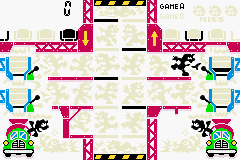

Classic (1983): The original 1983 Mario Game & Watch unit. Mario navigates cement vats and elevators in a factory. Modern: Mario and friends work in a cookie factory instead, with Yoshi getting fed the cookies. A delightful reskin that retains the cement-factory mechanics intact while making everything cuter.
Donkey Kong Jr.
Default
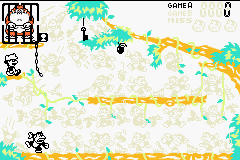

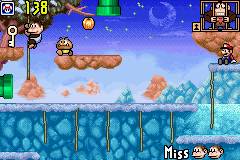
Classic (1982): Donkey Kong Jr. climbs vines, gathers keys, and frees his imprisoned father from a cell. The original 1982 single-screen platformer. Modern: Expanded into 3 distinct areas with progression between them — still climbing and key-collecting, but with more variety. A genuine expansion of the original concept.
Secondary Games (Unlock with Stars)
Donkey Kong 3
35 Stars
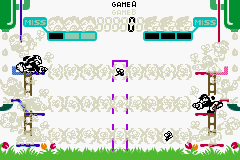

Classic (1983): Play as Stanley, the exterminator, firing bug spray upward at Donkey Kong. Modern: Mario uses bubbles to redirect Boos and fireballs against Donkey Kong. A complete reimagining — only Donkey Kong himself bridges Classic and Modern. Note: no Star Mode unlock for this game.
Chef
7 Stars

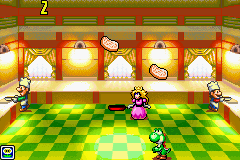
Classic: A chef juggles food in mid-air, keeping it from falling to the floor where a mouse waits. Modern: Princess Peach cooks food thrown into the air by the Mario Bros. and feeds it to Yoshi. The cooking minigame structure with Peach as the chef and Yoshi as the customer is one of the compilation’s most charming reimaginings.
Mario Bros.
20 Stars
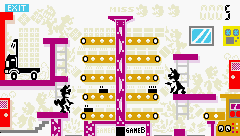

Classic: Mario and Luigi prepare packages of bottles in a factory; let one fall and the foreman disciplines them. Modern: Mario and Luigi make cakes in a cake factory while Bowser tries to stop them. The cake passes through five visual stages as it progresses down the assembly line.
Donkey Kong
35 Stars
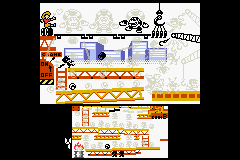
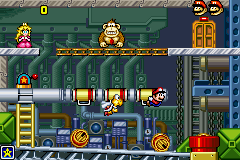
Classic (1983): The Game & Watch port of the 1981 arcade classic. Mario ascends a construction site dodging barrels to reach the top. Modern: Mario avoids falling barrels and Koopas to save Peach (replacing Pauline) from Donkey Kong, across 3 areas. A direct lineage to the original 1981 arcade classic.
Octopus
50 Stars


Classic (1981): A diver dodges octopus tentacles to retrieve treasure from the sea floor. Modern: Mario dodges three colored octopuses (orange, green, blue) underwater. The Modern version expands the original mechanic with multiple octopus types and more challenging tentacle patterns.
Fire Attack
65 Stars


Classic (1982): A frontier soldier defends a wooden fort from arrow attacks. Modern: The same mechanic with a Mario cast. The last Modern game to unlock — requires 65 stars of dedicated play to access.
9 Museum Games (Classic Only)
The 9 Museum games are Classic-mode-only LCD recreations with no Modern versions, no scoring, and no star collection. They’re pure historical preservation of less-celebrated Game & Watch units, all unlocked through the star-collection meta-game.

Manhole
Unlocks at 4 Stars
The protagonist holds up manhole covers in real time to prevent pedestrians from falling through holes in the floor. A classic 1981 Game & Watch unit.

Tropical Fish
Unlocks at 10 Stars
A man holds up a fishbowl so tropical fish can jump from one fish tank to another. If a fish hits the ground, a cat grabs it for a miss.

Mario’s Bombs Away
Unlocks at 15 Stars
Mario carries a bomb from one buddy to another across a jungle. Enemy soldiers in the trees try to light the bomb. The Heavy Smoker throws cigars carelessly, igniting nearby oil. Mario must avoid all fire or his bomb lights. A rare Mario-cast LCD original from 1983.

Parachute
Unlocks at 25 Stars
A man uses a rowboat to catch falling parachuters before they hit the water. A 1981 classic with a simple sideways-movement mechanic.
Bomb Sweeper
Unlocks at 30 Stars
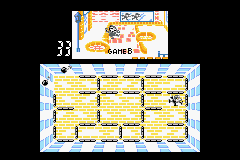
John Solver goes into a labyrinth-like sewer to stop a bomb set by the criminal Dynamite Jack from detonating. A 1987 New Wide Screen Game & Watch.

Climber
Unlocks at 40 Stars
A climber scales floating platforms in the sky while avoiding birds and obstacles. The classic 1986 Game & Watch unit.

Safe Buster
Unlocks at 45 Stars
Defuse bombs being dropped onto a safe by catching them in baskets. A 1988 Game & Watch design.

Life Boat
Unlocks at 55 Stars
Two sailors steer a lifeboat to rescue passengers falling from a sinking ship. A 1983 dual-screen Game & Watch unit.

Zelda
Unlocks at 60 Stars
The Game & Watch version of Zelda — originally released in 1989. Link becomes playable in this game after collecting 160 total stars, the highest-level unlock in the compilation. A Zelda-series cameo within a Mario compilation.
Gallery Corner

The Gallery Corner is where most of the compilation’s bonus features live. It’s accessed from the main menu and houses the meta-content that rewards star collection.
Gallery Corner Features
- Message Board — in-game hints, tips, and announcements
- Music Room — sound test for the Modern soundtracks (unlocks at 2 stars)
- Museum — the 9 Classic-only Game & Watch titles (unlocks at 4 stars)
- G&W History — a Game & Watch timeline showcasing all original units 1980–1991 (unlocks at 70 stars)
- Credits — development credits (unlocks at 170 stars)
- Cast Credits — the ultimate completion reward (unlocks at 220 stars — every star in the game)
The Unlock-Twice System

Complete Unlockable Timeline
The complete unlockable timeline. Stars unlock new games, new Museum titles, and new Gallery Corner features in a strict sequence — every threshold adds new content.
| Stars | Unlockable |
|---|---|
| 2 | Music Room added to Gallery Corner |
| 4 | Museum added to Gallery Corner + Manhole added to Museum |
| 7 | New main game: Chef |
| 10 | Tropical Fish added to Museum (write-up only) |
| 15 | Mario’s Bombs Away added to Museum (write-up only) |
| 20 | New main game: Mario Bros. |
| 25 | Parachute added to Museum (write-up only) |
| 30 | Bomb Sweeper added to Museum (write-up only) |
| 35 | New main game: Donkey Kong |
| 40 | Climber added to Museum (write-up only) |
| 45 | Safe Buster added to Museum (write-up only) |
| 50 | New main game: Octopus |
| 55 | Life Boat added to Museum (write-up only) |
| 60 | Zelda added to Museum (write-up only) |
| 65 | New main game: Fire Attack |
| 70 | G&W History added to Gallery Corner |
| 80 | New Museum game: Manhole (playable) |
| 90 | New Museum game: Tropical Fish (playable) |
| 100 | New Museum game: Mario’s Bombs Away (playable) |
| 110 | New Museum game: Parachute (playable) |
| 120 | New Museum game: Bomb Sweeper (playable) |
| 130 | New Museum game: Climber (playable) |
| 140 | New Museum game: Safe Buster (playable) |
| 150 | New Museum game: Life Boat (playable) |
| 160 | New Museum game: Zelda (playable) — Link becomes playable |
| 170 | Credits |
| 220 | Cast credits (full completion) |
Screenshots Gallery
A selection of in-game screenshots showcasing the variety of Classic LCD recreations and Modern Mario-cast remakes.
Mode Variety Highlights


Legacy Screenshots


Development Staff
Game & Watch Gallery 4 was developed by Nintendo R&D1, Nintendo’s legendary first-party studio responsible for Metroid, Wario Land, and many of the Game & Watch handhelds themselves under producer Gunpei Yokoi.
- Developer: Nintendo R&D1
- Publisher: Nintendo
- Platform: Game Boy Advance
- Genre: Compilation / Anthology / Microgames
- Series Entry: 5th and final Game & Watch Gallery
- Previous Entry: Game & Watch Gallery 3 (Game Boy Color, 1999)
- Predecessor Series: Game & Watch (Nintendo handhelds, 1980–1991)
Reception & Legacy
Game & Watch Gallery 4 received mixed-to-positive reviews, with critics praising its historical preservation while some felt the compilation was light on innovative content compared to other GBA titles of the era.
Critical Scores
- Nintendo World Report (Lasse Pallesen): 8/10 — “A must-have for anyone who isn’t familiar with G&W. The Modern modes with updated graphics and sounds are very good, but ultimately, they are not what’s carrying this game. What’s carrying this game is that you get 20 slices of pure, classic Nintendo gameplay.”
- GameSpot (Frank Provo): 7/10 — “Nintendo has packaged a grand total of 31 games…” (counting all unlockables)
- GameSpy (Kevin Murphy): 61/100 — “It’s really hard to recommend Game & Watch Gallery 4 to GBA owners when games like Metroid Fusion and Tony Hawk’s Pro Skater 4 are out there.” The critic argued the modernizations were too shallow
What Critics Praised
- Historical preservation. The Classic modes faithfully reproduce LCD handhelds from 1980–1991 — a museum piece for Nintendo’s pre-NES handheld era
- Modern remakes. The Mario-cast Modern modes were highlighted as adding genuine new value with updated graphics and music
- Star unlock depth. 220 stars to collect provides substantial completionist content
- Variety. 20 distinct games (11 main + 9 Museum) is significant value for a single GBA cart
- Yoko Shimomura music. Modern soundtracks were well-received
- The Zelda Museum game. The Link unlock at 160 stars was a delightful surprise
Common Criticisms
- Limited modernizations. GameSpy and others felt the Modern remakes didn’t go deep enough; the core gameplay was largely preserved without significant additions
- Short play sessions. Each game is fundamentally a high-score chase — not for players seeking extended narrative experiences
- Niche appeal. Players unfamiliar with Game & Watch history might find the format less appealing than other GBA releases
- Boxing and Donkey Kong 3 missing Star Modes was felt as a small inconsistency
Legacy
- The final Game & Watch Gallery. After Gallery 4, the series ended. Game & Watch units would later be revived as physical hardware (Game & Watch: Super Mario Bros. in 2020 and Game & Watch: The Legend of Zelda in 2021), but as standalone collectibles rather than compilation games
- Wii U Virtual Console. The compilation reached all four major regions on the Wii U eShop in 2015–2016 — including its first ever Japanese release
- Museum piece for Yokoi-era Nintendo. The compilation remains a respectful archive of the LCD handheld era that preceded the Game Boy
SLB User Reviews
Game & Watch Gallery 4 has yet to receive a community review on Super Luigi Bros.
If you’ve played Game & Watch Gallery 4 and would like to submit a review, please get in touch.
Regional Logos, Box Art & Screens
The game shipped with regional box art reflecting its three regional titles — GWG 4 (NA), GWG Advance (EU/AU), and Game Boy Gallery 4 (Japan).
Regional Logos


Box Art


Iconic Screens





Trivia & Facts
- The 5th & final Game & Watch Gallery. Despite the “4” in the title, this is technically the 5th entry in the series. Game & Watch Gallery 1 (GB, 1995), Gallery 2 (GBC, 1997), Gallery 3 (GBC, 1999), and Game Boy Gallery (Japan only, 1995) preceded it. The numbering doesn’t match across all regions
- Three regional titles. Game & Watch Gallery 4 (NA), Game & Watch Gallery Advance (EU/AU), Game Boy Gallery 4 (Japan) — the only entry in the series with three different territorial names
- Japan got it last — 13 years late. The Japanese version was completed but never published at retail in 2002. It finally released in Japan on the Wii U Virtual Console in March 2016 — the longest gap between development and retail release of any Mario-related game
- Only G&W Gallery on GBA. All previous entries were on Game Boy or Game Boy Color. The GBA was the natural progression but also the series’ endpoint
- 11 main games + 9 Museum = 20 games total. Some reviewers counted Classic and Modern modes as separate games (so 11 × 2 + 9 = 31 games), which is what GameSpot referenced. The actual unique game-mechanic count is 20
- 220 total stars. The completionist endgame. Reaching 220 unlocks the Cast credits
- 5 stars unlocks Star Mode. A brutal hard difficulty for Modern games (except Donkey Kong 3 and Boxing, which inexplicably lack Star Modes)
- 160 stars unlocks Link. Reaching 160 total stars unlocks playable Link in the Game & Watch Zelda Museum game — a Zelda-series cameo deep in a Mario compilation
- Original G&W games span 1980–1991. The featured Classic modes recreate units released across 11 years of LCD handheld history, from Octopus (1981) to Manhole (1981) to Zelda (1989) to Mario Bros. (1983) to Mario’s Cement Factory (1983)
- Mario’s Bombs Away. A rare 1983 Mario Game & Watch unit playable only in the Museum. Features Mario in a wartime jungle scenario — unlike anything in modern Mario games
- Waluigi as the difficulty modifier. In Hard Mode for Rain Shower, Waluigi moves the ropes around to actively make things harder for Mario — one of his first “sabotage” villain roles in a Nintendo game
- Yoshi as the customer. In Modern Chef, Princess Peach cooks food for Yoshi — one of the few Mario games where Yoshi appears in a non-mount role
- Big Boo and Wiggler box. Modern Boxing’s opponents are Wiggler, Big Boo, and Waluigi — an unusual combination of Mario series fighters
- Nintendo R&D1 development. The studio responsible for Metroid, Wario Land, and the original Game & Watch units themselves (under Gunpei Yokoi). Fittingly, R&D1 was the appropriate studio to make this museum-piece compilation
- Gunpei Yokoi tribute. The original Game & Watch creator passed away in 1997. This compilation, released 5 years later, stands as a posthumous tribute to his LCD handheld designs
- The G&W History timeline. Unlocking the Gallery Corner’s G&W History at 70 stars displays a chronological timeline of every original Game & Watch unit released 1980–1991 — a built-in historical exhibit
- Four seasons in Rain Shower. Modern Rain Shower cycles through summer, autumn, winter, and spring visual variants — a small but charming variety touch
- Three time periods in Fire. Modern Fire similarly cycles through daytime, sunset, and nighttime visual variants
- The series didn’t die — it transformed. Years later, Nintendo revived Game & Watch as collectible hardware: Game & Watch: Super Mario Bros. (2020) for Mario’s 35th anniversary and Game & Watch: The Legend of Zelda (2021) for Zelda’s 35th. The Gallery compilations were retired but the hardware lives on
Reference / Information
Sub-pages and guides for Game & Watch Gallery 4.
Media / Downloads
Galleries and screenshots.