
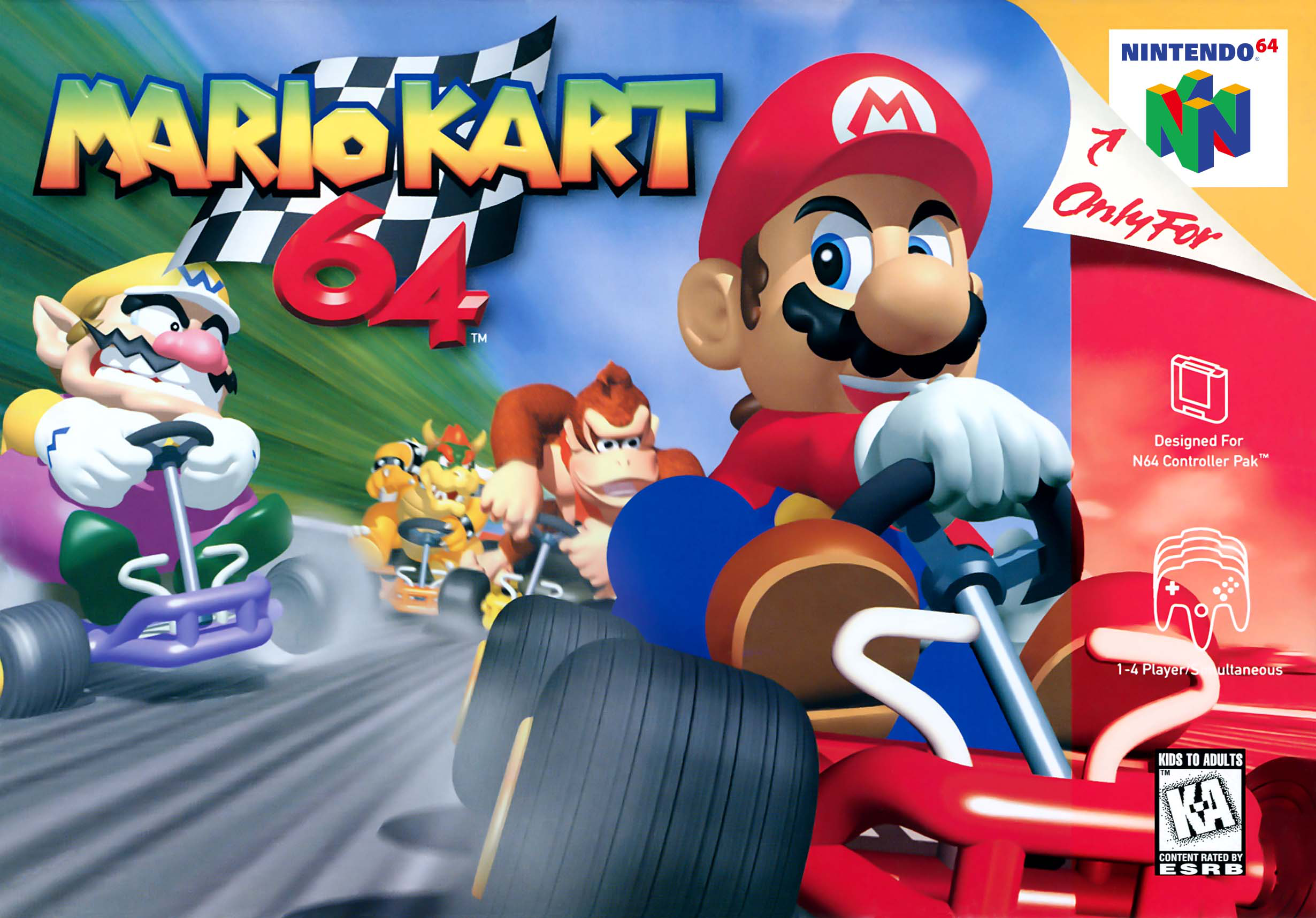
Mario Kart 64
The kart-racing sequel that made the genre what it is today. Mario Kart 64 brought the Mushroom Kingdom into glorious 3D, four-player split-screen, and 16 brand new tracks bigger and wilder than anything Super Mario Kart had attempted on the SNES. New items like the Spiny Shell, the Banana Bunch and the Fake Item Box debut here, and the Mario Kart formula we still know today — drift boosts, item-based combat, signature character tracks — was crystallised on the N64.
Overview & what was new
Mario Kart 64 is the second entry in the Mario Kart series and the first to render its courses in true 3D. Where Super Mario Kart on the SNES used Mode 7 trickery to fake a flat-plane racetrack, MK64 had real elevation, banking, jumps, slopes, hairpin descents and full 360° loops — courses you raced through, not just over. Tracks ballooned in size and personality: where SMK had short repeating layouts, MK64 gave every character their own signature racetrack and packed each one with set-pieces — the train at Kalimari Desert, Bowser’s Castle’s Thwomps, the cliff drops at DK’s Jungle Parkway.
It was also the first Mario game to support four players simultaneously, with 4-way split-screen for both VS and Battle modes. Voice acting arrived in the series too — Charles Martinet’s “Here we go!” Mario, Wario’s gleeful taunts, Bowser’s roar — and the item roster doubled in size with the Spiny Shell, Banana Bunch, Fake Item Box, Triple Mushrooms, Triple Greens, Triple Reds and Boo all making their debut.
| What was new in MK64 | Why it mattered |
|---|---|
| True 3D courses | Replaced SMK’s Mode 7 flat tracks with proper elevation, banking and jumps. Foundation for every Mario Kart since. |
| 4-player split-screen | First Mario game ever to support 4 simultaneous players. Defined N64 multiplayer culture. |
| Mini-Turbo from drifting | Hop into a turn, hold the drift, release for a blue-spark speed boost. Still the core skill of Mario Kart today. |
| The Spiny Shell debut | The infamous blue shell that homes in on first place — introduced here. Also the Fake Item Box, Banana Bunch, and Triple Shells. |
| Character racetracks | Mario Raceway, Luigi Raceway, Wario Stadium etc. — every character got their own signature track. Only MK game to do this in full. |
| Voice acting | First Mario Kart with character voices. Charles Martinet voiced Mario, Luigi and Wario. |
| Ghost data | Time Trial saves your best run as a transparent ghost car you can race against later. |
| Special Cup unlocked from start | Only Mario Kart game (until MK8 Deluxe) where every cup is available immediately. No grinding required. |
How it plays
MK64 plays much like its SNES predecessor at the most basic level — A to accelerate, control stick to steer, B to brake, Z to use items — but several systems were rebuilt for the new 3D courses.
| Mechanic | How it works |
|---|---|
| Hop | Press R to hop. Used to leap obstacles, recover from a Banana, or initiate a drift in mid-corner. |
| Drift & Mini-Turbo | Hold R going into a turn while steering — the kart slides. Wiggle the stick left-right to charge a Mini-Turbo; release for a blue-spark speed boost. The single most important high-level skill. |
| Rocket Start | Tap A on the count of “2” during the start-of-race countdown for a launch boost. Mistime it and you stall. |
| Spin-Turn | A + B held together makes the kart spin on the spot. Useful for tight turns at standstill, dodging in Battle, or recovering from going off course. |
| Brake-cancel a Banana | If you tap B at the right moment when running over a Banana while driving straight, a musical note (♪) appears and the spin-out is nullified. Save yourself with split-second timing. |
| Triple-tap acceleration | After spinning out or losing speed, tap A three times then hold to recover speed faster. Lightweights and Bowser benefit most. |
| Reverse | Hold B + back on the stick. Useful for digging out of walls or doing the secret Wario Stadium shortcut. |
Game modes
MK64 packs four core modes — the standard Mario Kart suite that every game since has built on.
| Mode | Players | Description |
|---|---|---|
| Mario Grand Prix | 1–2 | The single-player or co-operative championship. Pick a cup (Mushroom / Flower / Star / Special) and an engine class (50cc / 100cc / 150cc), then race four tracks consecutively. Finish in the top 4 to keep racing — place 5th or worse and you’re knocked out. Top 3 at the end of the cup get a trophy. Beat all four cups in 100cc to unlock the Extra (mirror) class — every track flipped left-right at 150cc speed. |
| Time Trials | 1 | Solo race against the clock with no opponents and a guaranteed three Mushrooms in your inventory at the start. Save your best lap as a Ghost — a transparent kart that re-runs your fastest lap on screen so you can race yourself. Beat the staff ghosts (the developers’ own times) for bragging rights. |
| Versus (VS) | 2–4 | Free-form multiplayer racing. Pick any track from any cup, no rules, just race. With 3 or 4 players, Mini Bomb Karts appear on track to liven things up. Points tally automatically — race as many or as few rounds as you like. |
| Battle | 2–4 | The competitive mode. Each player starts with three colour-coded balloons; lose all three and you’re out. Use items to pop opponents’ balloons or knock them off the arena. Heavier characters (Bowser, DK, Wario) can pop lightweights’ balloons just by ramming them at speed. Four arenas: Big Donut, Block Fort, Double Deck, Skyscraper. |
Characters & stats
Eight playable racers split across three weight classes. Each class has its own handling profile — lightweights accelerate fastest and have the best Mini-Turbos but get bullied by heavies; middleweights are all-rounders; heavies have the highest top speed and shove smaller karts off the road.
| Driver | Class | Top speed (100cc) | Acceleration | Strengths | Weaknesses |
|---|---|---|---|---|---|
| Toad | Light | 314 km/h | ★★★★★ | Best acceleration, sharpest turns, strongest Mini-Turbos, recovers fastest from spin-outs | Spins out from any bump from any other character. Worst in Battle Mode. |
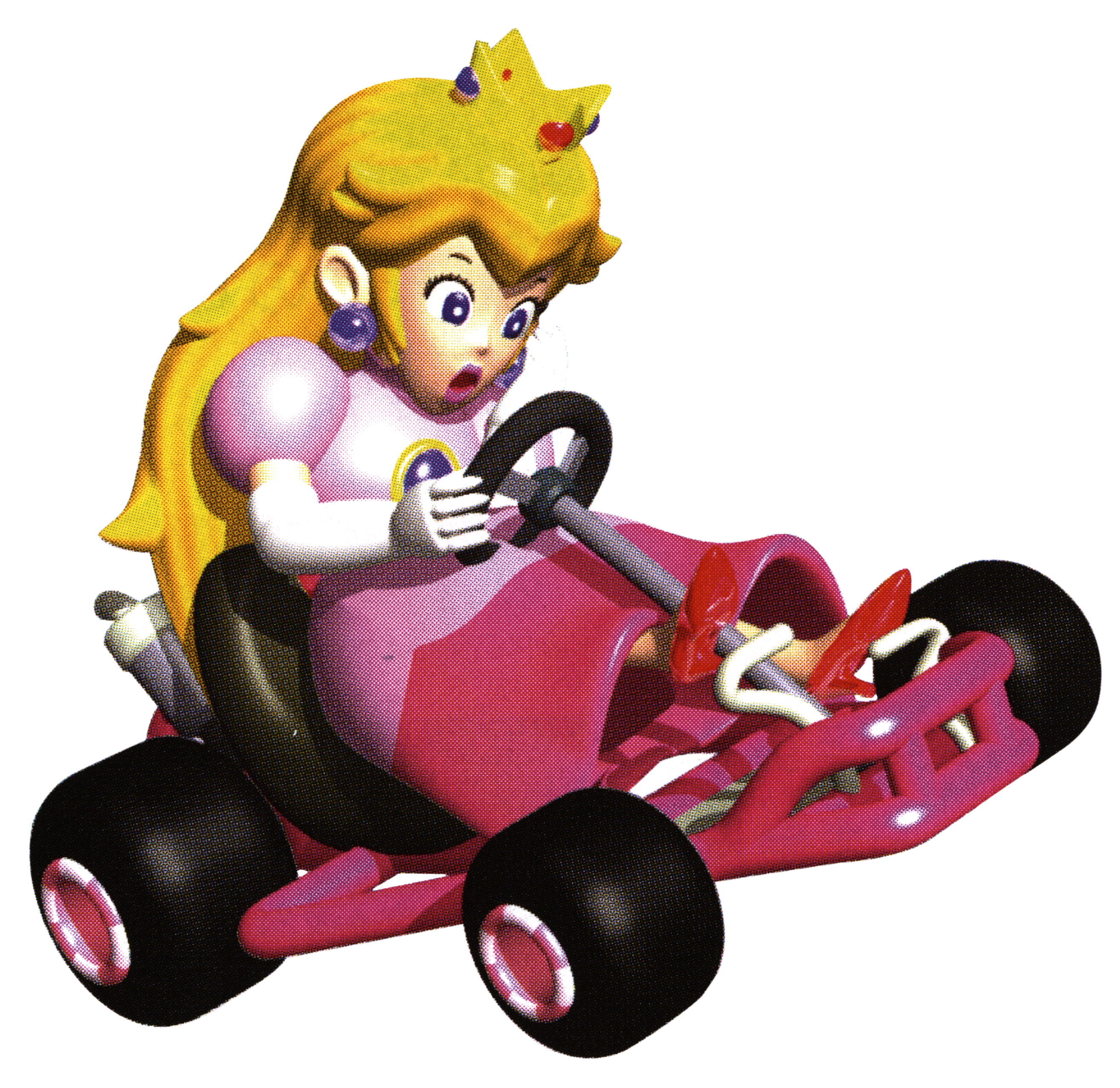
| Peach | Light | 314 km/h | ★★★★★ | Same handling profile as Toad — nimble, top acceleration | Light contact knock-back, weak in Battle |
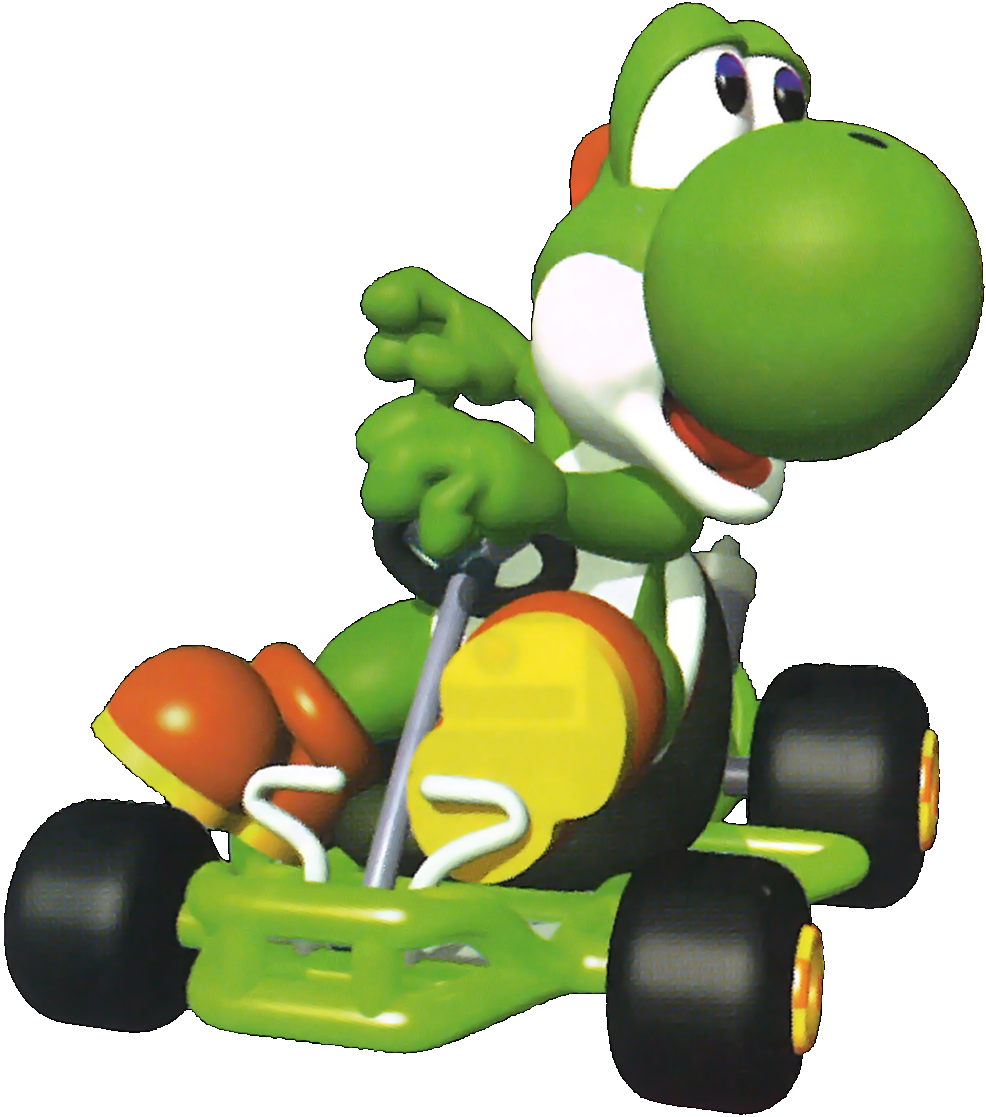
| Yoshi | Light | 314 km/h | ★★★★★ | Light-class agility, signature Yoshi Valley course | Loses to heavies in Battle |
| Mario | Medium | 310 km/h | ★★★ | Balanced — no weakness, but no exceptional strength either. The default pick. | Slowest acceleration of all classes |
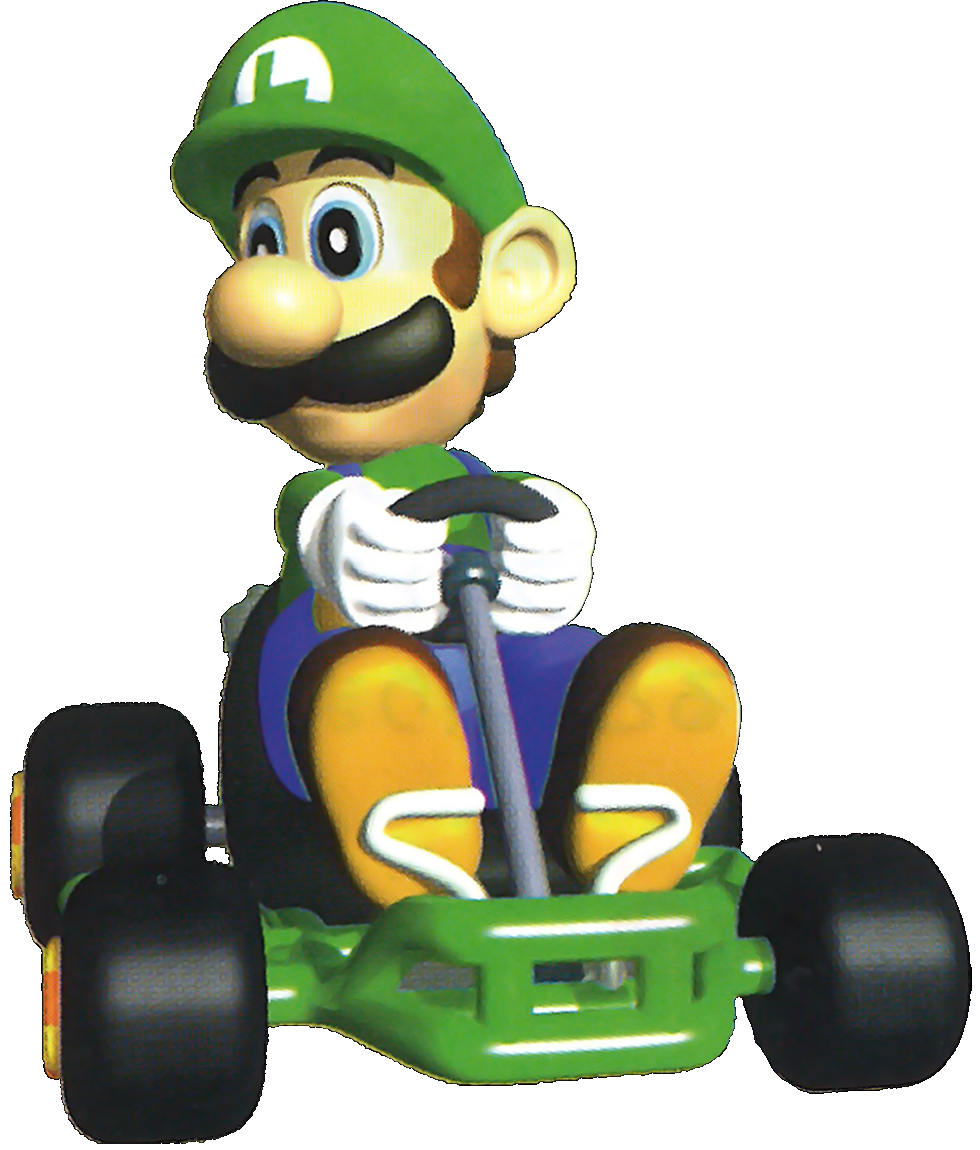
| Luigi | Medium | 310 km/h | ★★★ | Identical to Mario’s handling. Pick for personal preference. Luigi’s first N64 appearance. | Same as Mario |
| D.K. | Heavy | 314 km/h | ★★ | High top speed, knocks lighter karts around. New to the series here (replacing Donkey Kong Jr.) | Wide turning radius, sluggish acceleration |
| Wario | Heavy | 314 km/h | ★★ | Heavy-class speed and bumping power. Wario’s debut in Mario Kart. | Poor handling on tight corners |
| Bowser | Heavy | 314 km/h | ★★★★ (special) | Heavy weight, top speed — and gets the lightweight triple-tap acceleration recovery. Arguably the best character. | Wide turns, bullies lightweights but is bullied by walls |

Mario
Luigi
Peach

Toad
Yoshi
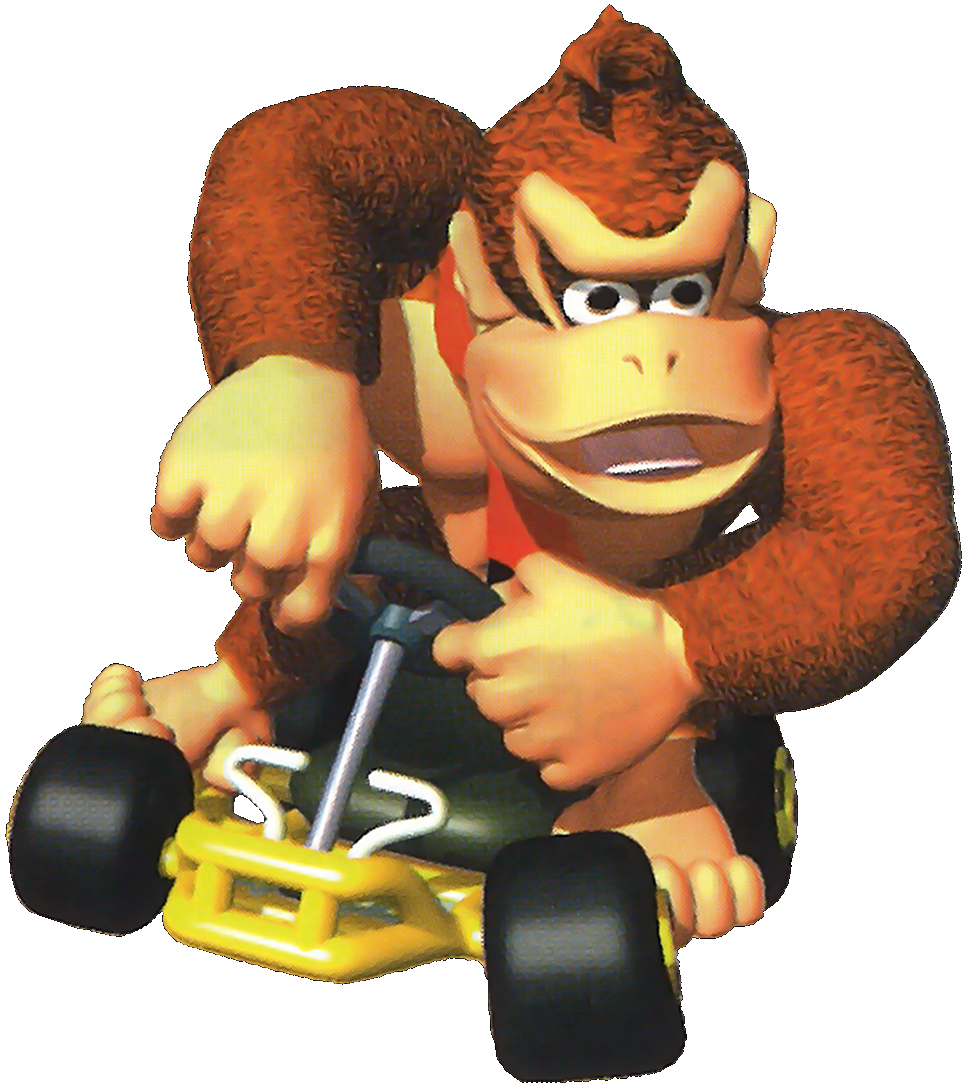
D.K.

Wario
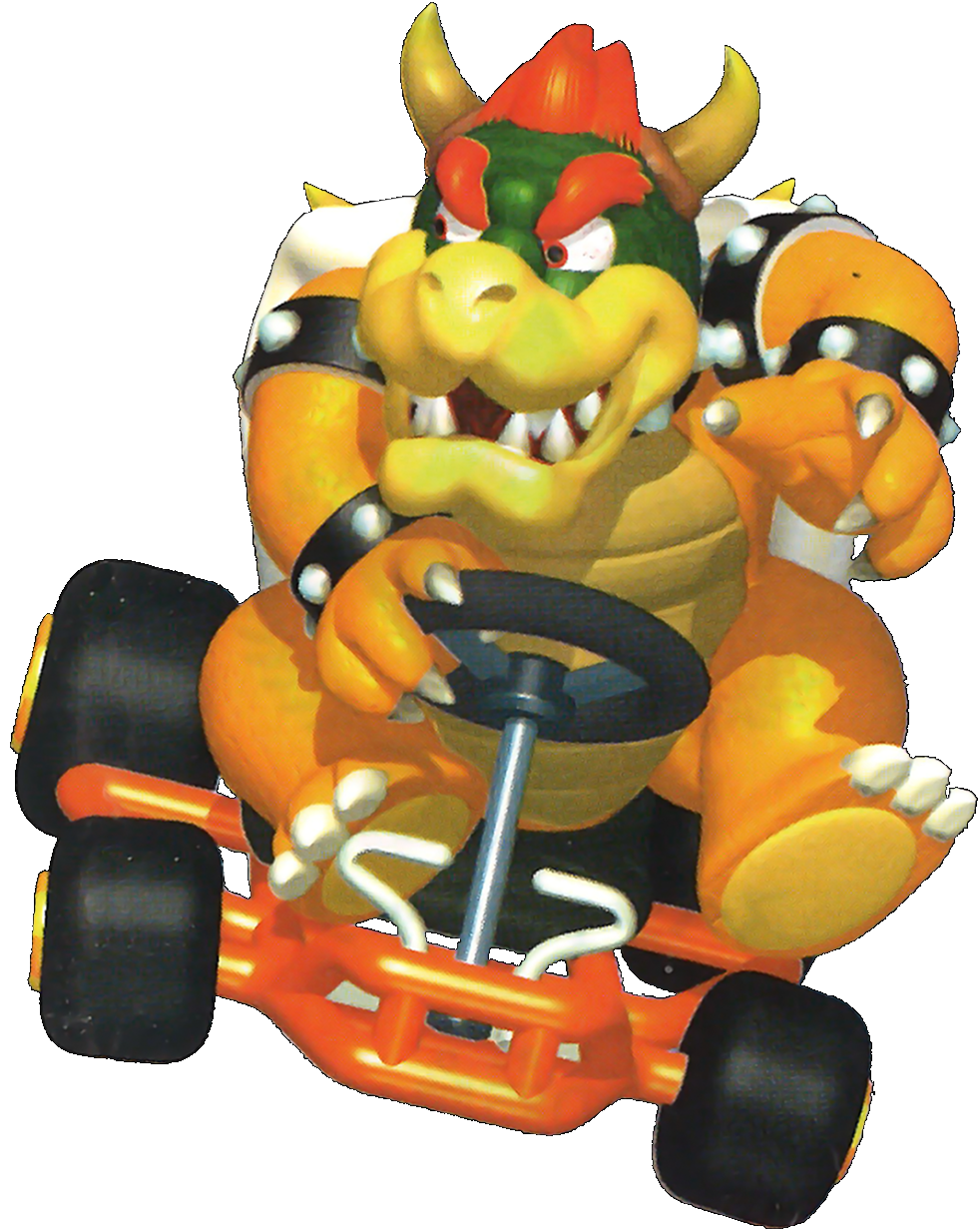
Bowser
Items
Fourteen items in total — nine of them brand new to the series. The famous Item Box (or “?” block) drops in front of the kart and triggers a roulette that biases towards your race position: lower-place racers tend to draw more powerful items.
| Item | What it does | |
|---|---|---|
 |
Mushroom | One short speed boost. Great for cutting corners off-road or rocketing past on the home straight. |
 |
Triple Mushrooms (new) | Three Mushrooms cycling around the kart — three boosts to spend. |
 |
Super Mushroom (new) | Continuous boosts for a fixed time window. Tap the item button repeatedly until it expires. |
 |
Fake Item Box (new) | Looks just like a real Item Box but flips your kart on contact. Place it on the racing line and watch racers eat it. Unique to MK64: a Fake Item Box can also block enemy projectiles. Only game where this works. |
 |
Banana | Drops a peel that spins out anyone who hits it. |
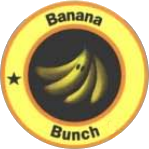 |
Banana Bunch (new) | Five Bananas trailing behind your kart. Drop them one at a time, or eat them all at once if a rival barrels into the trail. |
 |
Green Shell (new) | Throw it in a straight line. Bounces off walls and can come back to bite you. |
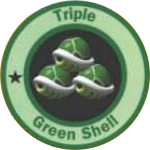 |
Triple Green Shells (new) | Three Greens orbiting the kart. Throw them or use the orbit as a shield against incoming items. |
 |
Red Shell (new) | Homing shell — locks onto and chases the racer ahead of you. |
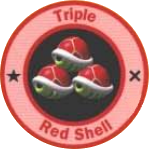 |
Triple Red Shells (new) | Three Reds orbiting your kart — throw or shield. Brutal in skilled hands. |
 |
Spiny Shell (new) | The infamous blue shell — targets the racer in 1st place automatically. Hits anyone unlucky enough to be in its path on the way there. Series debut. |
 |
Super Star | Brief invincibility plus a speed boost. Smash through anything and anyone. |
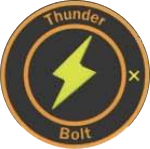 |
Thunder Bolt | Shrinks every other racer, slowing them dramatically and making them squashable. Only racers in last place tend to draw it. (On Wii Virtual Console the flash effect was toned down to avoid seizure concerns.) |
 |
Boo (new) | Briefly turns you invisible (so items pass through) and steals an item from a rival racer. The cheekiest item in the game. |
The four cups — 16 race courses
Sixteen race tracks split into four cups of four each. Special Cup is unlocked from the start — rare for the Mario Kart series. Each character has a signature track named after them.
Mushroom Cup — the easy one
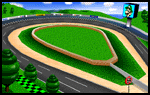
Luigi Raceway
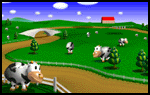
Moo Moo Farm
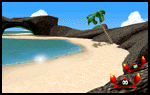
Koopa Troopa Beach
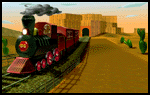
Kalimari Desert
Flower Cup — stepping it up
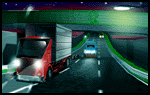
Toad’s Turnpike

Frappe Snowland
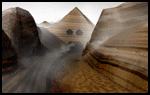
Choco Mountain
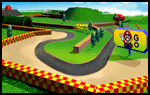
Mario Raceway
Star Cup — the serious challenge
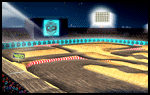
Wario Stadium
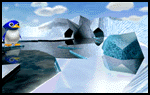
Sherbet Land
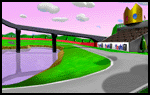
Royal Raceway
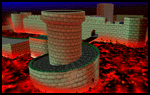
Bowser’s Castle
Special Cup — the boss cup
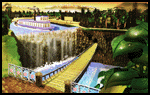
D.K.’s Jungle Parkway
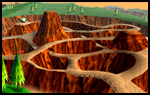
Yoshi Valley
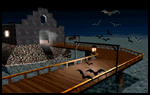
Banshee Boardwalk
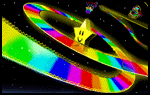
Rainbow Road
Course hazards & obstacles
Each track has its own ambient hazards beyond the usual Bananas and shells. A quick rundown of what’ll spin you out:
| Hazard | Where | What it does |
|---|---|---|
| Train | Kalimari Desert | A real train crosses the track twice per lap. Time the crossing or you’re flattened. |
| Thwomps | Bowser’s Castle | Big stone blocks slam down on the racing line. Squashes karts. |
| Boulders | Choco Mountain | Roll down from the cliff edge. One of MK64’s most infamous hazards. |
| Civilian cars & trucks | Toad’s Turnpike | Live highway traffic. Hit a truck and you’re flipped sky-high. |
| Snowmen | Frappe Snowland | Stationary on the racing line. Hit one and spin out. |
| Penguins | Sherbet Land | Walk and slide across the ice unpredictably. |
| Chain Chomps | Rainbow Road | Embedded in the track surface, chomping randomly. Contact launches your kart. |
| Bats | Banshee Boardwalk | Swoop down from the rafters and stun your kart. |
| Cacti | Kalimari Desert | Sit on the desert floor — spin you out like a Banana. |
| Crabs | Koopa Troopa Beach | Skitter across the sand. Get caught and spin out. |
| Piranha Plants | D.K.’s Jungle Parkway | Snap up at passing karts. |
| Porcupines (Monty Mole-style) | Moo Moo Farm | Pop out of holes and launch your kart. |
| Coconut-throwing natives | D.K.’s Jungle Parkway | Tribal figures hurl coconuts onto the racing line. |
| Mini Bomb Karts | 3–4 player VS only | Roaming explosive karts that detonate on contact. Adds chaos to multiplayer. |
Battle arenas
Four arenas for Battle Mode. Each player gets three colour-coded balloons; lose them all and you’re out. Items only — no racing.
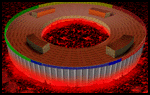
Big Donut
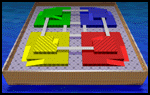
Block Fort

Double Deck
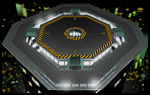
Skyscraper
Version differences & re-releases
MK64 has been re-released multiple times across nearly three decades of Nintendo hardware.
| Platform | Region | Date | Notable changes |
|---|---|---|---|
| Nintendo 64 (original) | Japan | Dec 14, 1996 | Original release. “Royal Raceway” was named “Peach Circuit” in Japan; track names ending in “Circuit” were renamed to “Raceway” in Western releases. |
| Nintendo 64 (Player’s Choice) | NA, Europe | Jan–Apr 1998 | Budget reissue. |
| iQue Player | China | Dec 25, 2003 | Chinese N64-compatible system release. |
| Virtual Console (Wii) | Worldwide | Jan–Apr 2007 | Wii download. Thunder Bolt flash effect dimmed to avoid seizure concerns. |
| Virtual Console (Wii U) | Worldwide | Jan–Dec 2016 | Wii U download. Off-TV play on the GamePad. |
| Nintendo 64 — Nintendo Switch Online | Worldwide | Oct 25–26, 2021 | Most recent re-release. Online multiplayer support added. |
Reception & legacy
Mario Kart 64 was a critical and commercial smash — the game that defined N64 multiplayer for a generation of players. It went on to become the system’s second best-selling game behind only Super Mario 64, with over 9.87 million copies sold worldwide on the original cartridge.
Reviewers praised the leap to 3D, the four-player split-screen, the personality of each track, and the depth added by the new item roster. Common criticisms at the time were the visible seams between the polygon course geometry and the 2D sprite characters — the racers themselves are flat billboards rotated to face the camera, a compromise to keep the game running at a smooth frame rate. AI rubber-banding (where opponents’ speed ramps up if you pull too far ahead) also drew complaints. None of it dented the reputation: MK64 remains a regular fixture on “best N64 games of all time” lists three decades later.
The game’s influence on the series is fundamental. Drift-based Mini-Turbos, the Spiny Shell, four-player local multiplayer, the four-cup / 16-track grand prix structure, character voice acting — every Mario Kart since builds on the foundation laid here.
Trivia
- Luigi’s first Nintendo 64 game. He doesn’t appear in Super Mario 64, so MK64 was his N64 debut.
- Wario joins the cast. His first Mario Kart appearance — he replaces Koopa Troopa, who’d been in the SNES original.
- Donkey Kong replaces Donkey Kong Jr. from the SNES game. In-game he’s almost always credited as just “D.K.” — an attribution to Rare appears in the closing credits.
- The game was originally going to be called “Super Mario Kart R”, with Magikoopa in DK’s slot. Donkey Kong replaced him before the final release.
- Royal Raceway features the castle from Super Mario 64 in the background — you can drive over the bridge and explore part of the castle grounds during the lap.
- Kalimari Desert is named after the South African Kalahari Desert.
- This is the only Mario Kart game where Fake Item Boxes can block enemy projectiles. A Green Shell flying at you? Drop a Fake on the racing line and it’ll absorb the hit.
- Also the only Mario Kart (until MK8 Deluxe) where Special Cup is selectable from the start. No grinding through cups required.
- Charles Martinet voiced Mario, Luigi and Wario in this game.
- Some character voice clips were re-used in the original Mario Party the following year.
- Yoshi Valley is the only track in the game where your race position is hidden — the branching paths make it impossible for the game to be sure who’s actually leading.
- Lakitu’s role expanded massively here — he’s the start-of-race traffic light, the fishing-rod rescuer when you fall off, the lap counter, and the chequered-flag finisher.
- In Wario Stadium, you can clear the entire track in seconds via a famous reverse jump shortcut — throwing yourself backwards over a wall onto the final stretch. Speedrunners still use it.
- The cover art was created by Yoichi Kotabe, who had worked on Studio Ghibli’s Heidi, Girl of the Alps before joining Nintendo.