
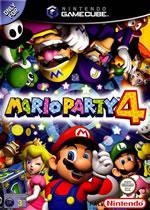
Mario Party 4
Overview

Mario Party 4 is the fourth main entry in the Mario Party series and the first on the Nintendo GameCube, following three N64 installments. Released in North America on 21 October 2002, it was Hudson Soft’s first chance to bring Mario Party into the 6th-generation console era — with full 3D environments, sharper character models, and a new audio-visual polish that elevated the series beyond its 64-bit predecessors.
The game features 8 playable characters (Mario, Luigi, Peach, Yoshi, Wario, Donkey Kong, Daisy and Waluigi — with Daisy and Waluigi now usable in Story Mode for the first time), six themed boards each hosted by a recognisable Mushroom Kingdom regular (Toad, Shy Guy, Goomba, Boo, Koopa Troopa, and ultimately Bowser), and 62 brand-new mini-games spanning 4-player, 1-vs-3, 2-vs-2, Battle, Bowser, Story, and the hidden Extra Room categories.
The headline new mechanic is the Mega Mushroom / Mini Mushroom system. Players who land on the right item shops can grow giant (rolling two dice for a 2-20 movement, crushing other players for coins as they pass) or shrink (rolling 1-5 but unlocking access to tiny side paths and mini mini-games). This system reshapes the strategic layer in every party.
It’s the first Mario Party where the framing premise is a birthday party — the cast is invited to the Party Cube, a floating dimension where each character host wants to give the player a present, but you have to win their board to claim it. The Story Mode threads this through all six boards plus a final Bowser confrontation.
Plot
“Toad, Koopa, and a whole host of party patrons have arrived on the mysterious Party Cube to celebrate your Birthday Party! But giving you presents would be way too easy, so you’re going to have to win the presents by playing a game or two! Now let’s get this party started!”
Mario and the gang are enjoying the outdoors when a mysterious cloud forms in the distance. As the cloud moves closer, a giant bag appears to be floating in the sky. The bag opens up to reveal Toad, Koopa, Goomba, Shy Guy, and Boo, who invite Mario and the gang to party in the Party Cube.
It’s the player character’s birthday, and each host wants to give a present. But the character must play in each host’s board and win a special mini-game to earn the present. The player works through all five hosts, collecting their presents one by one. Just when the party is about to wrap up, Bowser shows up and threatens to steal every present the player has — unless the player agrees to go to Bowser’s board and win there too.
The player accepts Bowser’s challenge, plays through Bowser’s Gnarly Party, and defeats the King of the Koopas to keep their birthday loot. Each host gives the player their unique present, ranging from amusement park souvenirs to mysterious cube-themed gifts.
Gameplay & New Mushroom Mechanic
The Mario Party formula returns with several refinements. Core loop:
- Roll the dice block — tap A to stop a 1-10 roll. Move that many spaces along the board.
- Land on a space — different space types trigger different events (see Spaces section)
- Buy a Star — reach the Star Space (held by a board-specific character) and exchange 20 coins for one Star. The Star Space relocates to a different position on the board after purchase.
- Play a mini-game at the end of every turn — the mini-game type depends on what colour spaces all 4 players landed on (4 blue/red = 4-player; 3 of one + 1 of another = 1-vs-3; 2 of each = 2-vs-2; a Bowser space landed on triggers a Bowser mini-game)
- Reach a target number of Stars — whoever has the most Stars (and ties broken by coins) at the end of all turns wins the board
New Mechanic: Mega Mushroom / Mini Mushroom
The signature MP4 mechanic. The two new items reshape how you play boards:
- Mega Mushroom (5 coins) — the player becomes giant, rolls TWO dice blocks (2-20 spaces), and CRUSHES any opponents they pass, stealing 10 coins per crush. Matching dice = 10 bonus coins (or 30 for double 7s). Drawback: cannot buy Stars or use Item Shops while giant.
- Mini Mushroom (5 coins) — the player becomes tiny, dice block limited to 1-5, but unlocks tiny pipe shortcuts hidden around each board. Can also trigger exclusive Mini Mini-games.
- Super Mega Mushroom — an upgraded Mega Mushroom that lasts longer or has stronger effects depending on the board context
- Super Mini Mushroom — same upgrade idea for the Mini version
The Mushroom system means a single well-timed Mega purchase can completely flip a game state — or trap you out of buying Stars at a critical moment.
Game Modes
Mario Party 4 has six game modes, accessed from the main “Party Cube screen”. Each mode is represented as a ticket on the cube.




Party Mode
The classic multiplayer experience. Hosted by Toad pre-board, then by the board’s own character. Up to 4 players (CPU fills empty slots). Pick from 8 characters, adjust CPU difficulty Easy/Normal/Hard/Expert (Expert is unlockable), then choose how many turns (10/20/30/50) and which board. The most Stars wins.
Story Mode
The single-player campaign. Play through all 6 boards sequentially, each ending in a 1-on-1 match against the board’s host. Win the match to receive the host’s birthday present. Final showdown is against Bowser on his board. Daisy and Waluigi are playable in Story Mode for the first time in the series.
Mini-Game Mode
Hosted by Goomba. Pure mini-game playground with four sub-options:
- Free Play — any unlocked mini-game
- Team Play — 2-vs-2 mini-games only
- Battle Mode — first to 3, 5 or 7 wins. Custom mini-game filter (All/Easy/Custom)
- Tic-Tac-Toe Mode — teams compete on a 3×3 grid, winning mini-games earns squares
Option Room
Hosted by Shy Guy. Adjust game settings, view records, customize Mario Party presets.
Present Room
Hosted by Koopa Troopa. View all the birthday presents collected so far in Story Mode — each host’s gift displayed and described.
Extra Room
Hosted by Boo. Contains three exclusive bonus minigames not playable elsewhere — covered in the next section.
Extra Room Secret Mini-Games
The Extra Room is hosted by Boo and contains three exclusive mini-games that aren’t available in any other mode. Each must be unlocked by completing certain Story Mode milestones.
Thwomp’s Backroom Ball
A pinball-style game played on a giant Thwomp-themed table. Players use flippers to keep the ball alive while racking up points. Played 1-vs-CPU or 2-player. Surprisingly addictive once unlocked.
Whomp’s Basement Brouhaha
A wall-smashing minigame in Whomp’s basement. Players race to break the most coloured walls in a 60-second window using power gauges and timing presses. Pure reflex and rhythm game.
Beach Volley Folly
A full beach volleyball game with a twist — featuring exclusive playable characters not available in any other part of the game (unlockable via Battle Mode in Mini-Game Mode). The full volleyball roster includes characters from across the Mushroom Kingdom not playable in the main party modes.
Playable Characters
Mario Party 4 features 8 playable characters, all returning from Mario Party 3. While no new playable characters are introduced, this is the first Mario Party where Daisy and Waluigi are playable in Story Mode — they were Party Mode-only in MP3.
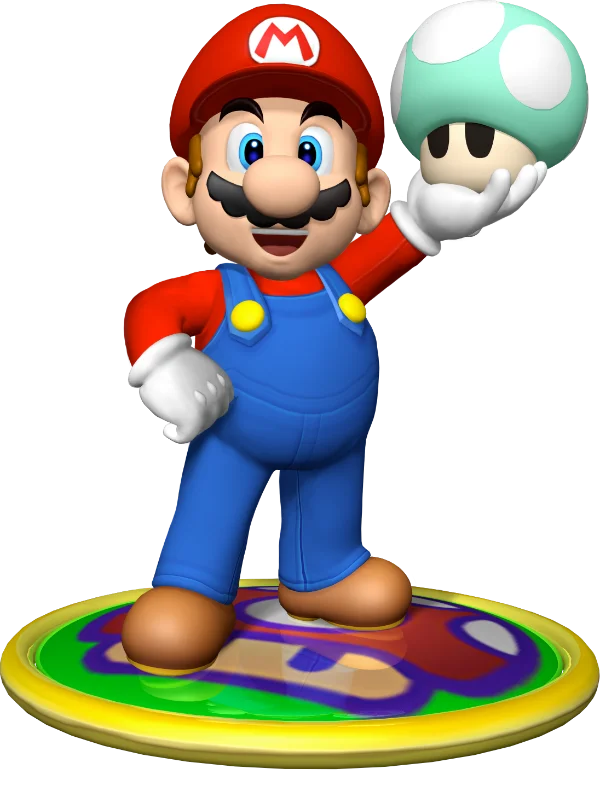


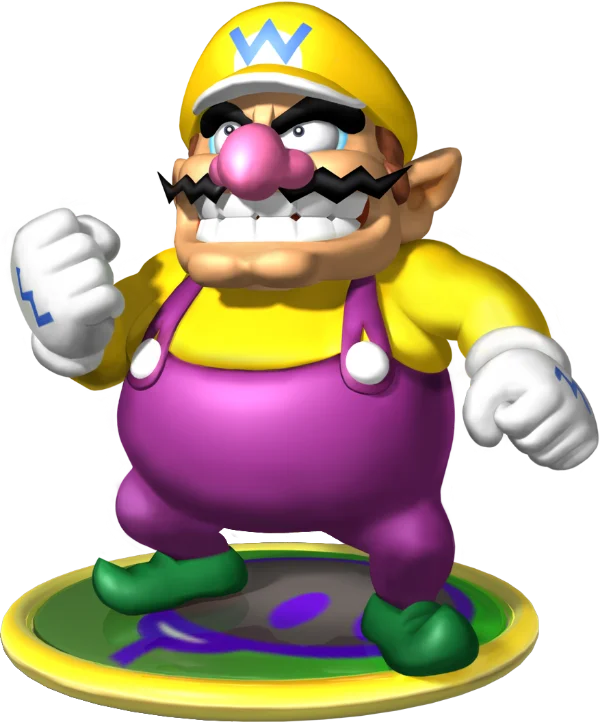

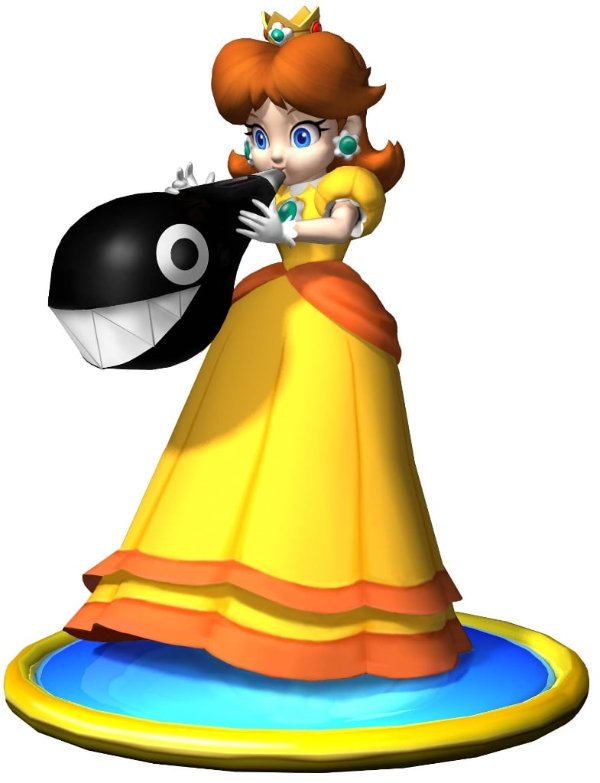

Each character has personality-driven flavour text on their selection screen, character-coloured cursors for mini-games like Toad’s Quick Draw and Hop or Pop, and a unique celebratory animation when they win.
Beach Volley Folly Exclusive Characters
The hidden Beach Volley Folly mini-game in the Extra Room features additional playable characters — including the board hosts themselves (Toad, Shy Guy, Goomba, Boo, Koopa Troopa) plus Koopa Kid. Once unlocked via Battle Mode, these characters can be used in Free Play of the Beach Volley Folly mini-game.
Board Hosts
Each of the six boards in Mario Party 4 is hosted by a different Mushroom Kingdom regular — five of them friendly hosts handing out birthday presents in Story Mode, plus the final showdown with Bowser himself.

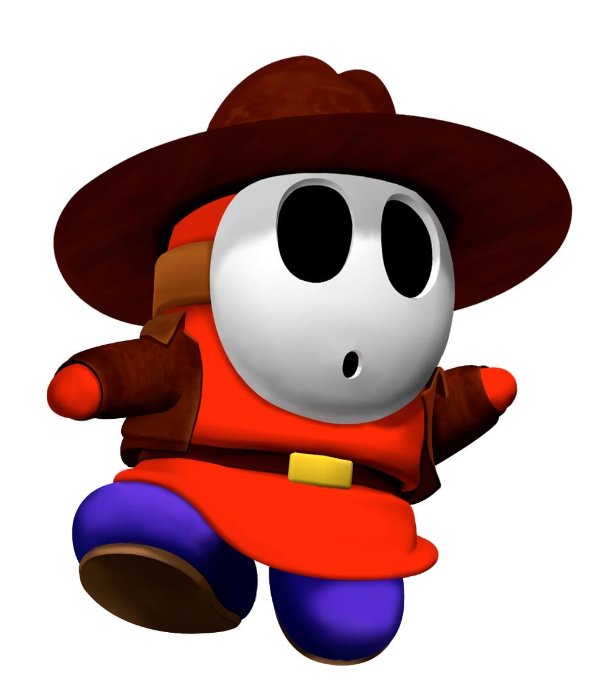


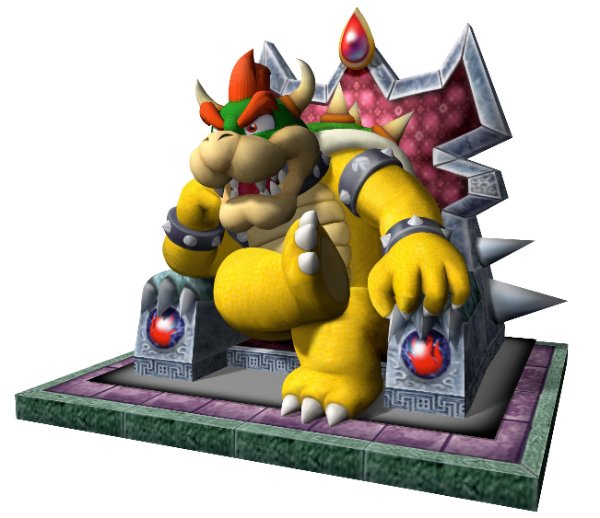
Each host also takes on a secondary role:
- Toad — primary host of Party Mode pre-board selection (greets you on the Party Cube screen)
- Shy Guy — hosts the Option Room
- Goomba — hosts Mini-Game Mode
- Boo — hosts the Extra Room with its three secret mini-games
- Koopa Troopa — hosts the Present Room where collected gifts are displayed
- Bowser — the final Story Mode opponent and host of his own board
Boards
Six themed boards, each with its own host, atmosphere and signature mechanic. The first five unlock through Story Mode progression; Bowser’s board is the final challenge.




| Board | Host | Theme & Signature Mechanic |
|---|---|---|
| Toad’s Midway Madness | Toad | Amusement park theme. The tea cup rides can spin you to a different junction. The roller coaster shortcuts from bottom-left to top-right and vice versa. Generally beginner-friendly. |
| Shy Guy’s Jungle Jam | Shy Guy | Jungle theme. The Shy Guy statues ask you to make a happy or sad wish when activated by Happening Spaces. Klepto the condor can offer to fly you to the bottom-right of the board. |
| Goomba’s Greedy Gala | Goomba | Casino theme. Features a roulette wheel at the centre with eight spaces marking the spin outcomes. Lots of coin-gambling gimmicks. |
| Boo’s Haunted Bash | Boo | Haunted house theme. Boo floats around the board offering coin-and-Star theft services. The mansion has multiple floors and Boos that steal coins or Stars from opponents. |
| Koopa’s Seaside Soiree | Koopa Troopa | Tropical beach theme. Mr. Blizzard sleeps on the island and the central Whale bus transports players between locations. |
| Bowser’s Gnarly Party | Bowser | The final board. Lava-filled fortress theme. Bowser himself walks around the board and triggers extra-malicious events. The endgame challenge. |
Mega Board Mayhem & Mini Board Mad-Dash
Two unlockable variant modes apply to any of the six boards:
- Mega Board Mayhem — everyone starts permanently Mega-sized for the entire game. Pure crush warfare.
- Mini Board Mad-Dash — everyone is permanently Mini-sized. Slower movement, more strategic tiny-pipe usage.
Items
Items in Mario Party 4 are bought from Item Shops scattered around each board (cost varies per item). The Mushroom items are the new MP4 headline.
| Item | Cost | Effect |
|---|---|---|
| Mega Mushroom | 5 coins | Roll two dice (2-20), crush passed opponents for 10 coins each. Matching dice = 10 bonus coins (30 for double 7s). Cannot buy Stars or use Item Shops while giant |
| Mini Mushroom | 5 coins | Roll 1-5 dice block. Unlocks tiny pipe shortcuts and Mini Mini-games |
| Super Mega Mushroom | 15 coins | Same as Mega but with stronger/longer effect |
| Super Mini Mushroom | 15 coins | Same as Mini but with stronger/longer effect |
| Mini-Mega Hammer | 15 coins | Force another player to use a Mini Mushroom or Mega Mushroom on their next turn |
| Warp Pipe | 15 coins | Swap places with another player on the board |
| Swap Card | 30 coins | Exchange ALL of your Stars with another player’s Stars |
| Sparky Sticker | 15 coins | Defensive item — protects from one item-based attack |
| Bowser Suit | 20 coins | Disguise as Bowser. Steal coins from passed opponents and access Bowser Spaces safely |
| Magic Lamp | 30 coins | Teleport directly to the Star Space |
| Gaddlight | 40 coins | Steal up to 2 Stars from an opponent (named after Professor E. Gadd’s tech) |
Each player can hold up to 3 items at once. The strategic timing of when to deploy a Mega Mushroom (offensive) or Mini Mushroom (defensive shortcut routes) is one of the deepest layers of MP4.
Spaces
| Space | Effect |
|---|---|
| Blue Space | Gain 3 coins. On the last 5 turns, the roulette may double this |
| Red Space | Lose 3 coins. On the last 5 turns, the roulette may double this loss |
| Happening Space | Triggers a board-specific event. Can be positive or negative — e.g., taking a roller coaster shortcut, having a Shy Guy statue cast a happy/sad wish, or being intercepted by Klepto the condor |
| Bowser Space | Triggers either a Koopa Kid event (steals coins) or a Bowser event: Bowser Revolution (everyone’s coins are divided equally), Bowser Mini-game (forces a Bowser-themed mini-game), Bowser Shuffle (randomly swaps player positions), or various other Bowser-themed disasters |
| Battle Space | All players pay coins into a pot, then play a mini-game. Winner takes the pot |
| ? Space | Mystery space — triggers a random board-specific event |
| Star Space | Where you exchange 20 coins for 1 Star. Relocates after a Star is purchased |
| Item Shop / Mushroom Space | Access the Item Shop to purchase items including Mega/Mini Mushrooms |
| Bank Space | Passing players deposit 5 coins into the bank. Landing on the Bank Space awards all banked coins to that player |
Shops & Board Features
Each board features at least one Item Shop where players can spend coins to buy items. Shop access is restricted — you cannot enter the Item Shop while in Mega Mushroom form, which adds a strategic layer of timing.
Other Board Features
- Tiny Pipes — shortcuts accessible only while using a Mini Mushroom. Each board has 2-4 pipes hidden in strategic spots.
- Boo Houses — visit Boo to pay coins to steal coins or Stars from opponents (cheaper to steal coins than Stars)
- Lottery / Roulette stops — on certain boards, gambling minigames with their own rules
- Roller Coasters / Tea Cup Rides / Whale Bus — board-specific transport gimmicks
- Boon Wishes — on Shy Guy’s board, the Shy Guy statues can cast a happy wish (bonus) or sad wish (penalty)
- Lottery Booth / Reversal of Fortune — spin a wheel to potentially swap coins or Stars with another player
Mini-Games
Mario Party 4 features approximately 62 brand-new mini-games across all categories. No mini-games are recycled from MP1-3 — this is a fully fresh roster. The categories:
4-Player Mini-Games
The classic free-for-all. Examples include Avalanche! (DK and friends slide on a sled), Hop or Pop (timing-based balloon popping), Right Oar Left? (rowing), Booksquirm (jumping a giant book), and Beach Volley Folly in the Extra Room.
1-vs-3 Mini-Games
One player against three. Asymmetric balance — the “1” usually has a power advantage. Examples: Trace Race, Cliff Hangers, Bowser Wrestling.
2-vs-2 Mini-Games
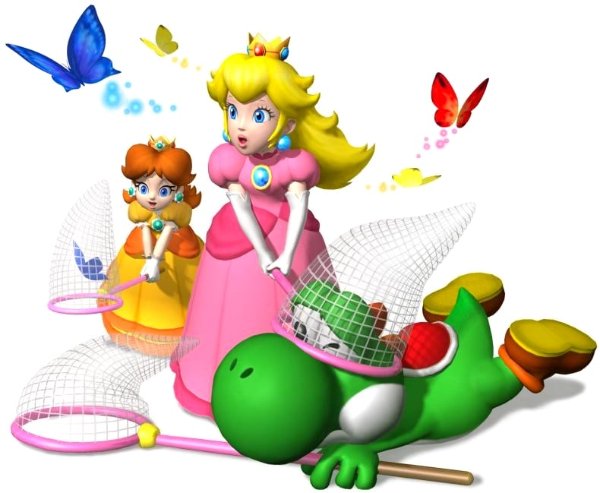
Team mini-games. Examples: The Great Deflate (Wario and Waluigi tag-teaming), Butterfly Blitz (synchronised swiping), GOOOOOOOAL!! (2-vs-2 soccer match).
Battle Mini-Games
Coin-stake battles. Players ante coins into the pot, winner takes all. Examples: Domination, Money Belts.
Story Mini-Games
One per host — the special challenge against each board’s host character to win their birthday present. Boss-character themed.
Bowser Mini-Games
Triggered by landing on a Bowser Space or when Bowser appears on the board. Punishing games where Bowser tries to drain everyone’s coins. Examples: Bowser Bop, Bowser’s Bigger Blast (one player explodes from a bomb pile).
Mini Mini-Games
Exclusive to Mini Mushroom-sized players. Tiny-scale games where the world is bigger than the player. Examples on each board.
Extra Room Mini-Games (3 exclusive)
- Thwomp’s Backroom Ball — pinball
- Whomp’s Basement Brouhaha — wall-smashing reaction game
- Beach Volley Folly — volleyball with secret characters
Iconic Mini-Game Highlights


Development Staff
Mario Party 4 was developed by long-time Mario Party studio Hudson Soft, the company that developed every Mario Party entry from 1 through 8 before the series moved to Nd Cube. Hudson Soft was supported by CAProduction, a co-developer with longstanding ties to Hudson and what would later become Nintendo Cube.
- Developer: Hudson Soft (with CAProduction)
- Publisher: Nintendo
- Director: Kenji Kikuchi — also directed Mario Party 1, 2, 3 and 5
- Composer: Ichiro Shimakura — also composed the Mario Party 3 soundtrack
- Mario Voice: Charles Martinet
- Cast Voices: Charles Martinet (Mario/Luigi/Wario/Waluigi), Jen Taylor (Peach/Daisy), Kazumi Totaka (Yoshi), etc.
This was the last Mario Party announced under Hiroshi Yamauchi’s tenure as Nintendo president — Yamauchi stepped down in May 2002 just before MP4’s release.
Reception & Sales
Mario Party 4 received mixed-to-positive reviews from critics on launch. The mini-game variety and multiplayer chaos were widely praised; the single-player Story Mode and board pacing drew the most criticism.
Critic Reactions
- GameSpot — Ryan Davis praised the mini-game format but noted “players who already exhausted themselves on the previous Mario Party titles may not have enough here to draw them back again”
- Eurogamer — Tom Bramwell acknowledged the variety and thematic features but criticised board size, leading to a “glacial pace” when paired with the on-board animations
- IGN — praised the boards for their distinct thematic features that helped “ease the tediousness”. Reviewers liked the visual upgrade from N64
- Critical consensus — the Mushroom system received some negative feedback (frustration at not being able to enter shops or purchase Stars while in big form) but the multiplayer chaos and mini-game polish was strongly praised
- Story Mode drew the most criticism — widely seen as inferior to the multiplayer party experience
Sales
Mario Party 4 sold approximately 2.7 million copies worldwide over its lifetime, making it one of the strongest-selling Mario Party entries on home consoles. It established Mario Party as a major GameCube franchise that would continue through MP5, MP6 and MP7 over the next four years — Nintendo released a new Mario Party game every year of the GameCube’s lifetime.
Pre-release & Cut Content
The retail game has a handful of fascinating differences from pre-release builds and unused content discovered in data-mining:
- E3 demo character select screen — hidden in the game files are pre-release menu assets (E3Setup.bin, E3SetupDLL.rel, E3SetupDLL.str). Replacing the standard menu files with these reveals an E3-version character select screen in which Donkey Kong and Wario cannot be selected. These two characters were apparently added late in development.
- Placeholder box art — the original cover art initially used for Mario Party 4 box artwork was simply character artwork from Mario Party 3 (N64). The final retail cover got new artwork only later in production.
- Reused N64 announcer — an early trailer shows the game still using the Mario Party 2 and 3 announcer voice, with characters having no voice clips at all. The announcer was later replaced with the new MP4 cast voices.
- Debug menu — a hidden debug menu exists in the game’s data with all mini-games listed. Mini-games are coded in the 400s, but there are unused mini-games numbered in the 300s that more closely resemble Mario Party 3 mini-games — suggesting some MP3 content was originally going to be carried over but was eventually scrapped for fully original MP4 games.
- Various unused asset textures, scrapped mini-game prototypes, and earlier-build animation files have been data-mined from the retail ROM
Adaptations
Mario Party 4 received two unusual adaptations outside the main GameCube release:
Adobe Flash Online Game
To promote the GameCube release, Nintendo published a dedicated Adobe Flash-based promotional mini-game hosted on the official Mario Party 4 site. The Flash game featured simplified versions of MP4 mechanics — basic dice-roll movement on a simplified board, with one or two mini-games playable via mouse-and-click controls. It functioned essentially as an interactive trailer and was taken offline after the launch promotional window ended.
Arcade — Dokidoki Mario Chance!
In March 2003, Japanese arcade publisher Banpresto released a Mario Party 4-themed arcade cabinet called Dokidoki Mario Chance! («ドキドキマリオチャンス!»). The game was a Japan-exclusive arcade adaptation using assets and characters from MP4, with mechanics modified for coin-operated single-session play. It never received an overseas release and is now a rare collector’s curio.
Trivia
- First Mario Party on GameCube — the previous three entries (1, 2, 3) were N64. MP4 establishes the series’ GameCube identity
- The Mushroom items (Mega/Mini) are the signature new mechanic of MP4 and would be carried forward in modified forms into MP5 and MP6
- The framing concept of a “birthday party” with hosts giving you presents is unique to MP4. Later Mario Party games use different narrative frames
- Story Mode is the first time Daisy and Waluigi are playable in a single-player Mario Party campaign
- The Beach Volley Folly hidden mini-game features playable characters not available anywhere else in the game — including the host characters like Toad, Shy Guy and Goomba as full playable volleyball avatars
- The boards feature heavy use of pre-rendered cinematic transitions when entering a new section — a GameCube-era visual flourish that hadn’t been possible on N64
- The Mega Mushroom mechanic predates the Mega Mushroom item from New Super Mario Bros. (2006) by 4 years — this is technically the first appearance of a giant-Mario power-up in any Mario game
- Kenji Kikuchi directed Mario Party 1, 2, 3, 4, and 5 — an unbroken run as Mario Party director
- The game received an arcade adaptation in Japan in 2003 (Dokidoki Mario Chance!) by Banpresto — one of the few Mario Party titles to ever have a real arcade version
- Mario Party 4 was the highest-budget Mario Party up to that point — the GameCube hardware allowed for significantly upgraded character models, smoother animations, and full pre-rendered cutscenes
- The Party Cube itself (the meta-environment from which you choose modes) is a unique MP4 narrative device that wouldn’t be used in any other Mario Party game
- This was the last Mario Party where Hudson Soft was the sole primary developer — later entries gradually transferred production to Nd Cube (the company formed from former Hudson and Cube staff after Konami absorbed Hudson in 2012)
- The hidden Expert CPU difficulty can be unlocked by completing Story Mode — the AI is genuinely sharp at this setting
- Daisy and Waluigi’s movesets in MP4 are visibly more polished than their MP3 appearances — both characters receive unique celebration animations and victory poses
Videos
Introduction & Story
The full game opening, showing the cast being invited to the Party Cube by Toad, Koopa, Goomba, Shy Guy and Boo for the player’s birthday celebration.
Story Mode Rules / Board Selection
Walkthrough of the Story Mode rules and the board selection screen, with Toad explaining how the host-vs-player matches work.
TV Commercial
The original North American TV commercial — a hallmark of 2002 GameCube launch marketing.
Reference / Information
Sub-pages and guides for Mario Party 4.
Media / Downloads
Box art gallery and screenshots for Mario Party 4.