
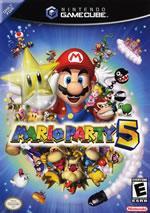
Mario Party 5
Overview

Mario Party 5 is the fifth main entry in the Mario Party series and the second to land on the Nintendo GameCube, releasing in North America on 10 November 2003. Following the back-to-back annual releases of MP4 (2002) and now MP5, Nintendo and Hudson Soft locked into a yearly Mario Party release cadence that would continue through MP6, MP7 and MP8.
The headline change for MP5 is the complete replacement of the previous Mushroom-item system with the Capsule mechanic. Players obtain capsules for free by passing capsule machines on the board, can throw a capsule up to ten spaces ahead to set a trap or buff, or pay a coin fee to activate it on themselves. There are 28 unique capsules in four event categories: Move, Coin, Capsule, and Special.
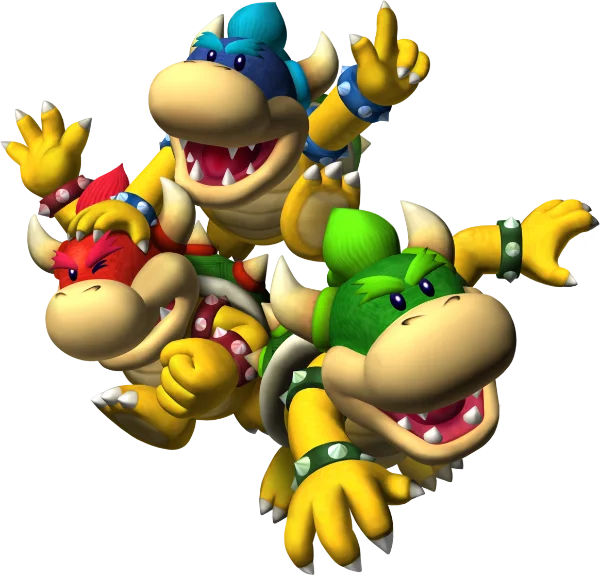
The cast grows from MP4’s 8 to a record 10 playable characters, with Toad, Boo, and Koopa Kid becoming playable for the first time in Mario Party history. Notably, Donkey Kong is removed from the main playable roster — he’s been promoted to the role of NPC hosting DK Spaces around the boards. DK is unlockable as a playable character only via Super Duel Mode.
The new framing premise is the Dream Depot: a magical land in the night sky where everyone’s dreams converge. The seven Star Guards — the Star Spirits from Paper Mario (2000) — invite Mario and friends to play across seven dream-themed boards while Bowser and the Koopa Kids plot to ruin everyone’s dreams.
Story
“In the night sky, past the moon and beyond the stars, there’s a dream world known as Dream Depot, where everyone’s dreams come together. This is the real land of dreams… In this land, there are Star Guards who protect the dreams of all.”
One dreamy night, the Star Guards came to a decision: “Many dreams arrive here at Dream Depot every day, so… why don’t we offer those with the power of dreaming a chance to visit?” They invited Mario and his closest friends because nobody dreams bigger than they do.
The Star Guards prepared the seven dream-themed boards as a celebration for their guests. But Bowser and the three Koopa Kids plot to ruin everyone’s dreams by taking over the Dream Depot.
In Story Mode, the player faces the three colored Koopa Kids across seven small boards. The objective is to bankrupt all three Koopa Kids (reduce them to zero coins) within 15 turns. If the player clears four out of the six default boards, the seventh — the Bowser-themed final showdown — unlocks. Win that to save the Dream Depot.
Gameplay
Mario Party 5 retains the established Mario Party loop — roll dice, move along a board, land on spaces, play a mini-game at the end of each turn — with several signature MP5 refinements:
- Roll the dice block — tap A to stop a 1-10 roll. Move that many spaces.
- Capsule machines — pass one for free and randomly receive a capsule. Each player holds up to 3 capsules at a time.
- Throw capsules ahead (up to 10 spaces) to plant traps, lay buffs, or steal from opponents who land on them. Alternatively, pay coins to activate a capsule on yourself immediately.
- Land on a space — each space type triggers different events (see Spaces section). New for MP5: capsule-specific spaces.
- Buy a Star — reach the Star Space and exchange 20 coins for 1 Star. The Star Space relocates after each purchase.
- Mini-game phase — based on the space colours all 4 players landed on (Blue/Red split determines mini-game type: 4-player, 1-vs-3, 2-vs-2, or Bowser).
- End of game — bonus Stars are awarded for various accomplishments. Player with the most total Stars wins, ties broken by coins.
Bonus Stars at game’s end can include the Mini-Game Star (most coins won in mini-games), Coin Star (most coins held at any single point), Happening Star (most Happening Spaces landed on), and the Capsule Star (most capsules used). These bonuses often flip the final standings.
The other key strategic layer is coin redistribution via Bowser events — a Bowser Revolution can equalize all four players, completely upending the game state. Some critics found this frustrating; many fans found it the most chaotic-fun part of the experience.
Game Modes
Mario Party 5 has six game modes. The main menu (called the Dream Depot screen) is hosted by Klevar, while each individual mode is hosted by one of the seven Star Guards.
Party Mode
Hosted by Eldstar. The classic 4-player Mario Party experience. CPUs fill empty slots (Easy/Normal/Hard/Expert). Team Match sub-mode lets you assign characters to 2-vs-2 teams — a brand new feature for the series.
Story Mode
Hosted by Misstar. Single-player campaign across 7 modified smaller boards. Face all three Koopa Kids; bankrupt them or survive 15 turns to advance. Final board is the Bowser challenge. Toad becomes the player’s partner once only two Koopa Kids remain.
Mini-Game Mode
Hosted by Skolar. Pure mini-game playground with multiple sub-modes including Free Play, Battle, and the entirely new Card Party — a board-game-style card battler using mini-game results to capture territory cards on a 5×5 grid.
Super Duel Mode
Hosted by Mamar. The most innovative new mode — covered in its own section below.
Bonus Mode
Hosted by Muskular. Houses three additional mini-game variants and the Mini-Game Coaster (a survival run through randomly selected mini-games).
Options Mode
Hosted by Kalmar. Customize game settings, view records, save/load memory card data.
Super Duel Mode
Super Duel Mode is the most ambitious new feature in MP5 and one of the most beloved hidden gems of the entire Mario Party series. Hosted by Mamar, it’s essentially a battle-mech building and combat game contained within Mario Party.
How It Works
- Build a Machine — combine 3 parts: a body (with HP and base stats), a wheel/locomotion type (determines speed and turning), and a weapon (sword, gun, hammer, drill, etc.). Each component costs coins earned from victories.
- Battle — arena combat against AI or other players. Real-time movement, attack, dodge. Best of 3 or 5 rounds.
- Tournament — climb a 7-tier tournament ladder. Hard difficulty tournament victory unlocks the final boss: Donkey Kong in a unique mech. Defeat him to add DK as a playable character throughout Super Duel Mode (and indirectly across the game).
- Save your machine to memory card and bring it back for ranked play later
Super Duel was a precursor to similar customizable battle systems in later Nintendo games (Mario Strikers, ARMS). It’s essentially a complete second game inside Mario Party 5 — and one Nintendo never quite repeated in subsequent Mario Party entries.
Characters
Mario Party 5 features 10 playable characters, a record for the series at the time. All MP4 characters return except Donkey Kong, who is now the host of DK Spaces around boards. Three brand-new playable characters are introduced: Toad, Boo, and Koopa Kid.
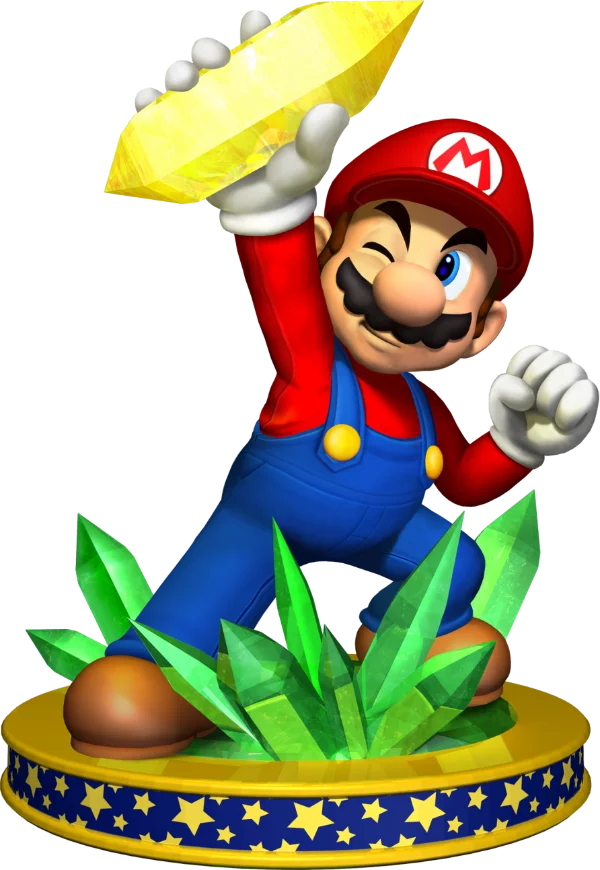


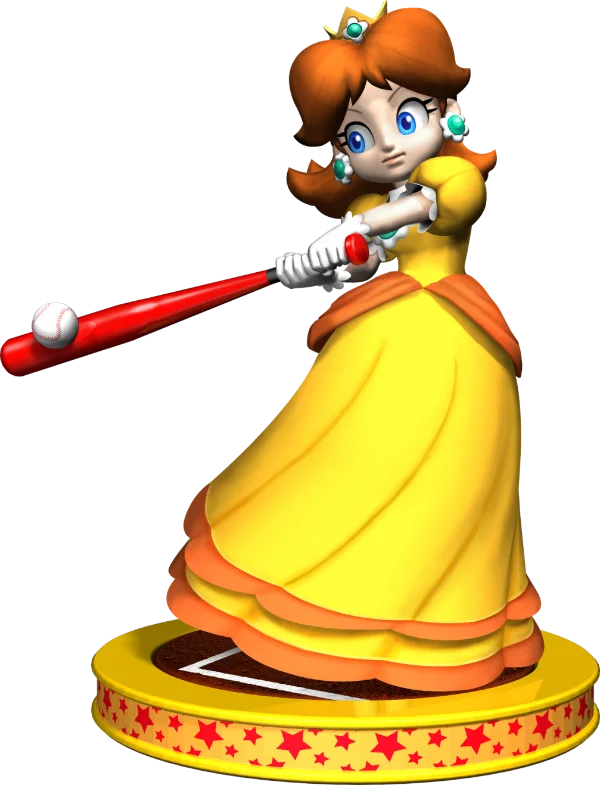


Notable Firsts
- Toad — first time playable in a board game in Mario Party. Previously he’d been the friendly Star Space attendant in every MP1-4. Now both roles co-exist (a separate non-playable Toad still attends Star Spaces).
- Boo — first playable Mario Party appearance. Boo had been the coin/Star-stealing NPC since the first game. Now playable, with no diminished role for NPC Boos.
- Koopa Kid — the first member of Bowser's minions ever made playable in a Mario Party board. Branded as “Mini Bowser” in the PAL release.
- Donkey Kong — removed from main roster. Now the host of DK Spaces, which trigger positive events. He’s unlockable in Super Duel Mode only.
Story Mode & Card Party Restrictions
The three new characters (Toad, Boo, Koopa Kid) are not playable in Story Mode or Card Party. Story Mode reserves Toad as the player’s partner role; Koopa Kid is the antagonist; and Boo is locked out for narrative consistency.
Tag Teams
Mario Party 5 introduces Tag Teams in Party Mode — a new 2-vs-2 Team Match variant where players choose teammates before the game starts. Teams share coins, can pass items to each other, and use joint Capsule strategy.
Team Match Rules
- Two teams of two players each (any character combination)
- Shared coin pool within each team (or independent, depending on settings)
- Mini-game results contribute to team total — victories split coins among teammates
- End-of-game bonus Stars award to the highest-scoring team
- Allows for completely new strategic dynamics: trap your opponent’s teammate, capsule-buff your own partner, coordinate trick-shot Star purchases
Tag Teams is one of the most cooperative variants the Mario Party series had attempted up to this point. It would inspire similar team-play features in later entries.
The Star Guards
The Star Guards are the protectors of the Dream Depot and the hosts of Mario Party 5’s six game modes. Eagle-eyed Mario fans will recognise them immediately: these are the Star Spirits from Paper Mario (2000), returning in their Mario Party debut. Their seven unique designs and personalities translate directly from their Paper Mario roles.


The full Paper Mario cast of seven Star Spirits became, here in MP5, the Star Guards. Their cameo is one of the deeper Easter eggs for fans of Nintendo’s 64-bit RPG. Each retains their original personality and stylistic distinctness from Paper Mario.
Boards
Seven dream-themed boards in total. Six default boards from the standard six-Star-Guard pairing, plus the unlockable Bowser-themed final board. Each is built from a different type of dream.
| Board | Theme & Signature Mechanic | Status |
|---|---|---|
| Toy Dream | Built from the dreams of toys. Light-blue checkered platform among clouds, populated by toy trains, ships, presents, a robot and toy soldiers. A toy train shuttles between the bottom and top sections of the board, with passengers able to jump on board and collect coins ejected from the funnel. | Default |
| Rainbow Dream | Built from the dreams of rainbows. Five floating clouds suspended above the clouds: cloudy, rainy, sunny, snowy, plus a central start space. Rainbow bridges between clouds change with the weather. Weather-themed events on each cloud. | Default |
| Pirate Dream | Built from the dreams of pirates. Multiple wooden ship platforms with cannons, crow’s nests and treasure chests scattered around. The ship rotates between sections of the board. | Default |
| Undersea Dream | Built from the dreams of the sea. Underwater seabed paths between coral and shipwrecks. Cheep-Cheep schools, octopuses and Mr. Blizzard appear as events. | Default |
| Future Dream | Built from the dreams of the future. Sci-fi cityscape with floating roads, neon lights, conveyor belts. UFO transports between sections. | Default |
| Sweet Dream | Built from the dreams of candy. Donut bridges, candy mountains, soft drink rivers, ice cream cone towers. The entire board is edible aesthetics. | Default |
| Bowser Nightmare | The seventh, unlockable board. Built from a nightmare. Lava pits, twisted fortress architecture, Bowser walks the board. The endgame challenge. | Unlockable (clear 4 of 6 boards in Story Mode) |
Story Mode Boards
In Story Mode, the seven boards are modified to smaller layouts focused on duels against the Koopa Kids. Each is a condensed version of the main board with adjusted Star/coin economies for the 15-turn campaign structure.
Spaces
Mario Party 5’s spaces fall into three groups: Normal Spaces (the basic colour-coded board events), Capsule Spaces (triggered by thrown capsules), and Other Spaces (special interactive board features).
Normal Spaces
| Space | Effect |
|---|---|
| Blue Space | Gain 3 coins. On the last 5 turns, the bonus roulette may double this |
| Red Space | Lose 3 coins. On the last 5 turns, the loss may be doubled |
| ? Space | Triggers a board-specific event. Often hosted by Klevar with a random outcome — some helpful, some hostile |
| ! (Happening) Space | Triggers a specific board-themed event — the toy train, weather change, ship rotation, etc. |
| Bowser Space | Triggers a Bowser event: Bowser Revolution (coin redistribution among all players), Bowser Mini-game, Bowser Shuffle (random position swap), or other malicious events |
| DK Space | New for MP5. Triggers a positive Donkey Kong event — receive coins, items, or other beneficial outcomes. DK is the host of these spaces. |
| Star Space | Exchange 20 coins for 1 Star. Relocates after each Star is purchased |
Capsule Spaces & Other Spaces
When a player throws a capsule on the board, the destination becomes a Capsule Space labelled with that capsule’s icon. Any player who lands on it triggers the capsule’s effect. Each capsule type leaves a distinct visual marker on the board until activated.
Other special spaces include the Battle Space (players pool coins into a winner-take-all pot for a mini-game), the Duel Space (forces a one-on-one duel between the lander and an opponent), and the Bank Space (passing players deposit 5 coins; landing on it claims the pot).
The Capsule System
Mario Party 5’s headline new mechanic. The Mushroom items of MP4 are replaced with 28 unique Capsules across four event categories. Capsules are obtained for free by passing capsule machines, can be thrown up to 10 spaces ahead as traps/buffs, or activated on yourself for a coin fee.
Move Event Capsules
Modify movement on the current or next turn:


| Capsule | Effect | Cost |
|---|---|---|
| Mushroom | Roll 2 dice blocks (2-20 movement). Matching dice = 10 bonus coins (30 for double 7s) | 5 coins |
| Super Mushroom | Roll 3 dice blocks (3-30 movement). Matching dice = 30 bonus coins (50 for triple 9s) | 15 coins |
| Cursed Mushroom | Target opponent rolls only 1-5 next turn. Cruel debuff | 10 coins |
| Warp Pipe | Swap places with another player on the board | 10 coins |
| Flutter | Fly past a small obstacle (Wiggler, etc.) without paying coins | 10 coins |
Coin Event Capsules
Affect the lander’s coin balance — stealing, giving, or transferring coins:


- Klepto — steal 5 coins from the lander when triggered
- Coin Block — lander earns coins based on dice roll
- Bubble — lander loses 5-10 coins to the bubble effect
- Goomba — steal coins
- Bullet Bill — take a chunk of coins from the lander
- Bob-omb — explode, lander loses coins (massive)
- Spiny — pokes the lander for 5 coins
- Hammer Bro, Paratroopa, Piranha Plant, Koopa Bank, Wiggler — various coin-themed events
Capsule Event Capsules
Affect the capsule system itself — swap, steal, or modify capsules:
- Kamek — shuffles all players’ capsules
- Lakitu — picks up other capsules on the board
- Magikoopa — swap your capsules with an opponent’s
- Mr. Blizzard — freezes the next opponent’s capsule
- Ukiki — steals an opponent’s capsule
Special Event Capsules
The high-value, game-altering capsules:



- Bowser Capsule — calls Bowser for a malicious event on the lander
- Miracle Capsule — triggers a rare positive event (free Star, coin windfall, etc.)
- Chance Capsule — spin a roulette to trigger a random event (gambling). Outcomes range from coin swaps to Star swaps
- Tweester Capsule — launches the lander to a random location on the board
- Duel Capsule — forces a 1-vs-1 duel mini-game with the lander
- Chain Chomp, Bone — additional special-event capsules
The total of 28 distinct capsules creates a far richer strategic layer than MP4’s 10-item system. There are also two unused capsules in the game’s data: the DK Capsule and the VS Capsule, both visible via data-mining but never accessible in normal play.
Mini-Games
Mario Party 5 features over 60 brand-new mini-games, all original to MP5 with no recycling from MP4. They span the standard Mario Party categories plus several new MP5-exclusive types:
4-Player Mini-Games
The classic free-for-all. Examples: Frozen Frenzy, Dodge Bomb, Chomp Romp, Tube It or Lose It, Countdown Pound.
1-vs-3 Mini-Games
Asymmetric balance. Examples: Chimp Chase (Peach's signature), Bill Blasters (Toad's signature), various stealth/escape games.
2-vs-2 Mini-Games
Team play. Examples: Dinger Derby, Berry Basket, Button Mashers, Wind Wavers.
Battle Mini-Games
Coin-stake battles. Players ante coins into the pot, winner takes all.
Duel Mini-Games
One-on-one combat games. Used by the Duel Capsule, Duel Space, or after passing another player. Custom Mazed & Confused is the signature duel game.
Bowser Mini-Games
Triggered by Bowser Spaces or the Bowser Capsule. Bowser tries to bankrupt the cast. Examples: Bowser’s Bigger Blast, themed punishment minigames.
Card Party Mini-Games
Exclusive to the new Card Party mode. Mini-games where the result captures territory cards on a 5×5 grid.
Super Duel Mode Mini-Games
Custom machine combat plays out as a series of real-time arena mini-games. The full Super Duel mode is essentially a sub-game ecosystem of its own.
Story-Exclusive Mini-Games
Boss-character themed mini-games. Each of the three Koopa Kids has signature challenges in their boards, plus the final Bowser confrontation.
The mini-game roster of 60+ is sometimes considered the strongest of any Mario Party by fan polls — the depth and variety here was a notable jump from MP4’s 62.
Development Staff
Mario Party 5 was developed by long-time Mario Party studio Hudson Soft, the primary developer of the series until Mario Party 9. CAProduction co-developed.
- Developer: Hudson Soft (with CAProduction)
- Publisher: Nintendo
- Director: Kenji Kikuchi — also directed Mario Party 1, 2, 3, 4, and now 5 (his fifth consecutive Mario Party as director)
- Planning Advisor: Shuichiro Nishiya — would go on to direct Mario Party 6 onwards. MP5 was his preparatory role under Kikuchi
- Composer: Aya Tanaka — her Mario Party 5 soundtrack stands out for its orchestral feel, with synthesized instruments approximating a professional symphony. The harpsichord-heavy compositions give MP5 a distinctly more sophisticated audio aesthetic than MP3 (Shimakura) or MP4 (Shimakura). Sequels MP6 and MP7 would step further toward orchestration as the GameCube generation progressed
- Voice Cast: Charles Martinet (Mario/Luigi/Wario/Waluigi), Jen Taylor (Peach/Daisy), Kazumi Totaka (Yoshi)
Reception & Sales
Mario Party 5 received mixed-to-positive reviews from critics on launch. The new Capsule system was praised for adding strategic depth, but the formula’s familiarity drew criticism from outlets that had reviewed the previous four entries.
Critic Reactions
- Game Informer — Andrew Reiner gave a second opinion citing coin redistribution as a frustration: “you could win every mini-game and collect the most coins and still end up in last place.”
- GameSpot — Ryan Davis: “If you bought Mario Party 4 last year, Mario Party 5 is hard to recommend.” Noted lack of formula evolution. Also commented that the presentation was “starting to seem a bit antiquated” with character models unchanged from MP4.
- GameSpy — praised the mini-game depth: “the sheer volume can keep you compelled. If only you didn’t have to deal with all that BS in-between.”
- Critical consensus — mini-games rated highly; the board game itself rated more modestly. Multiplayer remained the chief draw.
Sales
Mario Party 5 sold approximately 2.6 million copies worldwide over its lifetime, comparable to MP4’s 2.7 million. The annual Mario Party release cadence on GameCube was now firmly established, and MP5’s strong sales paved the way for MP6 (2004), MP7 (2005) and MP8 (2007).
Regional Differences
Several differences exist between the NTSC (North America/Japan) and PAL (Europe/Australia) releases:
- Koopa Kid renamed to “Mini Bowser” in the PAL version (same rename applied as in Mario Party 4 PAL)
- Winning/tie text animations differ — NTSC: “Draw” letters disappear by jumping one by one. PAL: letters get flattened one by one
- When a single player wins a mini-game, PAL displays the character’s name and “won” on separate lines; NTSC keeps them together. This convention extends to Mario Party 6 and 7
- PAL: “won” text appears by growing instead of spinning like in NTSC
- Various small UI text and label adjustments throughout the menus
Pre-release & Cut Content
Several differences between pre-release builds and the retail game:
- Pre-release title screen — different from the final. Featured playable characters running around the screen. The final title screen has more of a static branded look. (The pre-release title screen layout is similar to the file select screen used in the final game.)
- Pre-release character select screen — also significantly different in layout from the final retail version
- Minigame announcement font — originally used the orange-to-purple gradient color from Mario Party 4. Final game uses a simple shiny pink
- Two unused capsules exist in the game’s data: the DK Capsule and the VS Capsule. Both have functional sprite assets but are never accessible in normal play. Speculation is that the DK Capsule was originally meant to allow DK’s playable return before the design pivoted
- Debug menu — hidden in the game’s data, accessible via Action Replay codes. Visually identical to the MP4 debug menu but with MP5 mini-game names
- Various pre-release animations and unused mini-game prototypes have been data-mined
Trivia
- First Mario Party with a playable Bowser minion — Koopa Kid is the first member of Bowser's minions ever made playable in a Mario Party board game. Toad and Boo (NPCs in MP1-4) also become playable for the first time
- Donkey Kong is removed from the main playable roster — the first and only mainline Mario Party to do this. He’s relegated to NPC host of DK Spaces, with playable status only via Super Duel Mode unlock
- The Star Guards are the Star Spirits from Paper Mario (2000) — Eldstar, Mamar, Skolar, Muskular, Misstar, Klevar, and Kalmar. This is a major Easter egg for Paper Mario fans
- Composer Aya Tanaka’s orchestral-leaning soundtrack is distinct from other Mario Party games — the harpsichord-heavy compositions give MP5 a uniquely sophisticated audio identity
- The promotional website parodied the 2004 US Presidential election campaign, presenting Mario as a presidential candidate with Luigi (Veep), DK (Defense), Wario (Treasurer), and a rival Bowser ticket with Koopa Kid, Boo and Waluigi
- Super Duel Mode is essentially a second game inside MP5 — a custom mech-building battle system that Nintendo never replicated in any subsequent Mario Party
- The Capsule system from MP5 would be evolved in MP6 (Orb system) and refined further in MP7
- The Card Party mode (a tactical card-meets-mini-game hybrid) is unique to MP5 and never appeared in another entry
- Kenji Kikuchi directed Mario Party 1, 2, 3, 4 and 5 — his final Mario Party as director. MP6 onwards would be directed by Shuichiro Nishiya (planning advisor on MP5)
- The game features over 60 mini-games, none recycled from MP4. The mini-game depth here is considered by some fans to be the strongest of any Mario Party
- MP5’s Bonus Stars can flip the final game state — the Capsule Star, Happening Star, Coin Star and Mini-Game Star can each transform an obvious loser into a winner. This was a divisive design choice critics noted but many players defended
- Two unused capsules (DK Capsule, VS Capsule) sit in the game’s data — fully sprited but never accessible. The DK Capsule’s existence strongly hints at an earlier design where DK was meant to return as fully playable
- The Dream Depot premise was unique to MP5 — no other Mario Party uses the “land in the night sky where dreams converge” framing
- This is the last Mario Party fully composed by a single composer until later entries — Aya Tanaka handled the entire score solo
Videos
The original North American TV commercial — part of the 2003 GameCube launch marketing push for Mario Party 5.
Reference / Information
Sub-pages and guides for Mario Party 5.
Media / Downloads
Box art gallery and screenshots for Mario Party 5.