
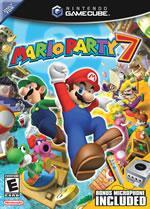
Mario Party 7
Overview

Mario Party 7 is the seventh main entry in the Mario Party series and the fourth and final entry on the Nintendo GameCube, releasing in North America on 7 November 2005. After MP4, MP5 and MP6 in three consecutive years, MP7 continued the annual cadence one more time before the series moved to Wii with MP8 in 2007.
The headline new feature of MP7 is the brand-new 4-Team Battle mode supporting up to EIGHT players simultaneously. Two players share a single controller (one taking even turns, the other odd turns), allowing four teams of two characters each. No other Mario Party before or since has supported eight players locally.
The premise: Toadsworth has chartered the luxury cruise ship MSS Sea Star and invited Mario and his closest friends on a world tour — everyone except Bowser. Furious at being snubbed, Bowser crashes the party at every port. Each board is a cruise destination, themed around a real-world locale (Venice, Pagoda Peak, Egyptian pyramids, etc.).
The cast grows to 12 playable characters with two newcomers: Birdo and Dry Bones, both unlockable for 1,000 Cruise Mileage Points each at the Duty-Free Shop. Conversely, Koopa Kid is removed from the playable roster (back to non-playable). The Orb mechanic is restructured into five categories, with new Character Orbs exclusive to default partner pairs.
Story
“TOADSWORTH: Mario and his friends are always busy fighting evil and saving the world, so I offered him a chance to come on a cruise around the world! Splendid! But in doing so, I apparently made that rogue Bowser somewhat angry…”
“BOWSER: This makes me MAAAAD!! GRRRAAAA!! They’re going on a vacation… AND NOT TAKING ME! They want a fun vacation? I'll give them a fun vacation! And by that, I mean NO FUN AT ALL! I'll find those chumps and wreck their good times! Bwa ha ha ha!”
Mario takes his morning walk and bumps into Toadsworth, who tells him about the upcoming luxury cruise aboard the MSS Sea Star. The cast assembles at the dock and boards the ship for a worldwide vacation. But as the cruise reaches each port, Bowser has been there first — he’s transformed each beautiful destination into a chaotic mess. Mario and friends step ashore to throw a Mario Party at each port, collecting Stars and putting things right.
Toadsworth narrates the framing story between boards, with cruise-themed transitions. The journey culminates at Bowser’s Enchanted Inferno! — the final board, where Bowser tries one last time to wreck the vacation. The framing of MP7 as a worldwide cruise tour is one of the most narratively coherent Mario Party stories.
Gameplay
Mario Party 7 retains the established Mario Party loop with several MP7-specific layers:
- Roll the Dice Block — tap A to stop a 1-10 roll. Move that many spaces.
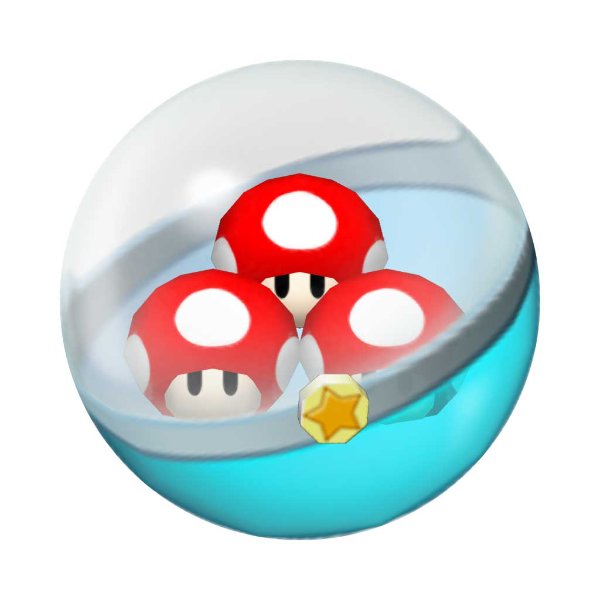
- Orb Huts — buy Orbs for coins (Koopa Troopa’s shops). Each player holds up to 3 Orbs at a time. The system is refined from MP6’s 4-colour system into 5 distinct categories.
- Throw/use Orbs — place trap Orbs on board spaces or activate Self Orbs immediately.
- Buy a Star — each board has different Star acquisition rules (some standard 20-coin, others escalating prices, others completely unique mechanics like Chain Chomp Star theft).
- Mini-game phase — based on space-colour split (4-player / 1-vs-3 / 2-vs-2 / Bowser).
- Cruise Mileage Points accumulate after each game in any mode — this persistent meta-currency unlocks characters, boards in some modes, and Duty-Free Shop items.
- End of game — bonus stars (Minigame, Action, Orb, Shopping, Red Star, etc. — 6 possible bonus stars total, up from MP6’s 4)
Key MP7 mechanic changes from MP6
- Star Space never appears under a player — a quality-of-life change preventing trivial wins
- No Chance Time — removed for the first time in numbered Mario Party
- Tag Battle teammates move together — the only Mario Party where Tag Battle teams share movement rather than acting independently
- Battle Mini-Game results integrated — no unique “Battle Results” screen; coins are simply allocated via the regular results screen
8-Player Mode
The headline mechanical innovation of MP7. The new 4-Team Battle mode supports up to EIGHT players simultaneously, a Mario Party first that has never been repeated in any later entry.
How 8-Player Mode Works
- Four teams of two players each: Team Dolphin, Team Seagull, Team Tuna, Team Mollusk (marine-animal themed)
- Two players share a single GameCube controller — one player handles odd turns, the other handles even turns within their team
- Teams share Orbs, Stars, and coins — complete cooperative play
- Mini-games adapt to support up to 8 players simultaneously (mostly in 4-vs-4 formats)
- The four teams compete in the same 6 boards as Battle Royale and Tag Battle modes
Why this matters
Hudson Soft pushed the GameCube’s 4-controller limit to its theoretical maximum by inventing the share-a-controller mechanic. It transforms Mario Party 7 from a 4-player party game into a genuinely large-group experience. While the mechanic was popular at launch, the controller-sharing logistics meant Nintendo never revisited it in MP8 (Wii) or any later entry — the rise of the Wii Remote made local 8-player less practical.
Cruise Modes
Mario Party 7 has six modes, all framed around the cruise theme. Toadsworth hosts the main menu and guides the player through mode selection.
Party Cruise
The standard mode. Up to 4 players (or 8 in 4-Team Battle). 10-50 turns, settings include rule type (Battle Royale / Tag Battle / 4-Team Battle), bonus stars enabled, board choice, difficulty.
Solo Cruise
Single-player story campaign. Play through all six boards with simplified, modified rules. Each board has its own Star-acquisition twist for Solo (some boards play very differently in Solo vs Party).
Deluxe Cruise
A special variant of Party Cruise with extra rule modifications, unlockable boards, and bonus minigames. Functionally a hard-mode Party Cruise.
Minigame Cruise
Pure mini-game playground. Free Play, Mini-Game Tournament, and the new Buddy Battle (2-player coop mini-game challenges).
Duty-Free Shop
The persistent unlock store. Spend accumulated Cruise Mileage Points to unlock characters (Birdo 1000 CMP, Dry Bones 1000 CMP), bonus boards, music tracks, sound test, and gallery items. The meta-progression hub.
Control Room
Game options. Adjust Rumble, Sound Settings (stereo/mono/surround), Mic Settings (the GameCube Mic from MP6 returns — toggle on/off; enabling triggers Mic minigames in Party Cruise plus Mic Spaces on the boards). Includes Mic Test.
Duty-Free Shop & Cruise Mileage Points
The Duty-Free Shop is MP7’s persistent meta-progression hub. Hosted by Toadsworth, it’s where all your accumulated Cruise Mileage Points get spent.
What CMP unlocks
- Birdo — 1,000 Cruise Mileage Points
- Dry Bones — 1,000 Cruise Mileage Points
- Bonus boards — some boards in Deluxe Cruise unlock via CMP spending
- Music tracks — sound test, jukebox of MP7 soundtrack
- Mini-game unlocks — some games require CMP rather than just playing them
- Gallery items — concept art, artwork pieces, and other collectible visual content
How you earn CMP
Cruise Mileage Points accumulate after every completed game in any mode. Standard play awards baseline CMP; winning, completing bonus objectives, or playing on harder difficulties multiplies the reward. This is the evolution of MP6’s Star Bank meta-system: where MP6 used Stars as the spend-currency, MP7 uses dedicated Cruise Mileage Points that don’t double as in-game Stars.
Characters
Mario Party 7 features 12 playable characters: 10 returning from MP6 plus 2 newcomers. Koopa Kid is removed from the playable roster and reverts to non-playable status.




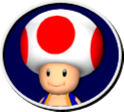



Notable Firsts
- Birdo — first ever appearance in the Mario Party franchise. She had been in Mario Tennis, Mario Kart: Double Dash, but this is her MP debut. Permanently paired with Yoshi.
- Dry Bones — first ever appearance in the Mario Party franchise. Also a major Mario Kart: Double Dash character. Paired with Boo.
- Koopa Kid removed — after his debut as a playable in MP5 and continued in MP6, MP7 reverts him to non-playable status. He hosts board events on Bowser’s Enchanted Inferno!
- Default Partners — a brand new MP7 mechanic. Each character has a designated partner with whom they share a unique Character Orb (more in next section). The 6 partnerships are canonical for MP7.
Other Characters
Toadsworth hosts the entire game. Bowser antagonises every board. Koopa Master sells Stars on Pagoda Peak. Donkey Kong, Koopa Troopa, Flutter, and various non-playable Mario characters appear in board events.
Default Partners
One of MP7’s defining innovations: each character has a permanent designated partner with whom they share a unique Character Orb. The 6 pairings:
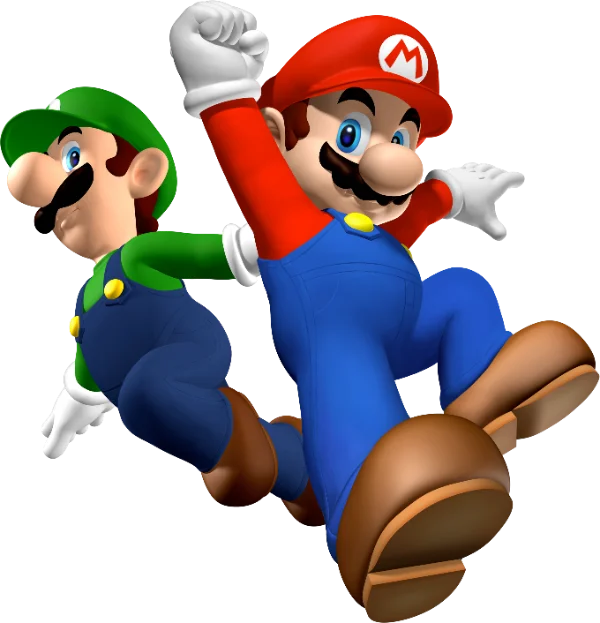


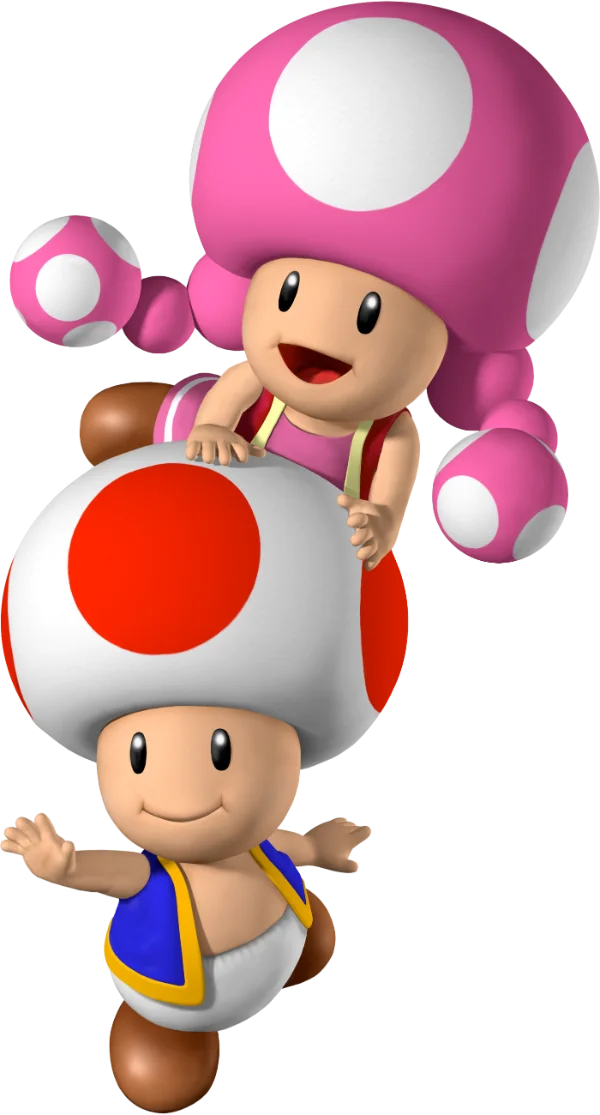

The genius of the system: in Tag Battle and 4-Team Battle, if two non-default partners team up, each can still obtain their own Character Orb from the shop, but only the designated character can use that orb. For example, if Mario pairs with Peach, Peach can still buy the Flower Orb — but she’s the only one who can activate it.
The Character Orb mechanic introduces a new strategic layer: choose partnerships that complement each other’s Character Orbs (Flower Orb defense + Fireball Orb offense, e.g.), rather than picking favourites.
Team Names
Mario Party 5 and 6’s personalised team names (e.g. “Mario Bros.” or “Cutest Couple”) do not return in MP7. Instead, teams are simply identified by marine animals, matching the cruise theme:
| Team | Used In | Japanese Name |
|---|---|---|
| Team Dolphin | Tag Battle and 4-Team Battle (Team 1) | イルカチーム (Iruka Team) |
| Team Seagull | Tag Battle and 4-Team Battle (Team 2) | カモメチーム (Kamome Team) |
| Team Tuna | 4-Team Battle (Team 3) | おさかなチーム (Osakana Team) |
| Team Mollusk | 4-Team Battle (Team 4) | かいがらチーム (Kaigara Team) |
The shift from named team relationships to marine animals reflects MP7’s much more theme-coherent approach — everything ties to the cruise framing, including the team naming.
Boards
Six cruise-themed boards, each modelled on a real-world location the MSS Sea Star visits. Each has distinct rules for Party Cruise vs Solo Cruise mode.
| Board | Theme | Party Cruise | Solo Cruise |
|---|---|---|---|
| Grand Canal | Venice, Italy — gondolas, canals, bridges | Buy Star for 20 coins at a set location; Star Space then moves | First to 2 Stars wins |
| Pagoda Peak | Asian mountain pagoda | Reach the peak. Koopa Master sells Stars with escalating prices: 10 → 20 → 30 → 40 coins per buy | Trade 100 coins to Koopa Master at the peak |
| Pyramid Park | Egyptian pyramids, Bowser Sphinx, Chain Chomps | Pay to ride Chain Chomps and steal Stars from opponents | Retrieve the stolen Star and return to the Bowser Sphinx |
| Neon Heights | Las Vegas-style neon city | 3 random chests placed on the board. Open one for 10 coins (or the Lakitu Orb) — contents: a Star, 20 coins, or a Bob-omb that sends you back to start | First to 3 Stars wins |
| Windmillville | Dutch countryside — windmills, tulips | Compete to place coins into windmills to claim Stars; whoever invests the most into a windmill owns it | Various Star-collection rules |
| Bowser’s Enchanted Inferno! | Bowser's fortress — lava, dark magic, fire spirits | The final board. Bowser actively walks around. Reaching Bowser loses a Star. Maximum chaos. | Endgame challenge: defeat Bowser by surviving and stealing |
The international cruise framing makes MP7’s boards the most narratively coherent of any Mario Party. Each is recognisable as a real-world cruise destination, with locale-appropriate mechanics.
Spaces
| Space | Effect |
|---|---|
| Blue Space | Gain 3 coins (may double in last 5 turns via roulette) |
| Red Space | Lose 3 coins (may double in last 5 turns) |
| Green Space (new for MP7) | A neutral “Action Space” that triggers Action Star tracking. Earning the most Green Spaces grants the Action Bonus Star at game’s end. |
| ! Happening Space | Triggers a board-specific event — Chain Chomp ride, windmill claim, sphinx event, etc. |
| ? Space | Triggers a random event hosted by Toadsworth, Koopa Kid or another character. |
| Bowser Space | Triggers a Bowser event (renamed “Bowser Time” in NTSC; “Bowser Party” in PAL): Bowser Revolution, mini-game, item theft, position swap, etc. |
| DK Space | Triggers a positive Donkey Kong event — coins, items, beneficial outcomes. |
| Mic Space | Activated only when Mic Settings are enabled. Triggers a microphone-controlled event using the GameCube Mic. |
| Star Space | Star purchase point. Rules vary per board. |
| Duel Space | Triggers a 1-vs-1 duel mini-game. |
| Orb Space | An Orb has been placed by a player. Lander triggers the Orb’s effect. |
The Orb System
MP7’s Orb system is restructured from MP6’s 4-colour categorisation into 5 distinct categories based on use behaviour:
1. Self Orbs (Green Shell)
Used on the player who activated them. Examples below:


- Mushroom Orb (all boards) — roll 2 dice blocks
- Super ’Shroom Orb (all boards except Windmillville) — roll 3 dice blocks
- Slow ’Shroom Orb — dice block moves slowly so you can stop exactly where you want
- Metal Mushroom Orb — immune to opponent traps for the turn
- Flutter Orb (Grand Canal, Bowser’s Enchanted Inferno) — fly directly to the Star
- Cannon Orb (Pagoda Peak only) — fires you up to the upper board section
- Lakitu Orb (Neon Heights only) — Lakitu brings you a treasure chest (potential Star)
- Snack Orb (Pyramid Park only) — protects from Chain Chomp Star theft for 3 turns
2. Thrown Orbs (Trap orbs placed on board spaces)
Throw onto a space ahead of you; lander triggers the effect. Examples: Bandit (steals coins), Spear Guy (knocks lander back), Pink Boo (steals Star), Spiny (poison), Zap (stuns), Bob-omb (explosion). 8+ Thrown Orbs total.
3. Roadblock Orbs (block opponents’ movement)
Placed on a space; halts opponent movement when reached. Examples: Thwomp Orb, Piranha Plant Orb, Mr. Blizzard Orb.


4. Character Orbs (Blue Shell)
Exclusive to specific character pairings. Always 15 coins, available on all boards. See next section for full breakdown.
5. Other Orbs
Automatically triggered when certain conditions are met. Includes the Koopa Kid Orb (triggers a Koopa Kid event) and the Toady Orb (triggered when stealing from Bowser).
Character Orbs
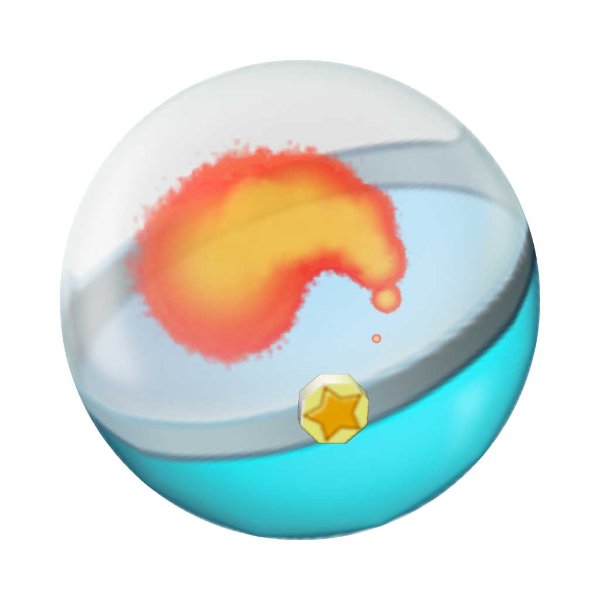
The unique-to-default-partners orbs. Each is colored blue, costs 15 coins, and is available on all boards. Only the designated character can use the orb (though both partners can buy from the shop in some configurations).


| Orb | Pair | Effect |
|---|---|---|
| Fireball Orb | Mario & Luigi | Hit an opponent in front of you and steal their coins |
| Flower Orb | Peach & Daisy | Spaces ahead of you change to flower spaces. You ignore traps and gain 3 coins per space moved |
| Egg Orb | Yoshi & Birdo | Eat character spaces and symbols in your path; they become eggs that become orbs after moving |
| Vacuum Orb | Wario & Waluigi | Spin a wheel; take that number of coins from opponents |
| Magic Orb | Boo & Dry Bones | Turn invisible (opponents can’t target you) and double Dice Block rolls for 2 turns |
| Triple ’Shroom Orb | Toad & Toadette | Roll the Dice Block twice (double dice) for 3 turns |
The Character Orbs are MP7’s most distinctive design element — they personalise the gameplay by making each pair feel mechanically distinct. Pair choice in 8-player mode becomes meaningful strategy.
Mini-Games
Mario Party 7 features over 80 brand-new minigames (Hudson Soft’s biggest mini-game roster yet for MP), and notably this is the first Mario Party to use the unhyphenated form “minigames” instead of “mini-games”. Categories:
- 4-Player Minigames — free-for-all chaos for 4 individuals
- 1-vs-3 Minigames — asymmetric one against three
- 2-vs-2 Minigames — team play
- Battle Minigames — ante-into-pot, winner takes all (no unique “Battle Results” screen — a series first)
- Bowser Minigames — punishment games on Bowser Spaces
- DK Minigames — positive Donkey Kong games
- Duel Minigames — one-on-one
- 8-Player Minigames — brand new for MP7. Roughly 4-vs-4 team minigames designed for the 4-Team Battle mode
- Mic Minigames — voice-controlled (require the GameCube Mic from MP6)
- Solo Minigames — single-player challenges for Solo Cruise
Notable Minigames
- Snow Whirled — Luigi's signature, snow-themed
- Catch You Later — mini-game where players catch falling characters
- Pearl Plunder — underwater pearl-collecting
- Various boat-themed mini-games — tying into the cruise narrative
Series Firsts in MP7
Mario Party 7 introduces several conventions that became firsts for the franchise:
- First Mario Party to spell “minigames” (one word) instead of “mini-games”. This convention has continued in every Mario Party since.
- First MP without a unique “Battle Results” screen after battle minigames. Coins are now allocated through the standard minigame results display.
- First MP with more than three possible Bonus Stars — MP7 has six (Minigame, Action, Orb, Shopping, Red, and one more), versus MP6’s 4.
- First MP to not directly show character placements (besides 1st) during the award ceremony.
- First numbered MP to lack Chance Time and Chance Time Spaces. This was a major design change — Chance Time had been a Mario Party staple since MP1.
- First numbered MP where a Star Space cannot appear directly where a player is standing. A quality-of-life fix.
- Only MP where Tag Battle teammates move together instead of moving independently. All other Mario Party games have Tag Battle teams move separately and then reunite. MP7’s shared-movement is unique.
- First and only MP with 8-player support via 4-Team Battle. No other Mario Party uses this mechanic.
Development Staff
Mario Party 7 was developed by Hudson Soft, the primary developer of all mainline Mario Party titles before MP9.
- Developer: Hudson Soft
- Publisher: Nintendo
- Director: Shuichiro Nishiya — his second Mario Party as director (after MP6). He would continue directing MP8, MP9, and MP10 — establishing the post-Kikuchi Mario Party era
- Composers: Hironobu Yahata and Shinya Outouge — the same composer duo as MP6. The MP7 soundtrack is musically continuous with MP6’s style, leaning electronic with some orchestral flourishes
- Voice Cast: Charles Martinet (Mario/Luigi/Wario/Waluigi), Jen Taylor (Peach/Daisy/Toad), Kazumi Totaka (Yoshi)
Reception & Sales
Mario Party 7 received mixed reviews on launch. While the 8-player mode and cruise framing were widely praised, the franchise familiarity was once again a critical concern.
Critical Reactions
- 8-Player 4-Team Battle was almost universally praised as a creative use of GameCube’s hardware limits. Reviewers appreciated the genuine innovation.
- Birdo and Dry Bones additions were welcomed by fans of those characters — Mario Kart: Double Dash had already established them as fan favourites.
- Series fatigue remained a critical concern — fourth Mario Party on GameCube in four years was a tough sell for some reviewers.
- Removal of Chance Time was controversial — some fans missed the chaotic gambling element; others appreciated the more skill-based pacing.
- Reviews of the new Cruise theme and Character Orb system were generally positive — the narrative coherence was a strength.
Sales
Mario Party 7 sold approximately 2.4 million copies worldwide over its lifetime, slightly below MP4-6’s 2.5-2.7M range. The GameCube Mario Party tetralogy (MP4-7) combined to sell over 10 million copies, confirming the platform’s status as the Mario Party home of its era.
Regional Differences
Several differences between regional releases:
- NTSC: “Bowser Time” vs PAL: “Bowser Party” — the Bowser Space event banner text differs between regions.
- PAL: character name and “Won!” appear on separate lines (as in MP5 and MP6 PAL). NTSC keeps them together.
- PAL: “won” text grows instead of spinning (as in MP5/6 PAL).
- Japanese version uses a female mini-game announcer (the same one from MP4 and MP5 JP). Western versions use a male announcer.
- Various small UI and text tweaks throughout
Pre-release & Cut Content
Several pre-release and unused content findings:
- Unused title screen — the early MP7 title screen shows Mario alone in a different layout. Accessible only via Action Replay codes in the retail game.
- Debug minigame menu — an updated debug menu inherited from MP1-3’s debug system, accessible via Action Replay codes. Lists all minigames with their internal IDs.
- Animation debug — a cube-based animation debug system similar to the one used in MP5.
- Various pre-release texture variants and unused animation frames found in the retail ROM
- Early development screenshots and trailers show different UI layouts and slightly different Character Orb visual designs that were refined for retail
Trivia
- First and only Mario Party with 8-player support. The 4-Team Battle mode with shared controllers has never been repeated in any other entry.
- Birdo and Dry Bones’ Mario Party debuts. Both were Mario Kart: Double Dash characters; this is their first MP roster appearance.
- Koopa Kid removed from playable roster after his MP5-6 run. He reverts to non-playable, hosting Bowser-themed board events on the final board.
- The MSS Sea Star cruise theme is the most narratively coherent of any Mario Party setup. Every board is a real-world cruise destination.
- Default Partners and Character Orbs are MP7-exclusive mechanics — they personalise pair-play in a way no other Mario Party does.
- The marine-animal team names (Dolphin/Seagull/Tuna/Mollusk) ditch the personality-based team names of MP5/6 in favour of thematic coherence with the cruise framing.
- Shuichiro Nishiya’s second directorial outing — he’d directed MP6 and would direct every numbered Mario Party afterward.
- This is the last Hudson Soft Mario Party on GameCube. The series moved to Wii with Mario Party 8 in 2007, then to Nd Cube starting with MP9 (2012).
- The “minigame” one-word spelling debuts here and continues in every later Mario Party.
- The Mic from MP6 returns, with new Mic Spaces on boards and the Mic minigames migrating in from previous mode separations.
- Chance Time is removed for the first time in numbered Mario Party history. The gambling chaos was a divisive feature; MP7’s removal was a deliberate design pivot.
- The Cruise Mileage Points meta-currency is a step beyond MP6’s Star Bank — dedicated unlock currency separate from in-game Stars.
- Toadsworth is the main host — his most prominent Mario Party role. He had been a supporting character in Super Mario Sunshine and the Mario & Luigi series.
- Birdo’s Yoshi pairing in MP7 is the moment that permanently cements them as the canonical Mario universe couple — they’ve been paired in nearly every co-op Mario sports/party game since.
- The Hudson Soft GameCube Mario Party era (MP4-7, 2002-2005) is collectively considered by many fans to be the franchise’s strongest sustained period.
Videos
The original North American TV commercial — the 2005 marketing push for Mario Party 7, highlighting the 8-player cruise theme and new characters.
Reference / Information
Sub-pages and guides for Mario Party 7.
Media / Downloads
Box art gallery and screenshots for Mario Party 7.