
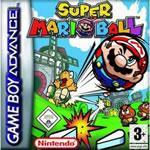

Mario Pinball Land
Overview
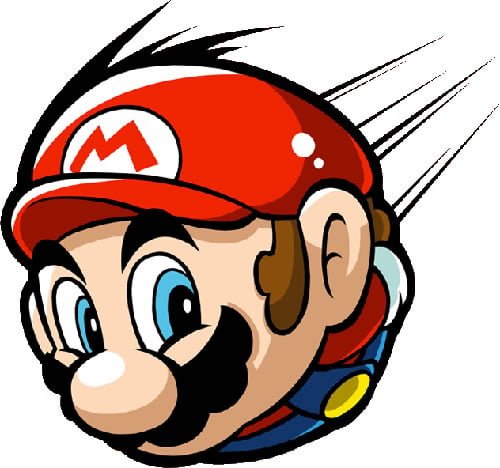
Mario Pinball Land (known as Super Mario Ball in Europe and Japan) is a 2004 Game Boy Advance pinball game with a Mario-flavoured twist: Mario himself takes the shape of a pinball and is fired around the playfield by the player using the GBA’s left and right shoulder buttons as flipper paddles. There’s no traditional Mario jumping or running — every movement is governed by pinball physics.
The game was developed by tiny UK studio Fuse Games, founded in September 2002 by Adrian Barritt and Richard Horrocks. The pair pitched a pinball concept to Nintendo of America in Seattle after building a demo of what they figured would be the first and last areas of the game. The deal was approved, and a team of just 5 people spent 18 months building the entire game — wrapping in June 2004.
The 5 stages are: the central Fun Fair hub, plus Grassy Greens, Frosty Frontier, Shifting Sands, and the Fiery Stage. Each main stage ends in a boss fight — Petey Piranha, Porcupuffer, King Tut, Big Boo (in the Fun Fair), and Bowser himself. Movement between stage areas works like a vertical Super Mario 64-style door system: gather enough Stars and the next door opens.
The game received mixed reviews on launch. Critics praised the visuals and the unique concept of fusing Super Mario and pinball, but criticised the difficulty, the playfield reset mechanic when Mario fell down between the flippers, and the relatively short length. IGN’s Craig Harris gave it 5/10, calling it “a graphically amazing title” let down by “flawed and annoying” gameplay decisions. The game has settled into cult-curiosity status — historically interesting as the start of Fuse Games’ long Nintendo pinball partnership that would later produce Metroid Prime Pinball and Pokémon Pinball-adjacent titles.
The Story
Princess in Peril!?
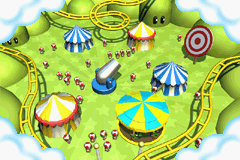
The story (lifted from the instruction booklet) opens at the Fun Fair, where Princess Peach has come to attend the unveiling ceremony for the new “Sky Cannon” — a transportation device that fires people across the kingdom to new destinations. The ceremony goes wrong almost immediately.
According to eyewitnesses, a pair of shady Goombas alter the Sky Cannon’s direction during the demonstration. The cannon misfires and Princess Peach is blasted clear across the kingdom into Bowser’s castle. Within moments, Bowser’s minions lock down the castle with Peach trapped inside.
Mario to the Rescue!
Without hesitation, Mario leaps into the same Sky Cannon to go after her. But there’s a problem: the cannon was designed for a special launching system. To fit inside, Mario must first be squeezed into a ball.
The Pinballer
Before Mario can ride the Sky Cannon, a special device called a “Pinballer” compresses him into ball form. The Pinballer is the in-universe explanation for the entire game’s premise — a Mario-shrinking machine that makes everything that follows physically possible.
The Goal: Four Star Keys
To get into Bowser’s castle, Mario must collect four Star Keys, each held by one of the four bosses guarding the four worlds beyond the Fun Fair. After collecting all four keys, Mario can challenge Bowser himself in the Fiery Stage to rescue the princess.
Gameplay

Mario Pinball Land is a pinball game with Super Mario adventure elements layered on top. The player controls Mario, who has been compressed into ball form. The L and R shoulder buttons trigger the left and right pinball flippers respectively, sending Mario flying across the playfield. There is no manual movement control — Mario rolls, bounces, and falls according to standard pinball physics.
Core Loop
- Launch ball: press A to fire Mario into play from the Sky Cannon launcher
- Hit objects: bumpers, ramps, enemies, and switches all award points when Mario contacts them
- Defeat enemies: hitting an enemy with enough force defeats it and drops coins, items, or Stars
- Open doors between areas: each stage has multiple sub-areas, separated by doors that require a number of Stars to open (just like the door system in Super Mario 64)
- Travel via the Sky Cannon: the Fun Fair hub gives access to the four main stages via different cannon launches
- Reach & defeat the boss at the end of each main stage to claim that stage’s Star Key
- Take all four Star Keys to the Fiery Stage to confront Bowser
Health & Failure
- Mario has 3 lives by default (each life is one ball in play)
- If Mario falls down the drain between the flippers, he loses a life
- When Mario falls in a sub-area beyond the starting area, he returns to the previous area — the enemies and objects of that previous area reset to their starting state. This playfield reset mechanic was the most controversial aspect of the game on launch
- 1-UP Mushrooms grant an extra life (an extra ball)
- Game Over occurs when all lives are lost
The Protective Pipe
At the start of each area, a blue Pipe appears between the two flippers, blocking the drain and preventing Mario from falling out. This grace period is time-limited — after a few seconds, the Pipe disappears and the standard drain risk returns. The Pipe item can also be collected mid-play to temporarily re-enable this protection.
Stars, Coins & Shops
- Stars: collected from defeating enemies, completing challenges, and breaking objects. Used to open doors between sub-areas
- Coins: the main currency. Used in Toad’s shop
- Toad runs a shop in a tent in the Fun Fair where Mario can purchase items (provided he has enough coins). Toad-pinball offers consumable power-ups
- Blue Coins unlock special minigames that award additional Stars
The Pinballer

The Pinballer is the in-universe device that compresses Mario into ball form. It’s the entire premise of the game’s existence, framed as a fictional in-fiction machine that makes pinball-Mario plausible.
How It Works
- The Pinballer is positioned next to the Sky Cannon at the Fun Fair entrance
- When Mario approaches the cannon, the Pinballer activates and physically squeezes him into spherical form
- Once compressed, Mario fits into the cannon barrel and can be launched
- Mario remains in ball form for the entire game — the Pinballer doesn’t reverse the transformation until the closing cutscene
The Pinballer’s Visual Role
On Game Over, the artwork shows Mario dazed on top of the Pinballer — a recurring visual gag suggesting the device hasn’t quite been kind to him. The Pinballer also appears in the launch animation each time Mario starts a new area, briefly showing the compression sequence before the ball is fired into play.
Why It Matters
The Pinballer is one of the most novel narrative devices in any Mario spinoff — a custom in-fiction machine designed to justify the game’s entire core mechanic. It establishes that pinball-Mario isn’t a stylistic choice but a literal in-canon event: Mario physically is a ball for the duration of the game.
Controls

GBA Controls
| Input | Action |
|---|---|
| D-Pad (up / down) | Select menu options on the in-game pause and shop menus |
| A button | Launch ball from the Sky Cannon launcher; confirm menu selections |
| B button | Use stored item; cancel menu selections |
| L trigger (or Left on D-Pad) | Left flipper — hits Mario from the left; selects left option on target screens and shops |
| R trigger (or Right on D-Pad) | Right flipper — hits Mario from the right; selects right option on target screens and shops |
| Start | Pause game |
| Select | Status / map screen |
Important: there is no direct Mario movement input. The only way to move Mario is by hitting him with the flippers. He cannot walk, run, or jump on his own. This is the defining design choice of the game and the root of much of the critical complaint about its difficulty curve.
The 5 Stages
Mario Pinball Land has 5 stages in total: the central Fun Fair hub, plus 4 themed worlds each ending in a boss. Each stage is divided into multiple sub-areas connected by Star-gated doors, with the boss arena at the end. Travel between stages is handled by the Sky Cannon in the Fun Fair.
The Fun Fair
The central hub where Mario’s adventure begins. Features the Sky Cannon launcher (Mario’s entry point to other stages), the Pinballer, Toad’s shop tent, and various minigame entrances.
Unlike the four main stages, the Fun Fair has no Stars to collect for door progression — it’s purely a hub and shopping zone. Mario returns here between stages to spend coins, swap items, and choose his next destination.
Mini-Boss: Big Boo appears in the Fun Fair as a mid-game encounter with four Boos in tow.

Grassy Greens
A sunny grassland with rolling hills, flower bumpers, and lush green visuals. Designed to ease the player into the pinball-platforming gameplay.
Key enemies: Goombas, Koopas, Bullet Bills, Piranha Plants, Pokeys
Boss: Petey Piranha — the giant Piranha Plant from Super Mario Sunshine, reimagined here as a multi-phase pinball boss. Mario must bounce off Petey’s body to damage him while avoiding his ground-pound attacks.

Frosty Frontier
An icy winter stage with snow-covered hills, ice bumpers, and slippery surfaces. The visual identity is dominated by snowy mountain backgrounds and ice-blue lighting.
Key enemies: Mr. Blizzards, Penguins, Shy Guys on Skates, Freezies
Boss: Porcupuffer — the spiky pufferfish from Yoshi’s Island, reimagined as a flooded-arena boss. Mario must navigate Porcupuffer’s spikes while bouncing in the water.

Shifting Sands
An Egyptian-themed desert stage with sand dunes, pyramids, and ancient temple visuals. Sandstorm effects and dimming lights give it a distinctive look.
Key enemies: Snakes, Spikies, Kleptos, Pokeys, Armored Koopas
Boss: King Tut — an Egyptian-themed Koopa boss housed inside a giant pharaoh statue. Mario must trigger the statue activation, then bounce off the boss’s exposed weak point while avoiding sand-trap hazards.
Fiery Stage
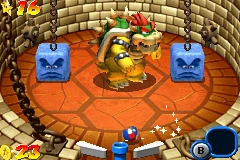
The final stage. A volcanic lava-filled environment leading directly to Bowser’s castle. Fire bumpers, lava channels, and red-hot visuals throughout.
Requires all 4 Star Keys from the previous bosses to enter. The hardest stage in the game by some margin, with multiple sub-areas and the final boss arena at its core.
Boss: Bowser — the final boss. Mario must defeat Bowser using pinball-physics combat in a multi-phase fight to rescue Princess Peach.
Characters


Mario
The main protagonist and the player’s “ball.” Mario goes on an adventure to rescue Peach — this time entirely in pinball form, having been compressed by the Pinballer at the Fun Fair. He cannot jump, run, or walk; all movement is governed by pinball physics and the player’s flipper inputs.
Princess Peach
Once again playing the role of damsel in distress. Accidentally fired from the Sky Cannon during the Fun Fair’s unveiling ceremony, she’s blasted across the kingdom to Bowser’s castle and locked inside by Bowser’s minions. Her rescue is the entire goal of Mario’s pinball journey.
Toad
Toad runs a shop in a tent in the Fun Fair where Mario can buy items — provided he has enough coins. Toad himself appears in pinball-ball form as a recurring background gag, suggesting the Pinballer has had repeat customers. He sells consumable power-ups including extra Mushrooms, Stars, and protective Pipes.
Bowser
The Koopa King and final boss. After the Sky Cannon misfires (manipulated by his Goomba minions), Bowser locks Peach inside his castle and waits at the end of the Fiery Stage. Defeating Bowser triggers the closing cutscene where the Pinballer reverses Mario’s compression and the princess is freed.
Bosses
Mario Pinball Land features 5 bosses total — one mid-game encounter in the Fun Fair plus a boss at the end of each of the 4 main stages. Each holds a Star Key required to access Bowser’s castle in the Fiery Stage.
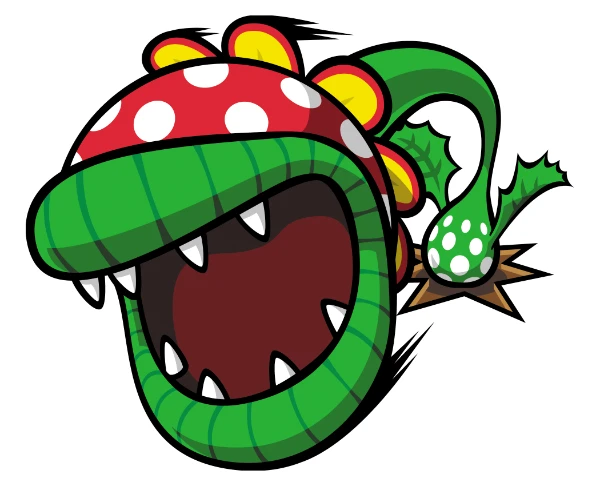
Petey Piranha
Grassy Greens — Stage 1 Boss
The giant Piranha Plant from Super Mario Sunshine, reimagined as a pinball boss. Petey fills a chunk of the playfield with his bulbous body and stomps the ground to disrupt Mario’s trajectory. The traditional weakness from his original appearance — the belly — returns here as the area Mario must repeatedly bounce off to damage him.
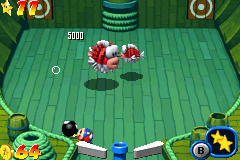
Porcupuffer
Frosty Frontier — Stage 2 Boss
The spiky inflatable pufferfish enemy from Yoshi’s Island, scaled up to boss size. Porcupuffer fills the central pool of a flooded arena. The spikes covering his body mean direct contact damages Mario; he must hit Porcupuffer at the unspike-protected mouth or rear.

King Tut
Shifting Sands — Stage 3 Boss
An Egyptian-themed Koopa enemy that emerges from inside a giant pharaoh statue. Mario must first activate the statue by hitting specific switches around the arena, which causes King Tut to appear from inside. Multi-stage fight with sand-trap hazards.

Big Boo
The Fun Fair — Mid-Game Encounter
Big Boo appears in the Fun Fair hub as a mid-game boss surrounded by four standard Boos. Like Boos elsewhere in the Mario series, Big Boo moves when Mario isn’t aiming at it and freezes when watched — making the pinball-physics combat a memory game in the dark arena.
Bowser
Fiery Stage — Final Boss
The Koopa King himself — the final boss reached only after collecting all 4 Star Keys. Multi-phase fight with fire breath, body slam, and shell-dash attacks. The most demanding boss in the game by some margin; the playfield is filled with lava hazards and Bowser’s attack pattern continually shifts.
Enemies
Mario Pinball Land features a broad enemy roster pulled from across the Mario universe — 23 main enemy types, each acting both as a points-on-contact bumper and a removable obstacle. Defeating an enemy typically drops coins, items, or Stars.


Full Enemy List
| Enemy | Behaviour |
|---|---|
| 1-Up Moles | Pop-up moles that grant a 1-UP if struck before they retreat |
| Armored Koopas | Reinforced Koopa variant. Multiple hits required to break the armor |
| Bob-ombs | Walking bombs with fuses. Explode after a time limit or when hit hard |
| Boos | Ghostly enemies that move only when not being directly aimed at |
| Bullet Bills | Cannon-fired projectiles. Hit them to defeat; avoid the impact |
| Bumblers | Buzzing flying enemies. Stage-specific obstacle |
| Chain Chomps | Bouncing chained enemies. Cannot be easily defeated — avoid or repel |
| Cheep-Cheeps | Underwater fish. Appear in flooded sections |
| Flying Shy Guys | Aerial Shy Guy variants |
| Freezies | Ice-cube enemies in Frosty Frontier. Freeze nearby objects briefly |
| Goombas | Standard mushroom enemies. The easiest enemies to defeat with a flipper bounce |
| Kleptos | Bird-like enemies that steal items if not stopped quickly |
| Koopas | Classic shelled enemies. Hit to retract into shell, then bash |
| Lakitu | Floating cloud-rider that throws Spinies. Disrupts pinball flow |
| Mr. Blizzards | Snowman enemies in Frosty Frontier. Throw snowball projectiles |
| Penguins | Frosty Frontier slow-walking enemies |
| Pokeys | Cactus-segment enemies. Each segment must be dismantled separately. Distinctive pinball-physics behaviour as each segment drops on impact |
| Shy Guys | Hooded standard enemies |
| Shy Guys on Skates | Frosty Frontier sliding Shy Guy variants |
| Snakes | Shifting Sands serpentine enemies |
| Spikies | Hedgehog-style spiked enemies. Risky for Mario to contact |
| Spiny Cheep-Cheeps | Spiked fish variant in flooded areas |
| Thwomp | Heavy stone-block crusher. Falls from above when Mario passes underneath |
| Moo Moo | Bull-like field enemies |
Items
Mario Pinball Land has 10 collectible item types ranging from common coins to the ultra-rare Special Egg. Most items can be picked up mid-play and either used immediately or stored for later activation with the B button.
| Item | Effect | Rarity |
|---|---|---|
| Coin | Main currency. Used at Toad’s shop to buy items | Very common |
| Blue Coin | Special currency. Unlocks special minigames that award Stars on completion | Uncommon |
| 1-UP Mushroom | Gives the player an extra ball (extra life). Essential for survival in late game | Uncommon |
| Pipe | Places a blue Pipe at the bottom of the screen, blocking the drain and preventing Mario from falling. Time-limited — disappears after a few seconds | Common |
| Yoshi Egg | Gives the player a Yoshi Egg as a second ball — effectively a multi-ball trigger common to traditional pinball | Uncommon |
| Mega Mushroom | Temporarily grows Mario to a larger size. Makes him plough through enemies and obstacles with ease | Uncommon |
| Invincibility Star | Makes Mario invincible, allowing him to instantly defeat any enemy he touches | Uncommon |
| Mini Mushroom | Temporarily shrinks Mario, allowing him to enter small passages normally too narrow to fit through | Uncommon |
| Lightning | Deals a single hit to all enemies onscreen simultaneously — the screen-clear bomb | Rare |
| Special Egg | A red egg with white stars. The rarest item in the game — only four exist across the entire game. Grants the combined effects of a Mega Mushroom, Invincibility Star, Yoshi Egg, AND Pipe at once | ULTRA RARE — only 4 in the entire game |
Toad’s Shop
Toad operates the in-game shop from his tent in the Fun Fair. Available items vary based on stage progress and coin availability. The shop supplies consumable power-ups (1-UPs, Pipes, Mushrooms) but cannot sell the ultra-rare Special Egg — those are only found in specific hidden locations across the stages.
Development

Mario Pinball Land has one of the more unusual origin stories in the GBA Mario library. The game was developed by tiny UK studio Fuse Games — their first ever release.
Founding Fuse Games
Fuse Games was founded in September 2002 by two ex-industry veterans: Adrian Barritt and Richard Horrocks. The pair wanted to pitch a pinball game to Nintendo — but they were a brand-new, unknown studio with no track record. They knew they’d need to make a significant impact before Nintendo would even agree to a meeting.
The Demo That Got Approved
Barritt and Horrocks built a playable demo consisting of what they figured would be the first and last areas of the game. They flew to Seattle to pitch the demo directly to Nintendo of America. The pitch worked — Nintendo approved the project for full development.
Why GBA Rather Than GameCube
The game was developed for the Game Boy Advance rather than the Nintendo GameCube for two practical reasons:
- Fuse Games had limited resources as a brand-new studio — a GameCube project would have been beyond their capacity
- The GBA’s hardware shares many similarities with the Super Nintendo Entertainment System, on which both founders had prior development experience. The familiar hardware made development faster for the small team
Development Timeline
- September 2002: Fuse Games founded by Adrian Barritt and Richard Horrocks
- 2002–2003: Demo built and pitched to Nintendo of America in Seattle
- 2003–2004: Full development under Nintendo’s publishing agreement
- June 2004: Development complete — 18 months total development time
- 26 August 2004: Japanese launch as Super Mario Ball
- 4 October 2004: North American launch as Mario Pinball Land
- 26 November 2004: European launch as Super Mario Ball
The Earlier Title
At an earlier point in development, the game was titled simply “Mario Pinball.” The full Mario Pinball Land name was decided later in production. The preliminary logo (used during the prototype period) is preserved in the game’s development archives.
Development Staff
Mario Pinball Land was developed by Fuse Games, the UK studio founded in September 2002 specifically to pitch Nintendo on a pinball game. The entire game was built by a team of just 5 people across an 18-month development cycle.
Core Team
- Adrian Barritt — Fuse Games co-founder. Lead programmer / director
- Richard Horrocks — Fuse Games co-founder. Co-director / game design
- Cai Remrod — Development team
- Keith Ainslie — Development team
- Kevin Ayre — Development team
Nintendo Side
- Producer: Shigeru Miyamoto — the legendary Mario creator. Acted as the game’s main producer, overseeing the Mario-universe integration and quality bar
- Publisher: Nintendo
What Fuse Games Did Next
The success of pitching to Nintendo as an unknown 5-person studio set Fuse Games on a Nintendo-pinball-specialist trajectory. They went on to develop further pinball-based games for Nintendo, including Metroid Prime Pinball (Nintendo DS, 2005) and contributed to subsequent Nintendo pinball projects. The studio became one of the rare Western developers entrusted with first-party Nintendo IP, all because of their original 2002 GBA pinball demo.
Reception & Legacy
Mario Pinball Land received mixed reviews on launch. The visual presentation and the unique concept of fusing Super Mario and pinball drew praise, but the difficulty, the playfield reset mechanic, and the relatively short length drew criticism.
“A game can’t live on pretty looks alone. Mario Pinball Land is a graphically amazing title, but the gameplay itself is far more flawed and annoying than it is fun to play.” — Craig Harris, IGN
Critic Scores at Launch
- IGN (Craig Harris): 5/10. Praised the visuals as “graphically amazing” but called the gameplay “far more flawed and annoying than it is fun to play.” Compared it unfavourably to Pokémon Pinball: Ruby and Sapphire, which had launched the previous year and was widely considered superior pinball design. Harris called Mario Pinball Land a “large step backwards in game design.”
- GameSpot: Praised the visuals and audio design. Criticised the high difficulty and the playfield reset mechanic when Mario fell down between flippers — returning to the previous area felt punishing
- General consensus: Visuals praised, premise praised, execution criticised
What Critics Praised
- Visual quality — the game’s art direction was widely considered excellent for the GBA era. Crisp sprites, varied stage aesthetics, distinct boss designs
- The Mario + Pinball concept — nobody had attempted to combine the two franchises in this way before
- The boss designs — Petey Piranha, King Tut, Big Boo, and Bowser were considered creative pinball-table reimaginings
- Music & audio — strong soundtrack and audio feedback
What Critics Criticised
- The playfield reset mechanic: falling down the drain in a sub-area sent Mario back to the previous area with all that area’s enemies and objects reset to start. This was widely seen as the single most frustrating gameplay decision
- The high difficulty: the game was considered punishing rather than challenging. Multiple critics called it “frustrating” rather than “tough”
- The short main game length: 5 stages with limited replay value meant players could complete the main story in a few hours
- Comparison to Pokémon Pinball: Ruby and Sapphire: Pokémon Pinball had launched the previous year on GBA and was considered the better-designed pinball game with more depth and player-friendly mechanics
Retrospective Position
Mario Pinball Land has settled into cult curiosity status within the Mario fanbase. The game is now appreciated more for its premise and visuals than its gameplay, with the “Mario becomes a pinball” concept regarded as one of the more creative Mario spinoffs ever shipped. Fuse Games’ origin story — 5 people, 18 months, no prior track record, direct-to-Nintendo-of-America pitch — has become legendary in the indie-developer-into-Nintendo-publishing-relationship narrative.
Regional Titles & Box Art
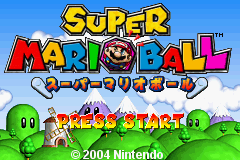
The game shipped under two different regional titles: Mario Pinball Land in North America and Australia, and Super Mario Ball in Europe and Japan. The titles, logos, and box art were significantly redesigned for each market.
Title Comparison
| Region | Title | Release Date | Notes |
|---|---|---|---|
| Japan | Super Mario Ball (スーパーマリオボール) |
26 August 2004 | First worldwide release. Slim cursive logo design |
| North America | Mario Pinball Land | 4 October 2004 | Renamed for the western market. Bolder, more arcade-styled logo |
| Europe | Super Mario Ball | 26 November 2004 | Uses the Japanese name. Different box art treatment from Japanese release |
| Australia | Mario Pinball Land | 26 November 2004 | Uses the North American name. Distinct AU box art variant |
Regional Logos


Regional Box Art
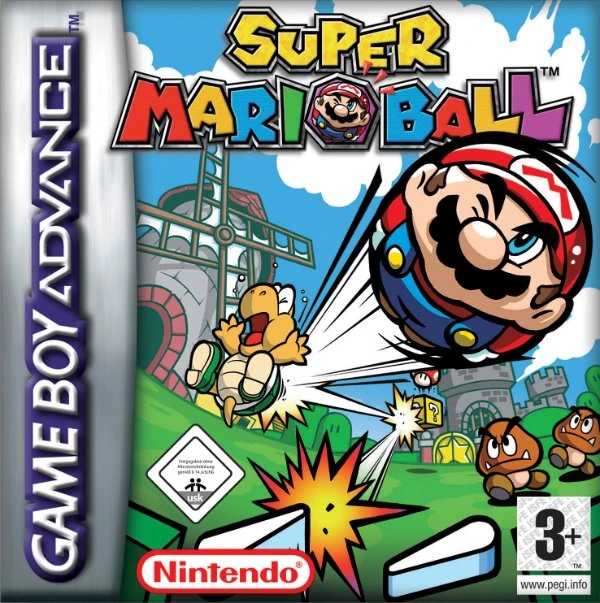
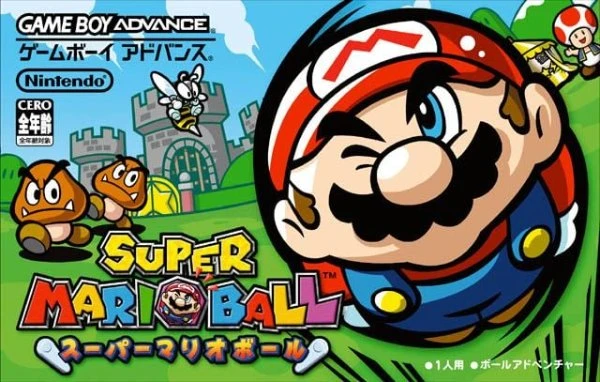

Regional Title Screens


Trivia
- Fuse Games was just 5 people. The entire game was built by Adrian Barritt, Richard Horrocks, Cai Remrod, Keith Ainslie, and Kevin Ayre over 18 months. Just five staff to produce a full Nintendo-published Mario title
- Shigeru Miyamoto produced it. The Mario creator himself acted as the game’s main producer, overseeing the Mario-universe integration despite the development being outsourced to a UK studio
- Two regional titles. Known as Super Mario Ball in Japan and Europe, and Mario Pinball Land in North America and Australia. The naming split reflects different marketing strategies for the same game
- The game was originally just “Mario Pinball.” The early development title dropped the “Land” suffix — the preliminary logo from this period is preserved in the game’s development archives
- Fuse Games went on to make Metroid Prime Pinball (Nintendo DS, 2005). Their successful Mario Pinball pitch led directly to Nintendo trusting them with another major first-party IP — a remarkable rise for a 5-person UK studio
- Mario never jumps in this game. Unique among Mario titles, Mario cannot jump, run, or walk — the entire game is controlled by pinball flippers. Movement is purely pinball physics
- The Pinballer is the in-universe device that compresses Mario into ball form. It’s the entire premise of the game’s existence, framed as a fictional machine that justifies the pinball-Mario concept canonically
- The Special Egg is the rarest item. Only 4 Special Eggs exist in the entire game. When activated, the Special Egg grants the combined effects of a Mega Mushroom, Invincibility Star, Yoshi Egg, AND Pipe simultaneously — a near-godmode state
- Toad sells items in pinball form. Toad himself appears as a pinball in Mario’s travels — suggesting the Pinballer has handled multiple customers, not just Mario
- The Sky Cannon misfire was sabotage. According to the in-game story, two shady Goombas tampered with the Sky Cannon’s aim during the Fun Fair unveiling ceremony, causing Peach’s accidental launch to Bowser’s castle
- The door-and-Stars system is borrowed from Super Mario 64. Each stage’s sub-areas are gated by doors requiring a certain number of collected Stars — a direct mechanical homage to SM64’s painting room progression
- King Tut is a Koopa-pharaoh hybrid. Housed inside a giant pharaoh statue. Mario must trigger statue activation switches to reveal the boss — a multi-stage statue puzzle
- IGN compared it unfavourably to Pokémon Pinball. Craig Harris’s 5/10 review specifically cited Pokémon Pinball: Ruby and Sapphire (2003) as the better pinball design — calling Mario Pinball Land “a large step backwards” from that benchmark
- The playfield reset is the most-cited gameplay flaw. Falling into the drain after a sub-area sent Mario all the way back to the previous area with all that area’s enemies and objects reset — the single design choice most widely criticised by reviewers
- Three regional logo designs. The North American “Mario Pinball Land” logo is bold and arcade-styled; the European “Super Mario Ball” logo uses elegant cursive lettering; the Japanese logo follows the European treatment with katakana
- The Australian release uses the NA name. Australia got “Mario Pinball Land” on 26 November 2004 — the same release date as the European market but with the North American title
- Petey Piranha is the easiest boss. Petey is positioned as the first stage boss (Grassy Greens) and acts as a tutorial-difficulty introduction to multi-phase pinball boss combat
- Big Boo appears as a mid-game encounter in the Fun Fair hub itself — not at the end of one of the four main worlds. He’s accompanied by four standard Boos, making the encounter a four-vs-one ghost pinball arena
- The game has no multiplayer. Single-player only, despite the GBA Link Cable being available. Pinball traditionally is single-player, but the choice was notable given many GBA Mario titles supported link play
- 23 enemy types. One of the more diverse enemy rosters in a Mario spinoff, drawing from across the Mario universe — Goombas, Koopas, Boos, Pokeys, Mr. Blizzards, Lakitu, Chain Chomps, even the lesser-seen Klepto and Moo Moo
Reference / Information
Sub-pages, guides, and walkthroughs for Mario Pinball Land / Super Mario Ball.
Media / Downloads
Box art gallery and screenshots for Mario Pinball Land.
Promotional Artwork
