
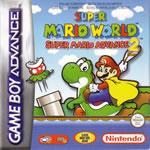

Super Mario Advance 2: Super Mario World
Overview

After the crushing success of Super Mario Advance (the GBA port of Super Mario Bros. 2 USA) launched the GBA as a viable Mario platform, Nintendo prepared a sequel — and that sequel was the 1990 SNES title many consider the greatest 2D Mario game ever made. Super Mario Advance 2: Super Mario World was released on the Game Boy Advance in December 2001 in Japan and February 2002 in North America, with European and Australian releases later that year.
This is the same 7-world, 96-possible-exit game from the SNES original — the entire main game, the Star Road, Funky and Outrageous in Special World, Bowser’s Castle, all of it. Mario travels through Dinosaur Land with Luigi to rescue Princess Toadstool, meeting Yoshi for the first time and gaining the new Super Cape power-up. Bowser and his 7 Koopaling children await.
Critical reception was strong: GameSpot 9.4/10, GameSpy 91/100. It’s now available on the Wii U Virtual Console and Nintendo Switch Online — Game Boy Advance library. The famously-tight controls of the SNES Super Mario World were preserved faithfully, making this port one of the most loved entries in the Advance series and arguably the cleanest way to enjoy Super Mario World on modern Nintendo hardware.
The Story

A Picnic in Dinosaur Land
After their many adventures, Mario and Luigi decided to take a well-deserved vacation. The brothers took Princess Toadstool to Dinosaur Land, a faraway land of dinosaurs and other strange creatures. They settled down on a sunny island for a quiet picnic in the sun.
The Princess is Missing!
While the brothers napped on the warm beach, the princess wandered off to explore the island. When Mario woke up, the princess was nowhere to be seen. He and Luigi searched everywhere, but to no avail. After hours of searching, the only thing they found was a giant egg in the woods.
Yoshi Joins the Adventure
As Mario and Luigi watched the egg, it began to shake. Suddenly, it sprung open — out hatched a young dinosaur named Yoshi! Yoshi told the brothers a terrible tale: “My friends have been imprisoned by the evil King Koopa. Could you help us out, please, Mario?”
Mario nodded his head in agreement and, along with Luigi and Yoshi, set off across Dinosaur Land to find the Princess and free Yoshi’s friends. As they began their journey, Yoshi handed Mario a beautiful cape. “This may help you,” Yoshi said. “Some say it has magical powers.”
The Goal: Seven Worlds & the Star Road
With a little luck (and help from a magic cape), our hearty crew can defeat the seven worlds of Bowser’s Krazy Koopa Kritters. Many locations are well-hidden so explore everywhere and try everything. Not all locations have to be explored to rescue the dinosaurs and save Princess Toadstool, but there are many “starry” treasures to be found in far-reaching places. You’ll need to search all areas to find what kinds of treasures are there … in Super Mario World.
Gameplay
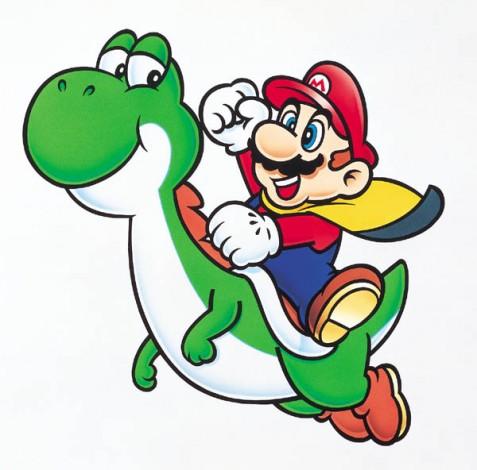
The gameplay of Super Mario Advance 2 didn’t change much from its predecessor. You still jump with A, run and shoot fireballs with B, and when you’re fast enough you can fly using the new Super Cape. Yoshi works exactly as in the SNES original — Mario can mount Yoshi at certain points and use his tongue to eat enemies and fruit.
Core Mechanics
- Jump & Spin Jump: A button for jump; press R for the Spin Jump (a defensive jump that can break blocks and damage Munchers safely)
- Run & Sprint: hold B to run; sprint at full speed to charge the Super Cape’s flight meter
- Fly with the Cape: sprint and jump while wearing the Cape to fly; tap A while flying to gain altitude, hold direction to glide
- Pick Up & Carry: hold B over a Koopa shell or item to pick it up; throw with B
- Yoshi Riding: mount Yoshi by jumping on him; B button now controls Yoshi’s tongue
- Yoshi Powers: eat Koopa shells of different colors for different power effects — red for fireballs, blue for flight, yellow for ground stomps
- Spin off Yoshi: Spin Jump to dismount Yoshi mid-air — a key technique for advanced traversal
The Cape (New & Iconic)
- The Super Cape replaces the Super Mario Bros. 3 Raccoon Tail and Tanooki Suit as Mario’s flight power-up
- Pick up a Cape Feather from a ? Block to activate it
- Sprint at full speed to charge a flight meter, then jump to launch into long airborne glides
- Hold up to gain altitude; hold down to dive; tilt the D-Pad to glide left/right
- Spin attack mid-flight by tapping A repeatedly
- The Cape is the most-loved power-up in the game and the gateway to many secret-exit shortcuts
Save Files & Progression
- Multiple save files for separate playthroughs
- World map shows your current location and connecting paths
- 96 possible exits across all levels — normal exits and secret exits that branch the map and unlock alternate paths to the Star Road and Special World
- 480 total Dragon Coins across all levels (some added by this remake to levels that didn’t have them in the original)
- Coin counters added to certain areas in this remake
- Collecting all 480 Dragon Coins displays an image of Princess Peach on the file select screen
Controls
The Advance 2 port adjusts the SNES control scheme for the GBA’s smaller button layout.
| Input | Action |
|---|---|
| D-Pad | Move left/right; crouch (Down); climb (Up on vines) |
| A button | Jump; fly with Cape |
| B button | Run / Sprint; throw items; shoot fireballs (Fire Mario); attack (Yoshi) |
| R trigger | Spin Jump (replaces SNES A-spin); break blocks above and below |
| L trigger | Scroll the screen forward/back to look ahead |
| Start | Pause |
| Select | Status menu / item drop |
| On the World Map | D-Pad to navigate; A to enter level; Select to swap between Mario and Luigi |
Note: The SNES X and Y buttons are repurposed on GBA. The Spin Jump (originally A on SNES) is moved to the R trigger. The screen-scroll buttons (originally L/R on SNES) are now handled by L only.
Characters




Mario
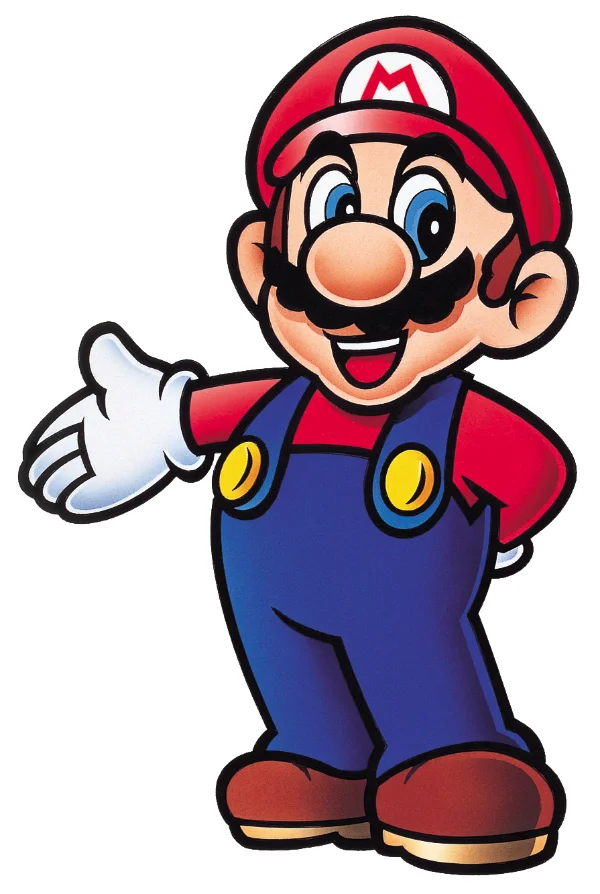
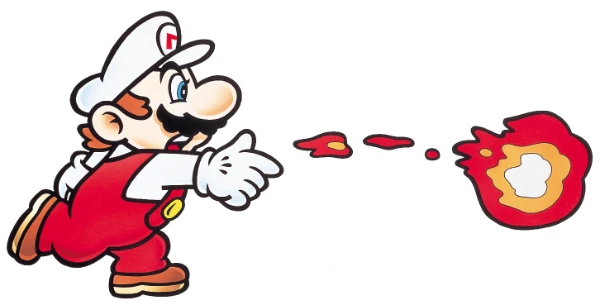
The primary protagonist. Standard physics throughout. Uses the new Super Cape as his main flight power-up. Can mount Yoshi and use the dinosaur’s tongue and powers.
Luigi (Playable in the Advance 2 Port)
Mario’s younger brother is now a fully playable character with his own physics, swappable on the world map by pressing Select. The original SNES Super Mario World had no playable Luigi — he was just a recolored Mario in the alternating 2-player mode. This port introduces:
- Jumps higher but more slowly than Mario
- Scuttle in midair as he jumps — the same effect from Super Mario Advance
- When flying with the Cape, Luigi cannot run on water as Mario can
- Yoshi spits any Koopa shell as a fireball when ridden by Luigi — a significant power boost
- His own independent sprite set with poses identical to Mario’s but redrawn for the GBA
- Independent inventory and stage progress (each brother has their own save state within a file)
Princess Toadstool / Peach
Kidnapped by Bowser. Her rescue is the entire goal of the adventure. Now displayed on the file select screen after collecting all 480 Dragon Coins.
Bowser
The Koopa King, holding Peach captive in his castle at the end of World 7 (Bowser’s Valley). The famous Mecha Bowser final fight returns, with Bowser piloting his Clown Car and throwing Mechakoopas at Mario.
Yoshi & the 7 Trapped Yoshies
Yoshi is the main ally. The seven trapped Yoshies are held captive across the game’s castles and fortresses. Rescuing them is the secondary objective alongside finding Peach.
The 7 Koopalings (Bosses)
Bowser’s seven children, each guarding the castle at the end of their respective world: Iggy Koopa (Yoshi’s Island), Morton Koopa Jr. (Donut Plains), Lemmy Koopa (Vanilla Dome), Ludwig von Koopa (Forest of Illusion), Roy Koopa (Chocolate Island), Wendy O. Koopa (Valley of Bowser), and Larry Koopa (Bowser’s Valley final castle approach).
Worlds & Locations
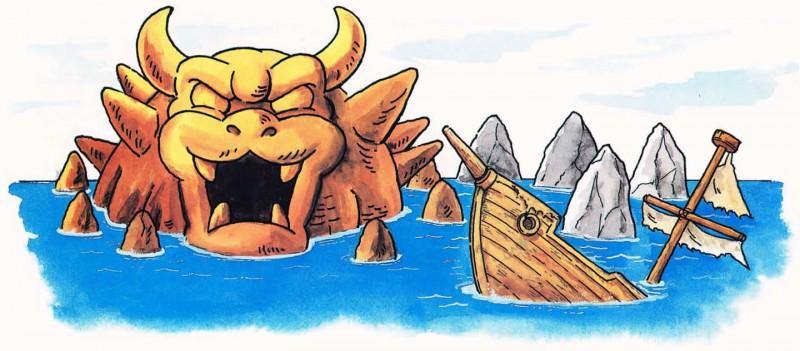
Super Mario Advance 2 takes place in Dinosaur Land, a faraway land of dinosaurs, ghosts, and Koopas. The world is divided into 7 main areas plus the secret Star Road and the hardest-of-all Special World. The total of 96 possible exits spans the entire map.

The 7 Main Worlds
| World | Name | Boss |
|---|---|---|
| World 1 | Yoshi’s Island | Iggy Koopa |
| World 2 | Donut Plains | Morton Koopa Jr. |
| World 3 | Vanilla Dome | Lemmy Koopa |
| World 4 | Twin Bridges (Butter / Cookie / Soda Lake) | (none — connector zone) |
| World 5 | Forest of Illusion | Ludwig von Koopa |
| World 6 | Chocolate Island | Roy Koopa |
| World 7 | Valley of Bowser | Wendy O. Koopa & Larry Koopa |
| Final | Bowser’s Castle | Bowser (in his Clown Car) |
The Secret Areas
- Star Road: a network of secret levels connecting all worlds via warp pipes. Accessed by finding secret exits in main levels. Skipping ahead is possible by routing through the Star Road
- Special World: the ultra-difficult endgame zone, including levels named Outrageous, Awesome, Mondo, and Funky. Reserved for the hardcore players
- Completing Special World makes Bowser appear differently on the world map — a small acknowledgement of complete game mastery
Castle & Fortress Levels
- Each main world has at least one Castle at the end (boss fight against a Koopaling)
- Some worlds also feature Fortresses with mini-boss encounters (typically Reznor)
- Ghost Houses appear in several worlds (Donut Plains, Forest of Illusion, Twin Bridges) — puzzle-room stages with hidden exits
- Bowser’s Castle is the final stage with multiple route choices and the climactic Clown Car fight
The Super Cape & Yoshi
Super Mario Advance 2 introduces two icon elements of the wider Mario franchise: the Super Cape and Yoshi the Dinosaur. Both first appeared in the 1990 SNES original, but this 2002 port made them accessible to a new generation of portable players.
The Super Cape
- Picked up from a Cape Feather hidden in ? Blocks throughout the game
- Mario gains a yellow cape — the visual identity of Caped Mario
- Allows Mario to fly across long distances after sprinting to full speed
- The spin attack with the cape can knock enemies away and break blocks above and below
- Diving with the cape gains altitude when pulled up at the right moment — an advanced flying technique
- The Cape is the game’s gateway to many secret exits — critical for completionist play
- Replaces the Raccoon Tail / Tanooki Suit from Super Mario Bros. 3 as the flight power-up
Yoshi (First Appearance)
Super Mario World introduced Yoshi to the Mario series. The dinosaur emerges from a hatched egg and can be mounted by Mario or Luigi.
- Tongue Attack: Yoshi can eat enemies with his long tongue
- Koopa Shell Powers: different colored shells in Yoshi’s mouth grant different temporary powers
- Red Shells: Yoshi spits fireballs
- Blue Shells: Yoshi grows wings and flies
- Yellow Shells: Yoshi gains ground-stomp power
- Green Shells: standard projectile spit
- Luigi-on-Yoshi Bonus: when Luigi rides Yoshi, any color shell becomes a fireball-spitting shell — a unique mechanic added to this port
- 7 Trapped Yoshies in the castles must be freed across the game — each has its own color
Changes from the SNES Original
Super Mario Advance 2 has fewer significant differences from its source game than Super Mario Advance did from the SNES Super Mario Bros. 2. Nevertheless, Nintendo made many small refinements compared to the SNES original.
Gameplay Changes
| Area | Change |
|---|---|
| Two-Player Mode | The original SNES two-player alternating mode was removed. Replaced with a Luigi-as-playable-character system swappable via Select on the world map |
| Luigi Physics | Luigi is now a separate character with higher but slower jumps, midair scuttle, and the SMA-style float. Cannot run on water like Mario. Yoshi spits any Koopa shell as a fireball under Luigi |
| Spin Jump | Moved from A button (SNES) to R trigger (GBA) |
| Screen Scroll | Originally L+R on SNES; now L only |
| Mario Bros. Multiplayer | The Mario Bros. arcade game included for 2-player Link Cable play — standard Super Mario Advance series feature |
Level Design Changes
- Cheese Bridge Area and others had their enemy and obstacle counts reduced
- Many levels have repositioned or additional Semisolid Platforms
- Dragon Coins added to levels that didn’t originally have them — Ghost Houses, Fortresses, and Castles (excluding Bowser’s Castle). Total of 480 Dragon Coins across the game
- Brand-new Message Blocks added to Yoshi’s Island 1, Donut Ghost House, Donut Secret House, and Butter Bridge 1
- Vanilla Dome 3: unshelled Koopa repositioned to catch shell properly after ricochet — a fix for an original-game timing oddity
- Midway Gates added to several levels that lacked them in the original
- Coin counters added to certain areas
Art & Graphics Changes
- Display resolution reduced (“screen crunch”) to fit the GBA’s smaller screen
- Lighter color palettes to compensate for the original GBA’s lack of a backlight
- The North American Super Mario World logo is used across all regions, instead of the Japanese version logo in the JP release
- Mario brothers’ overalls changed to standard blue, matching the official artwork and modern Mario branding
- Luigi has his own independent sprite set with redesigns based on his Super Mario Advance appearance (rather than being a Mario recolor)
- Peach’s sprites were updated to match her modern design
Introduction & Cutscenes
- The opening sequence with Mario, Luigi, and Peach on a picnic in Dinosaur Land remains
- Updated post-game cutscenes including the iconic Koopalings credits scene showing each Koopaling in a special pose
- Additional ending screens for players who complete all 96 exits
Sound & Manual
- Music re-encoded for the GBA’s audio chip while preserving Koji Kondo’s original compositions
- Sound effects re-sampled at lower quality
- The packaged manual is significantly different from the SNES original, including new screenshots and updated Yoshi color/power-up tables
Advance 2 Exclusive Glitches
The Advance 2 port introduced several exclusive glitches that don’t exist in the SNES original. These are port-specific bugs unique to the GBA codebase.
Y000 Lives Glitch
Enter a level with 999 lives and a Yoshi. Grab a 1-Up Mushroom with Yoshi’s tongue and press Start to pause as the mushroom is being swallowed. Exit the level — the life marker now shows Y000 lives until you re-enter another level. Triggers a display bug in the lives counter that wraps the “999+1” calculation incorrectly. Pure cosmetic but legendary among speedrunners.
Silver Yoshi
In the level Outrageous (Special World), time your jumping perfectly on the bottomless pit before the last Bullet Bill stand. Jump off Yoshi at the very last second and then get damaged by a Bullet Bill. After beating the level you’ll be riding a Silver Yoshi — which acts as a Yellow Yoshi. After you eat all the fruits on the level, the egg will hatch to reveal an actual unique Yoshi variant. A bizarre but reproducible visual glitch.
Status Menu Glitch
A specific input sequence on the status / pause menu can cause graphical corruption in the inventory display. The menu briefly shows incorrect icons before correcting itself. Harmless visual bug.
Yellow Switch Palace Re-Entry
Despite the Yellow Switch Palace being a one-time level (the switch flips Yellow Coin Blocks to Coins permanently), this glitch lets the player re-enter and re-trigger the switch on the GBA version. Has no real effect but breaks the “already triggered” flag.
Always-Harmful Torpedo Ted
Torpedo Teds (underwater Bullet Bill variants) sometimes remain harmful to Mario even after being defeated in specific underwater levels. A collision-detection bug specific to the Advance 2 port — unsafe to walk past a defeated Torpedo Ted in certain rooms.
Promotion & Videos
Two contemporary promotional videos preserve Nintendo’s 2001–2002 marketing campaign for Super Mario Advance 2.
Print & Other Promotional Materials
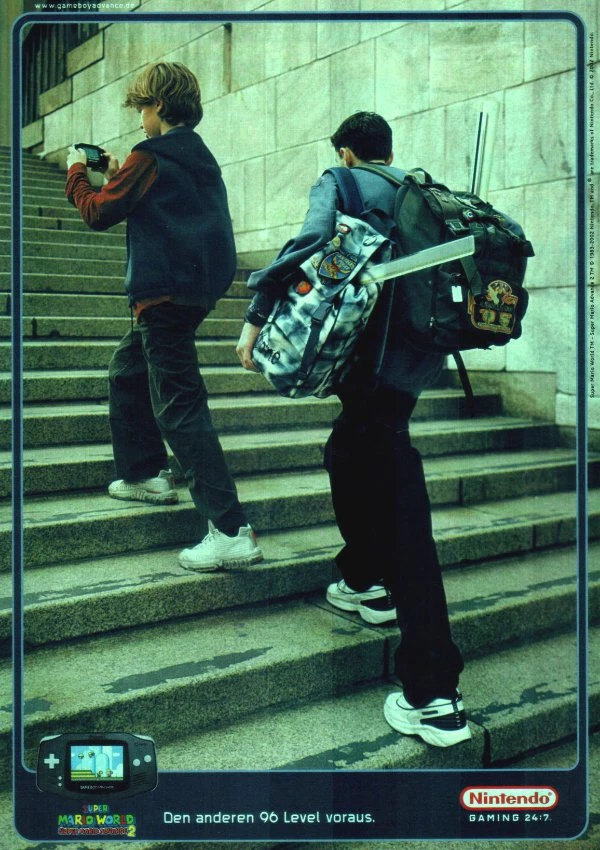
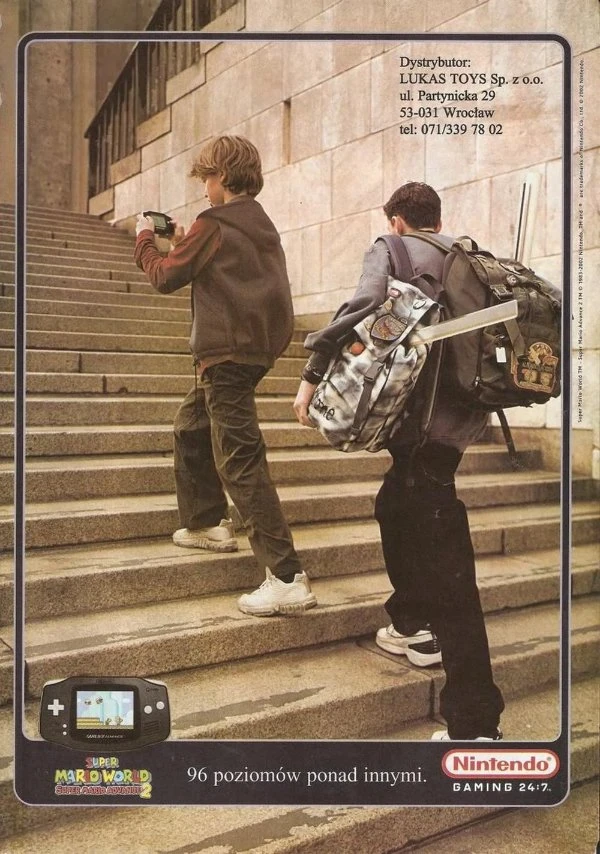
- International print advertising with regional variants across North America, Brazil, Germany, and Poland
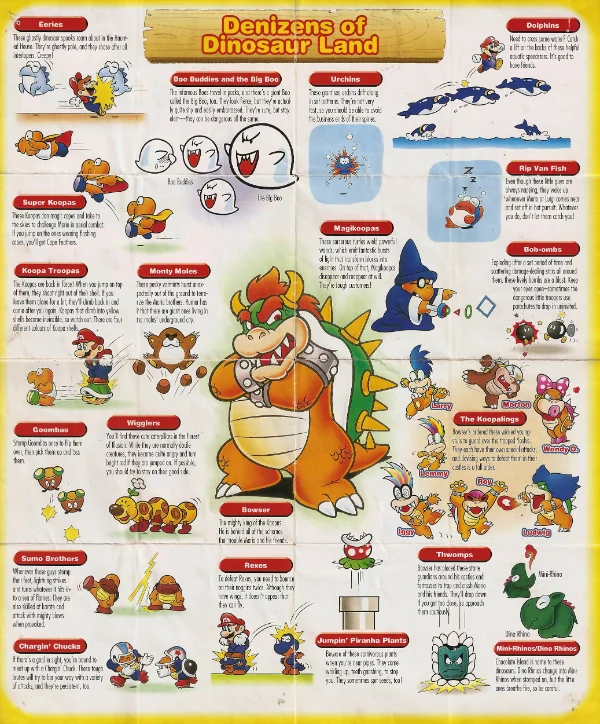
- Packed-in flyer with a Dinosaur Land map artwork on one side and additional promotional information on the reverse
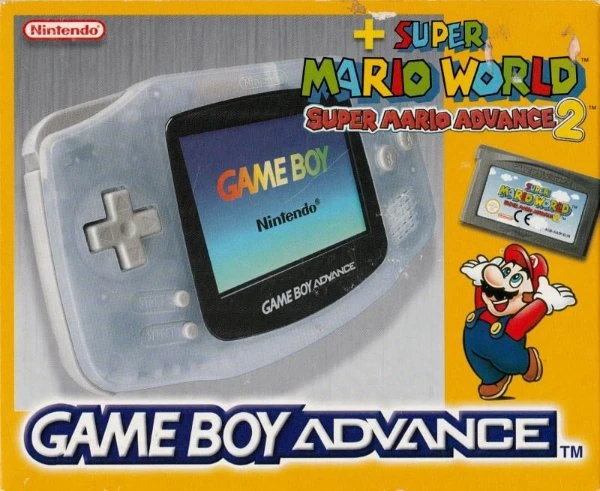
- European GBA console bundle shipped with the game included as a pack-in for new GBA owners
- Prima Games Official Guide published with detailed walkthroughs, world maps, and Yoshi color guide
Development Staff
Super Mario Advance 2: Super Mario World was developed in-house by Nintendo and published by Nintendo.
- Developer: Nintendo (in-house GBA porting team)
- Publisher: Nintendo
- Platform: Game Boy Advance
- Original Game: Super Mario World (SNES, 1990)
- Original Director: Takashi Tezuka
- Original Producer: Shigeru Miyamoto
- Original Score: Koji Kondo
- Original Character Design: Shigefumi Hino, Yoichi Kotabe
- Genre: 2D platformer
Reception & Legacy
Super Mario Advance 2 received universal acclaim on launch and remains one of the highest-rated titles in the Super Mario Advance series.
“Super Mario World is one of the greatest games ever made. The Game Boy Advance version adds a handful of amenities to cater a little bit more to the portable crowd, but these changes serve only to enhance an already extraordinary game.” — GameSpot (9.4/10)
Critical Scores
- GameSpot (Jeff Gerstmann): 9.4/10 — called Super Mario World “one of the greatest games ever made” and the GBA port a faithful enhancement. Wished for new multiplayer options but otherwise praised the entire package
- GameSpy (Derek “DC” Collins): 91/100 — praised the port for representing “the Golden Age of gaming on a smaller screen.” Acknowledged that this isn’t new content but stressed the quality of the underlying game
- General consensus: The most faithful version of Super Mario World available on portable hardware, with welcome quality-of-life additions including playable Luigi and the Dragon Coin expansion
What Critics Praised
- The faithful port quality — controls remain tight, level design intact
- The playable Luigi with unique physics adds genuine new gameplay value
- The expanded Dragon Coin system giving completionist players a new collection goal
- The Mario Bros. multiplayer link-cable bonus game
- The Cape and Yoshi systems preserved without compromise
- The blue overalls correction aligning the in-game sprites with the official artwork
What Critics Criticised
- Screen crunch — the reduced resolution to fit the GBA screen made some areas feel cramped compared to the SNES original
- No co-op multiplayer — the SNES alternating 2-player mode was replaced rather than enhanced with a true link-cable co-op
- Some critics felt the GBA visuals lost the SNES original’s vivid color palette
Sales & Legacy
- One of the best-selling Super Mario Advance titles, alongside the original Super Mario Advance
- Re-released on Wii U Virtual Console in 2014
- Available on Nintendo Switch Online — Game Boy Advance library as part of the Expansion Pack subscription
- Widely considered the definitive portable version of Super Mario World
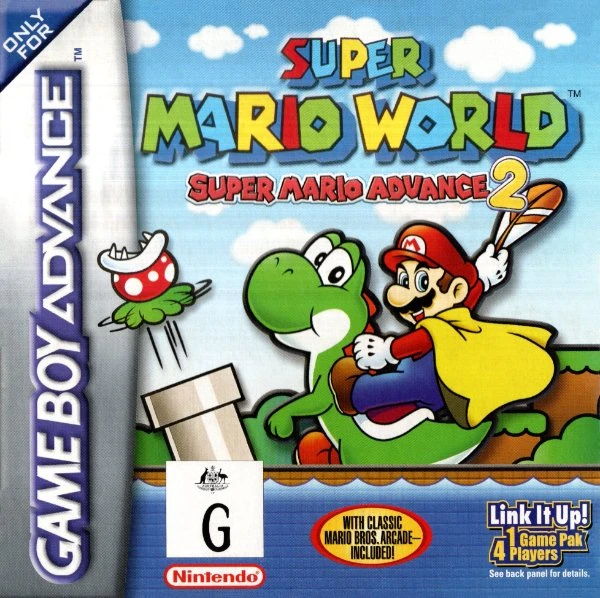
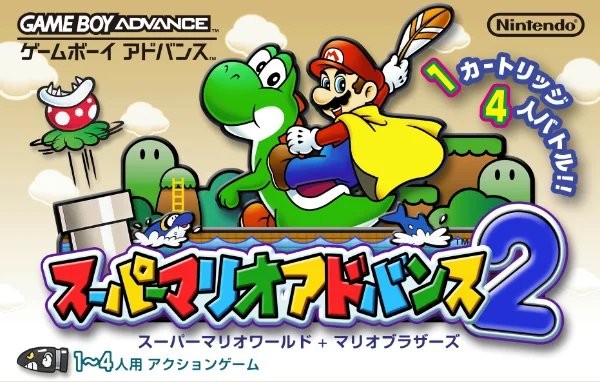
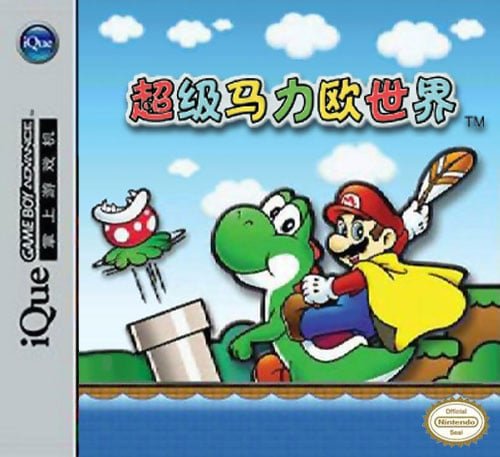
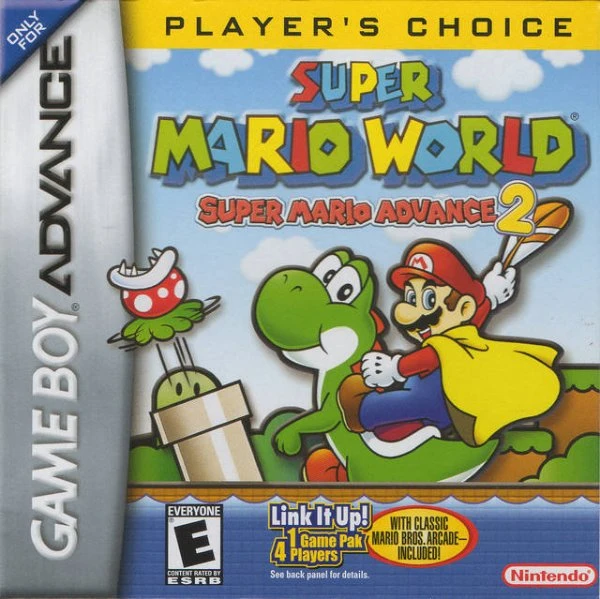
Regional Logos, Box Art & Marketing
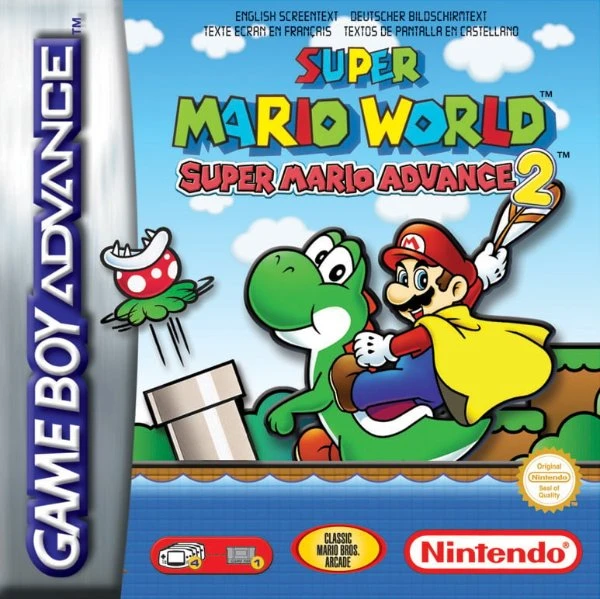
The game shipped with consistent worldwide naming as Super Mario Advance 2: Super Mario World, with distinct regional packaging and logos.
Regional Logos


Box Art
European GBA Bundle
Print Advertising


Promotional Flyer & Strategy Guide


Iconic Screenshots
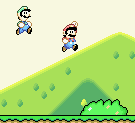
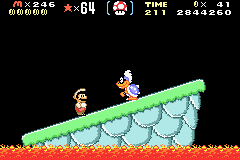

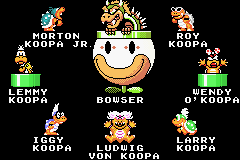
Trivia & Facts
- The originally-planned title was “Super Mario Bros. 4.” Super Mario World was developed as the direct successor to Super Mario Bros. 3 during the SNES era, but Nintendo renamed it for the launch to better showcase the new platform
- First appearance of Yoshi. The original 1990 Super Mario World introduced Yoshi to the Mario series, and the Advance 2 port made him accessible to a generation of portable players
- First appearance of the Cape. Mario’s Super Cape replaces the Raccoon Tail / Tanooki Suit from SMB3 as the flight power-up — a debut for one of Mario’s most iconic power-ups
- 96 possible exits across the entire game. Many require finding secret routes. Completionists pursuing 100% must find all 96
- 480 Dragon Coins total. Collecting every Dragon Coin in every level displays a Princess Peach image on the file select screen — a hidden completion reward that didn’t exist in the SNES original
- Luigi got a real character treatment. The original SNES Super Mario World had no playable Luigi — he was just a recolored Mario in the alternating 2-player mode. The Advance 2 port made him a fully playable character with unique physics and behavior
- Mario and Luigi got their iconic blue overalls. The SNES original had Mario in red-and-brown and Luigi in green-and-brown. The Advance 2 port aligned the sprites with their official modern artwork (blue overalls, signature colors elsewhere)
- The Spin Jump moved. Originally on A button in the SNES, it’s now on the R trigger in the GBA — a control-scheme adjustment necessary because A is now the primary jump button (the SNES had separate A for spin-jump and B for jump)
- Yoshi spits any color shell as fireballs under Luigi. A unique mechanic added to this port — in the SNES original, Yoshi’s shell powers were color-dependent regardless of rider
- The Y000 lives glitch is legendary. Get 999 lives, use Yoshi to grab a 1-Up while paused mid-swallow, exit — the counter shows Y000. Pure cosmetic but speedrunner-famous
- The Silver Yoshi glitch in Outrageous (Special World) creates a uniquely-colored Yoshi by precisely timing a death sequence. Reproducible and visually striking
- Star Road and Special World remain the hardcore endgame zones. Special World levels are named Outrageous, Awesome, Mondo, and Funky — some of the most-feared platforming challenges in Mario history
- Mario Bros. arcade is included for 2-player Link Cable multiplayer — a standard Super Mario Advance series feature
- Released on the original SNES bundled with the system in 1990. Twelve years later, the GBA port shipped with European GBA console bundles — a callback to the original’s pack-in heritage
- Re-released on Wii U Virtual Console in 2014 and Nintendo Switch Online — GBA library in subsequent years
- Brazilian, German, and Polish print ads were produced for international markets, reflecting Nintendo’s strong push for the GBA platform in 2002
- The Koopalings credits scene is one of the most beloved Mario series moments, showing each Koopaling in a comic pose
- 96 exits + Dragon Coins + Yoshi color completion = ~25-40 hours of true completionist playtime. A blockbuster GBA title length-wise
Promotional Wallpaper
Promotional materials and the iconic Dinosaur Land flyer artwork served as the primary wallpaper-style imagery for the 2002 launch. Below: the Dinosaur Land flyer artwork that was packed in with copies of the game.
Reference / Information
Sub-pages and guides for Super Mario Advance 2: Super Mario World.
Media / Downloads
Box art gallery and screenshots for Super Mario Advance 2: Super Mario World.