

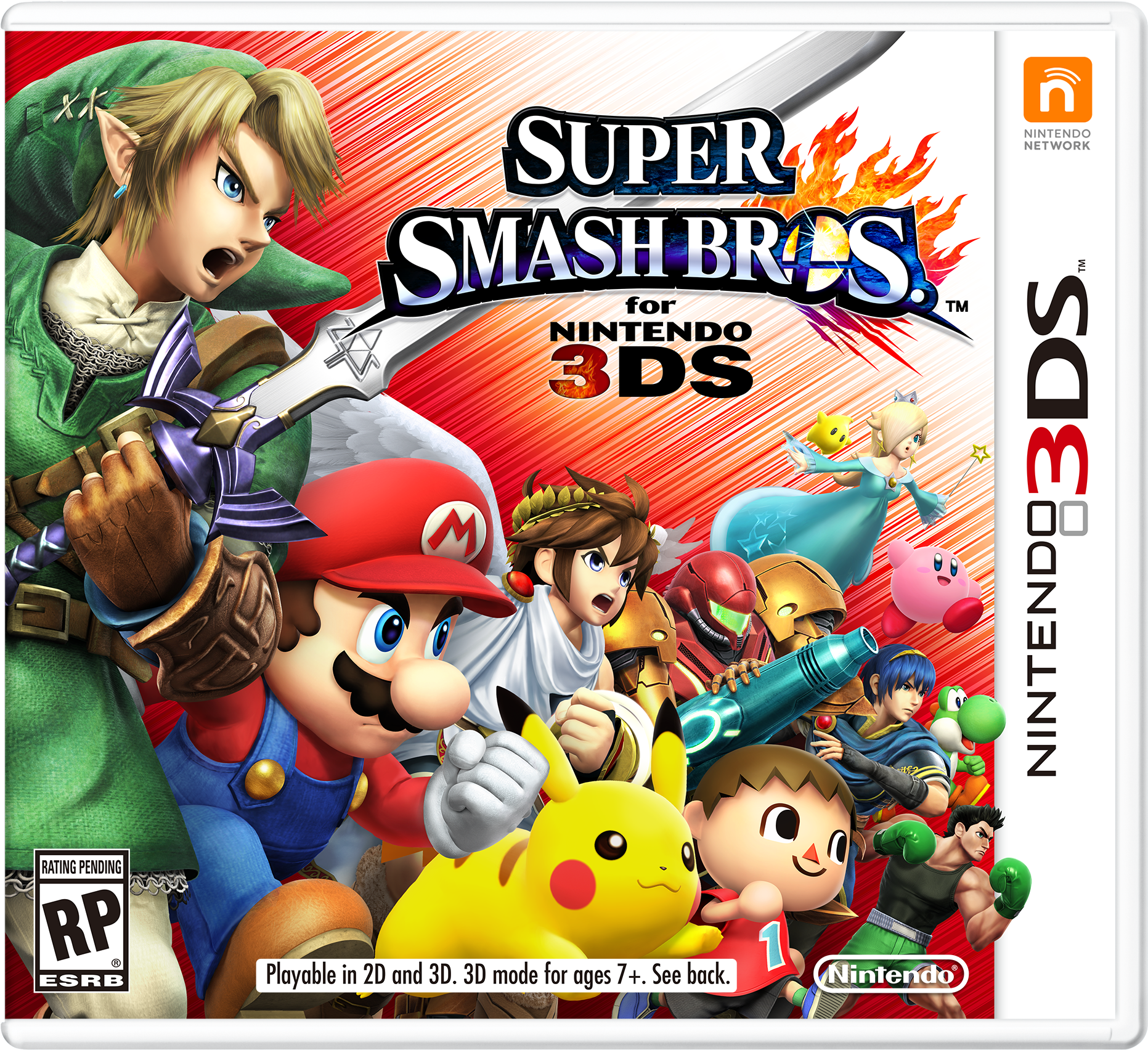
Super Smash Bros. for Wii U & 3DS
Nintendo’s biggest crossover fighter yet — released simultaneously on two very different platforms, with 58 fighters, landmark DLC, and a roster that made the whole internet argue for months.
Super Smash Bros. for Wii U and Super Smash Bros. for Nintendo 3DS were the fourth entries in Nintendo’s crossover fighting series, developed by Masahiro Sakurai’s Sora Ltd. alongside Bandai Namco. Released within weeks of each other in autumn 2014, they represented an ambitious dual-platform project — same roster, same core gameplay, but genuinely different experiences tuned for each platform.
The project was the first time a mainline Smash game had been developed for a handheld, and the first to involve a major external co-developer. It was also the first Smash to sell DLC characters post-launch — a decision that kept the community buzzing well into 2016. Between the two versions, the game reached more players than ever before, and laid the groundwork for Super Smash Bros. Ultimate’s enormous roster.


“Developing Smash for two platforms simultaneously was genuinely unprecedented in scope. The goal was always to make each version feel native to its hardware — not just a port — while sharing the same core game engine and complete roster.”
Both versions share the same 51-fighter roster and core gameplay, but are genuinely different games in terms of modes, stages and features. The Wii U version is the definitive full home console experience; the 3DS version is compact and portable-focused, and notably launched about six weeks before the Wii U version.
- 8-Player Smash — up to 8 local players simultaneously
- Smash Tour — board game mode with stock battles
- Event Mode — ~100 scenario challenges with unique rules
- Master Orders & Crazy Orders risk/reward modes
- Trophy Rush — time-based trophy minigame
- Stage Builder with GamePad touch screen
- Full Masterpieces (NES/SNES playable demos)
- HD visuals at 1080p/60fps
- GameCube Controller Adapter support
- amiibo Figure Player system
- Launched first — Oct 2014 (JP/NA) / Dec 2014 (EU)
- Smash Run — dungeon-crawl power-up mode before battles
- Stages themed on handheld Nintendo games
- Find Mii / Nintendogs / Spirit Train / Prism Tower stages
- Can be used as controller for Wii U version
- Transfer custom fighters between versions via 3DS
Smash Run — the 3DS exclusive mode where players explore a dungeon for 5 minutes collecting power-ups before battling — has never returned in any subsequent Smash game and remains one of the most-requested features in the series.
51 characters at launch — the largest base Smash roster up to that point. Both versions share the identical roster; no version-exclusive playable fighters. Every Brawl veteran returned except Snake and Ice Climbers (the latter cut due to 3DS hardware constraints), alongside strong newcomers including Rosalina & Luma, Little Mac, Villager, Mega Man, Pac-Man and Greninja. The 7 DLC fighters post-launch were the series’ first paid characters, capped by Bayonetta winning the Smash Ballot.


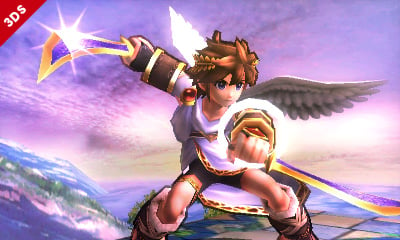




Both versions were critically acclaimed. The Wii U version earned Metacritic 92 and sold 5.38 million copies. The 3DS version scored 85 and sold around 9.63 million — one of the best-selling 3DS games ever. Between both versions, Smash 4 outsold every previous Smash entry before Ultimate.
- The 3DS version launched roughly six weeks before the Wii U version — Japan and North America on 3 October 2014, Europe on 6 December. The Wii U version launched 21 November in Japan, 28–29 November worldwide.
- Ice Climbers were cut because the 3DS hardware couldn’t render two full character models with separate AI at 60fps. Since both versions needed the same roster, they were removed from both — one of the most controversial cuts in Smash history.
- The 3DS version can be used as a controller for the Wii U version — genuine cross-platform functionality requiring both versions and both systems.
- Bandai Namco provided over 100 staff alongside Sora Ltd. — the first time a major external studio was this deeply involved in a Smash project.
- The Smash Ballot ran April–October 2015 with over five million votes. Bayonetta was declared winner in December 2015 and released February 2016.
- Cloud’s reveal trailer in November 2015 remains one of the most-viewed gaming reveals in history — FFVII had never appeared on Nintendo hardware before.
- Smash Run (3DS exclusive) has never returned in any later Smash game. Fans have been requesting it for Ultimate since that game’s reveal.
- Ryu was the first Smash character with fighting game-style directional input commands — a deliberate nod to Street Fighter’s origins.
- Both versions together outsold every previous Smash entry — not beaten until Super Smash Bros. Ultimate.