
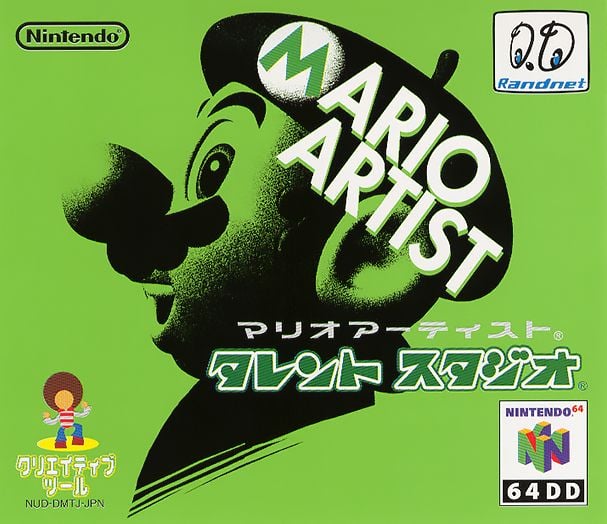
Mario Artist: Talent Studio
Overview
Mario Artist: Talent Studio is the second entry in the Mario Artist series for the 64DD, released in Japan on 1 February 2000. Where Paint Studio was about 2D drawing and Polygon Studio would later cover 3D modelling, Talent Studio occupies a unique niche: a virtual avatar creator. Players design 3D characters called “talents” (タレント) by customising face, hair, clothes, voice, and biography — then use those talents as performers in animations and movies.
The killer feature is the face importing. Bundled with the game is a Capture Cassette (or you could use a Game Boy Camera via the Transfer Pak) that lets you run a video camera signal into the 64DD and capture real photos — your own face, a friend's face, a magazine cover — and apply them as textures on the talent's head. Combined with the N64 Microphone, which records a one-second voice clip, the result is a talent that genuinely looks and sounds like a real person.
Talent Studio is also one of only two 64DD games to use the Transfer Pak (the other being Mario Artist: Paint Studio), and features deep cross-disk integration with the rest of the Mario Artist line: 2D images can be imported from Paint Studio as face textures or movie backgrounds; 3D models from Polygon Studio can be used as movie props; finished talents and movies can be uploaded online via Communication Kit.
The Mii Origin Story
Talent Studio is the conceptual prototype for Wii Miis.
In a 2008 Iwata Asks interview about Wii Fit, Satoru Iwata himself pointed to Talent Studio as the avatar-creation lineage that fed into the Mii Channel. The DNA is unmistakable: a 3D player-designed character, face customisation as the headline mechanic, full body/clothing/voice editing, and the avatar persisting across multiple uses (animations, movies, future Mario Artist titles) as your character.
The chain goes: Talent Studio (2000) → Stage Debut / Personal Trainer prototypes → Mii Channel (Wii, 2006) → Mii Maker (3DS / Wii U / Switch). The visual fidelity and editing depth of Talent Studio talents was actually higher than early Miis — you could literally photograph a face onto them. Six years before the Wii made Miis a global phenomenon, this Japan-only 64DD game had already shipped the idea.
Controls
| Action | Input |
|---|---|
| Move cursor | Control Stick / 64DD Mouse |
| Select buttons and options | A Button / 64DD Left Mouse Button |
| Rotate or zoom into a talent / back | B Button / 64DD Right Mouse Button |
| Move cursor to exit button | START Button |
| Undo | R Button |
| Move the screen | C Buttons |
| Act as A Button / slow mouse by 50% (configurable) | Z Button |
Modes

Talent Studio is structured around two creative modes and one viewing mode, accessed from the main menu:
Talent o Tsukuru (「タレントをつくる」, “Create a Talent”) is where the actual avatar creation happens. Movie o Tsukuru (「ムービーをつくる」, “Create a Movie”) lets you direct your saved talents in short films. Sakuhin o Miru (「さくひんをみる」, “View Works”) is the gallery for saved talents and a playlist viewer for movies.
Talent o Tsukuru — The Avatar Editor

Talent o Tsukuru is the heart of the game. Players design virtual avatars — called “talents” — by combining sample body types with deep customisation across five pillars. The N64 Microphone records a 1-second voice clip per talent. Up to eight saved faces live in the Kao Album (かおアルバム, “Face Album”) for quick reuse. Show Time animations are accessed directly from this mode — the editor and the performer aren't separate apps.
The Five Customisation Pillars
Face shape, hair, nose, ears, facial hair, plus optional headgear (helmets, hats, glasses, earrings, small items). Colour and pattern editable per-piece.
Face textures: eyebrows, eyes, lips by preset, or import a real photo via Capture Cassette / Game Boy Camera / Paint Studio. Lipstick and expressions adjustable.
Voice timbre (feminine/masculine) and pitch. Records a 1-second clip via the N64 Microphone — your actual voice, played back as the talent's sound.
Body height & shape, swimsuits, tights, shirts, pants, socks, shoes, gloves, accessories. Colour and pattern editable per item.
Name, occupation, gender, birthday, age, favourite catchphrase, and free-form bio text. The talent becomes a character on paper as much as on screen.
Sample Talents
The game ships with 15 pre-built sample talents — a mix of named characters (each with their own MarioWiki page) and three numbered “Basic Talent” templates designed as customisation starting points.
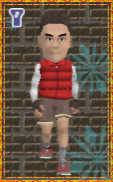
豪 マサル
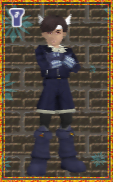
勉者ルイ

ハル
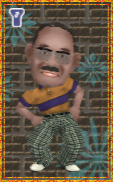
車 大吉
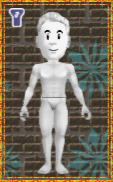
きほんタレント1
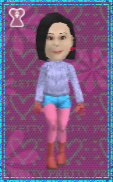
星 ヒカル
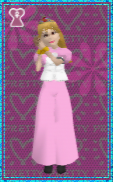
モモ姓
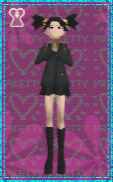
アイコ
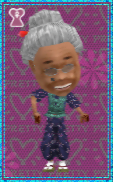
桜田 ウメ

きほんタレント2
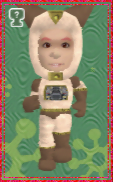
E〜坊
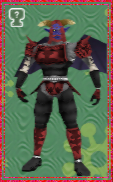
魔王
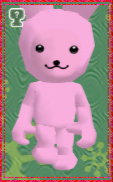
うさぎ
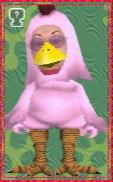
車 漳子

きほんタレント3
Movie o Tsukuru
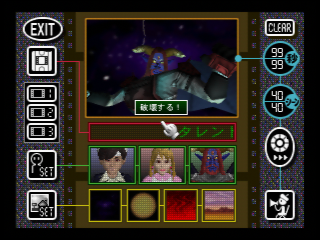
Movie o Tsukuru is the directing suite. Players create short films starring their saved talents on customisable backgrounds, with a robust scene editor that handles scenes, effects, music, sounds, and captions. Movies have hard limits: 99 seconds maximum runtime and 50 scenes maximum.
Three sample movies ship with the game as editable templates — Talent Quest, Hotcake, and SPEED — or you can start from scratch.
Import Sources
- Backgrounds: sample stages, Capture Cassette video capture, Game Boy Camera, or 2D artwork from Mario Artist: Paint Studio.
- Props: built-in 3D sample models, or 3D creations imported from Mario Artist: Polygon Studio.
- Music: built-in tracks (including the SMB Ground BGM and a Kazumi Totaka arrangement — see References).
- Sounds: classic SMB sound effects, voice clips recorded via N64 Microphone.

Show Time
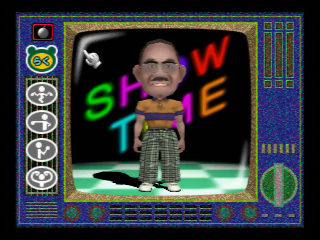
Show Time (ショータイム) lets the player drop their custom talent into 28 pre-built animation skits, split across four themed categories of seven each: odoru (dancing), sports, seikatsu (life), and iroiro (various). Each animation runs continuously, with A Button triggering a context-specific effect (cheers, flashes, butterflies, sweat droplets, etc.) and the C Buttons playing back the talent's recorded voice clip.

ディスコ

ラインダンス
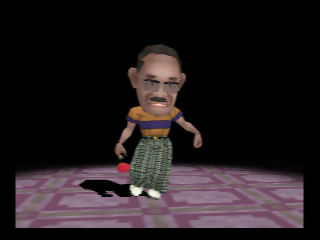
フラメンコ
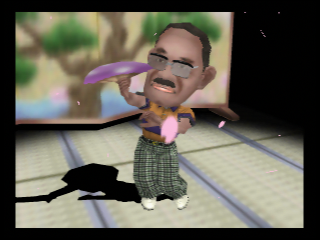
こてん

リンボーダンス

うきうきステップ
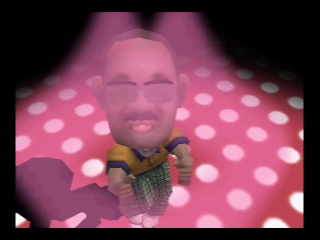
セクシーポーズ

トレーニング

ピッチャー
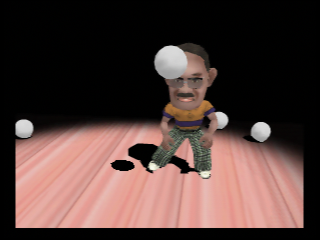
とっくん

ボディービルダー
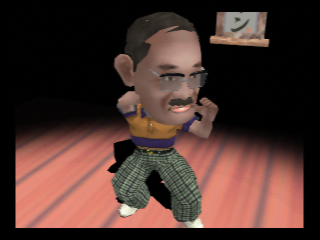
カラテ
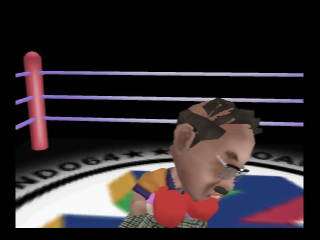
ボクシング

へいきんだい

か
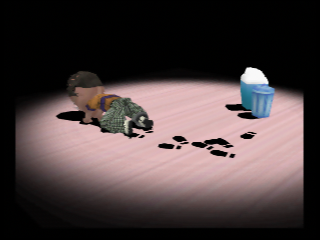
そうじ

あまもり
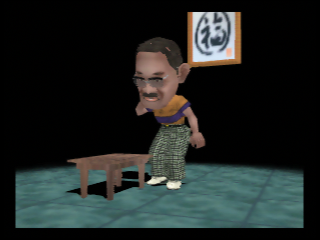
でんわ
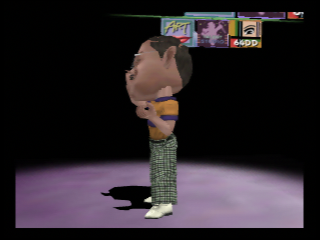
でんしゃ
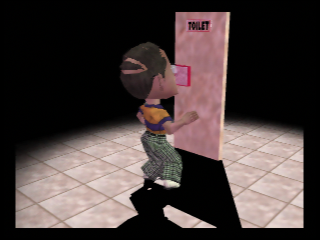
トイレ
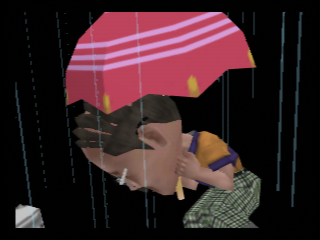
たいふう
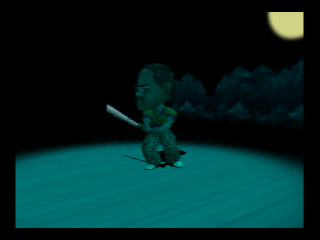
サムライ

かいじゅう

びっくりばこ

「とびます!」

スーパーモデル

わらいすぎ

しきしゃ
Moyō Album
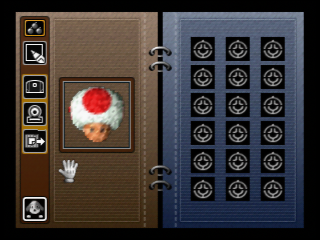
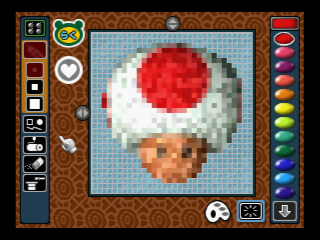
Moyō Album (もようアルバム, “Pattern Album”) is a sub-mode of Talent o Tsukuru accessible while editing a talent's face features or clothing. It is the game's reusable pattern library — up to 18 patterns can be saved at once, importable from Capture Cassette, Game Boy Camera, or Paint Studio. The Moyō o Tsukuru (もようをつくる, “Create a Pattern”) option opens a dedicated editor to modify the selected pattern from scratch.
Sakuhin o Miru

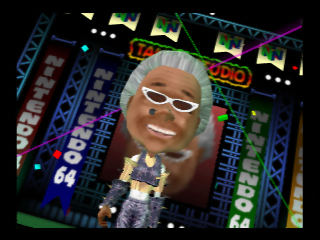
Sakuhin o Miru (さくひんをみる, “View Works”) is the playback gallery. Saved talents can be viewed on a stage with their full voice clip and biographical info; saved movies play back in a custom-built playlist. It's the showcase mode — less about creating and more about admiring (or showing off) what you've made.
Pre-release & Unused Content
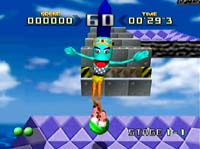
Pre-release footage of Talent Studio under its working title Talent Maker revealed a cancelled minigame: players would control their talent on a giant green ball, navigating through stages under a time limit, collecting purple gems for bonus points. The minigame was cut from the final game entirely.
Two unused modes still in the final code (per TCRF):
Show Time Edit (ショータイムエディット, Shō Taimu Editto) — would have let players customise Show Time animation properties: background, camera angle, lighting, “graffiti” overlays.
Pose o Erabu (ポーズをえらぶ, “Choose a Pose”) — would have offered five selectable poses for talents.
August 5 1999 prototype dump. In September 2025, dumper LuigiBlood released a showcase of an early Talent Studio prototype dated 5 August 1999. Discoveries: an early Talent o Tsukuru with only face, face items, voice, and clothes editable; a completely different set of sample talents (all 18 replaced in the final release); and an unfinished Movie o Tsukuru with scrapped Mario Kart 64 course backgrounds — Sherbet Land, Toad's Turnpike, DK's Jungle Parkway, Banshee Boardwalk — plus a SMB “Underground BGM” music track that was removed before launch.
Prototype Sample Talents
The 1999 prototype shipped with a completely different roster of 18 sample talents, all replaced in the final 2000 release. They are a fascinating glimpse at the game's earlier creative direction — including a literal bare-skin avatar designed to be the “blank canvas”, a santa, a high schooler, a sumo-styled lord, and a literal Silver Knight.

まっぱくん
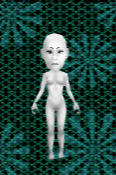
すはだびじん
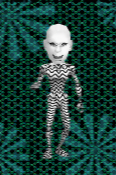
そのた
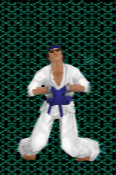
伊達 直樹
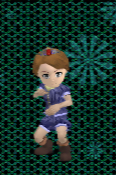
ぼっちゃん王子
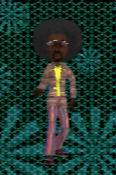
ボビィ反町
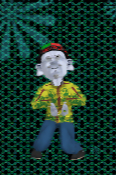
李伯仙
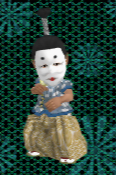
バカ殿
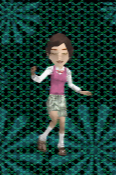
ミス高校生
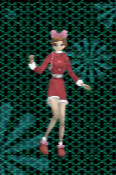
サンタのおねーさん
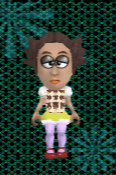
ヨシ子ちゃん
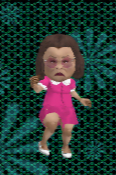
サッチ
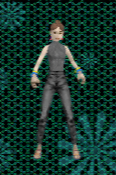
元モデル
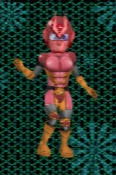
正義のヒーロー
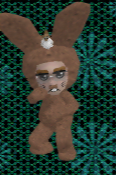
吉田一男さん48歳
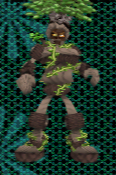
森の主
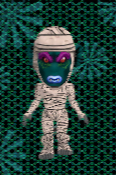
巻いた人
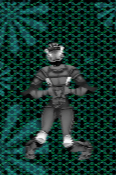
シルバーナイト
Gallery & Screenshots
Artwork & Packaging
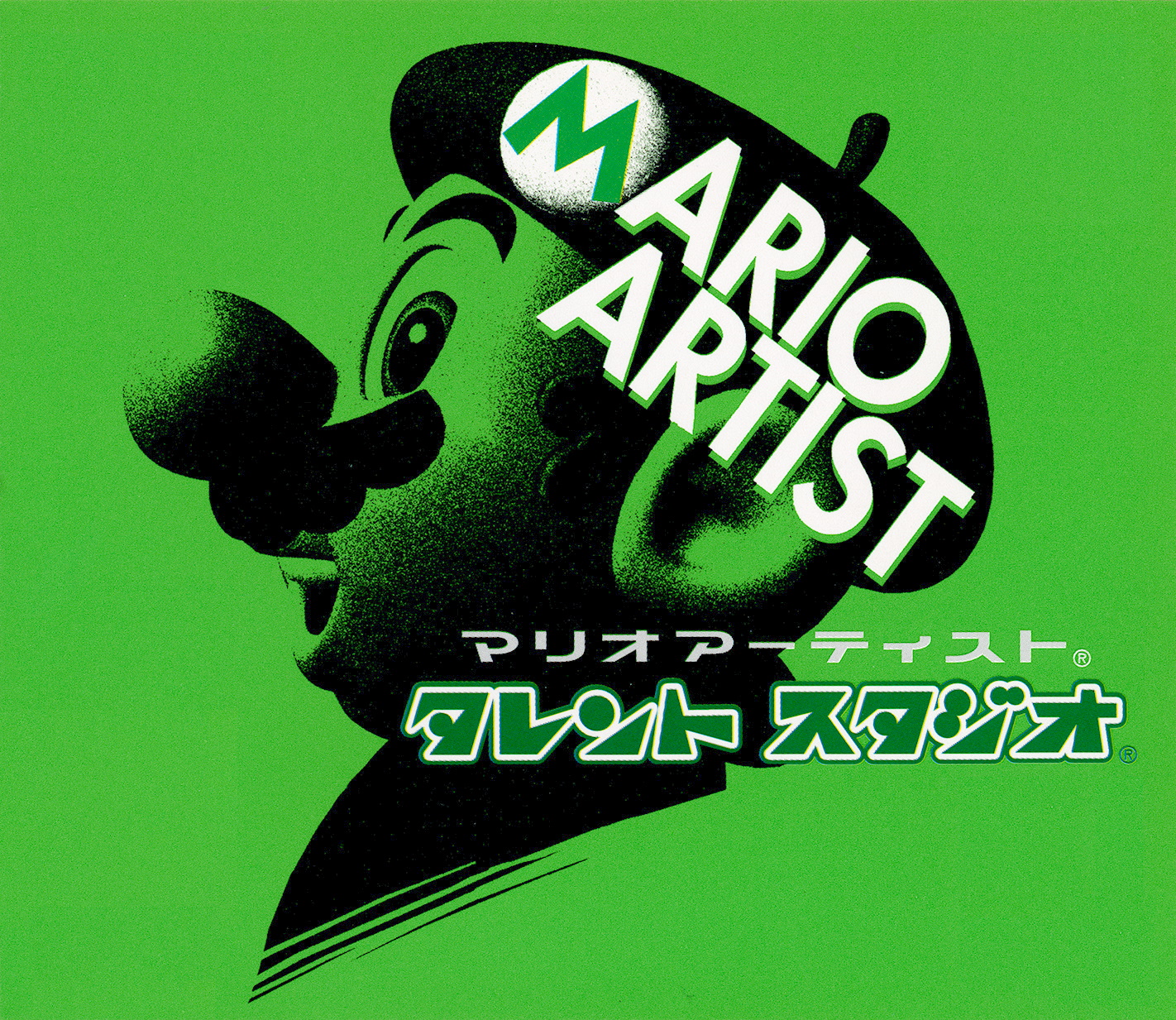
Alternate Cover Art
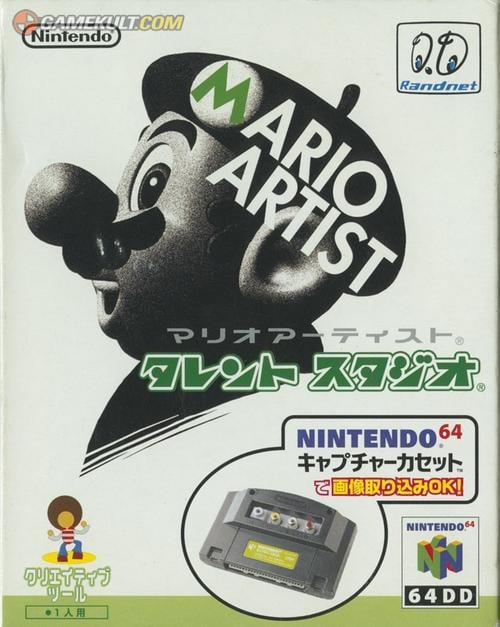
Capture Cassette Bundle
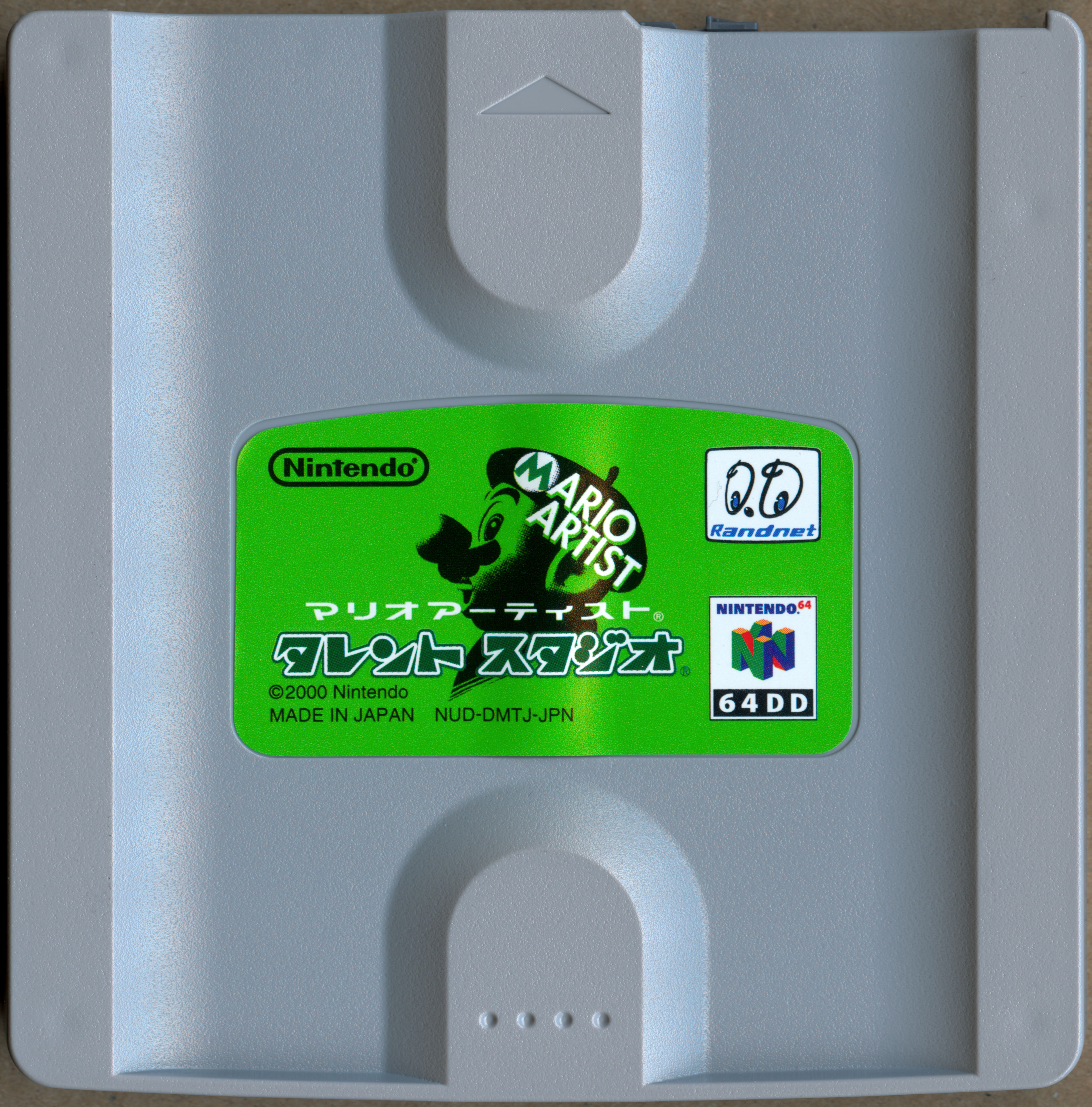
Game Drive (Disk)
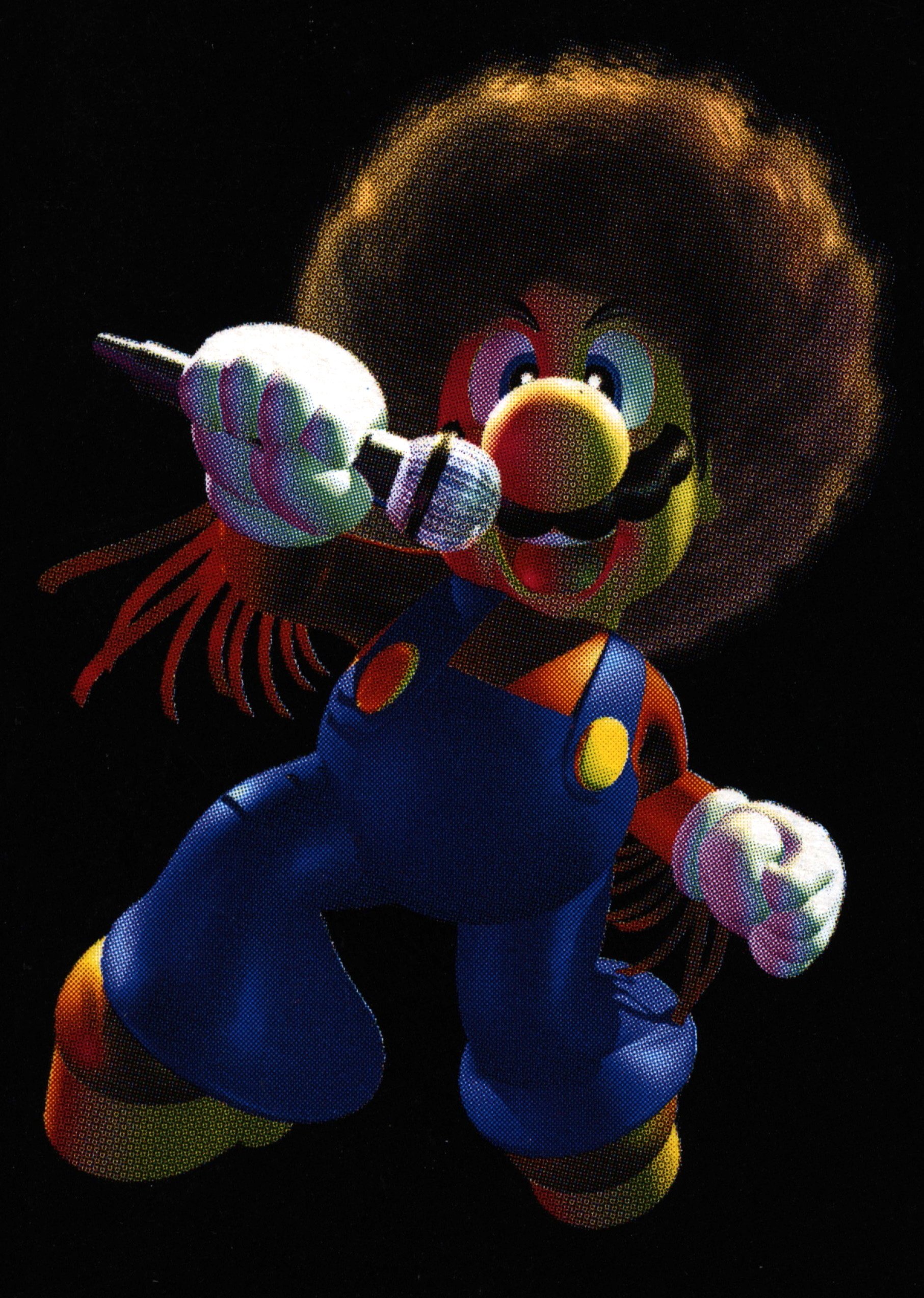
Mario Artwork
Mode Screenshots
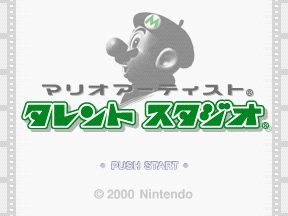
Title Screen
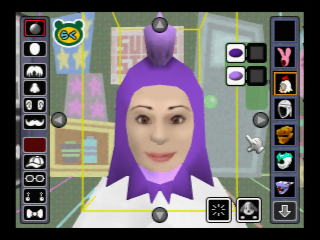
Editing a Helmet
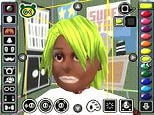
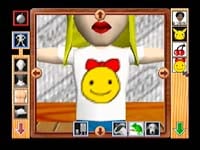
Editing Hair
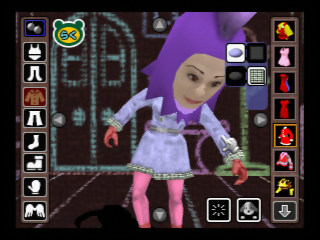
Editing Clothes
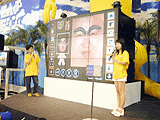
References to Other Games
Super Mario Bros. (NES)
- The first six notes of the Ground BGM are available as a built-in music track for movies.
- Classic sound effects from SMB (jump, coin, power-up etc.) can be used as movie sounds.
Mario Kart 64
- Artwork of Koopa Troopa Beach appears as a sample movie background.
- (In the 1999 prototype: additional course backgrounds were used including Sherbet Land, Toad's Turnpike, DK's Jungle Parkway, and Banshee Boardwalk — all removed before release.)
The Kazumi Totaka / K.K. Song connection.
Talent Studio contains an arrangement of Kazumi Totaka's signature melody — Totakeke's theme — as a selectable movie music track. This specific arrangement was later adapted into “K.K. Song” in the Animal Crossing series. The Totaka's Song easter egg has appeared in over 30 Nintendo titles — but Talent Studio is the version that became K.K. Slider's signature.
Trivia
- Talent Studio is the first Nintendo game with a virtual-avatar editor as its core mechanic — predating the Mii Channel (2006) by over six years.
- It is one of only two 64DD games to use the Transfer Pak — the other being its sibling, Mario Artist: Paint Studio. The Transfer Pak let the player use a Game Boy Camera as a face-capture source.
- The bundled Capture Cassette accepts a composite video signal from any video camera or VCR — meaning you could theoretically capture any frame of any video as a face texture for your talent.
- The N64 Microphone, also bundled, was the same peripheral used for Densha de Go! 64 and Hey You, Pikachu — this is one of the few 64DD games to use it.
- The Show Time animation “Balance Beam” flashes randomised scores from four countries (GBR, FRA, USA, JPN) and an average — an oddly specific Olympic-style touch.
- Three sample movies ship with the game: Talent Quest, Hotcake, and SPEED — the last named after the late-90s J-pop group, though the connection is unconfirmed.
- Hiroshi Yamauchi — Nintendo's late legendary president — appears as a built-in talent. (Outside the named samples list, but in-code.)
- The Kazumi Totaka melody used in Talent Studio is the exact arrangement that became Animal Crossing's K.K. Song — making this game the source of K.K. Slider's signature track.
- Public debut: Nintendo Space World '99, alongside the other three Mario Artist titles. It was the second to ship (after Paint Studio).
- The 1999 prototype dump (Sept 2025) reveals that the entire 18-strong sample-talent roster was scrapped and replaced — suggesting Nintendo was unsatisfied with the early character direction.
- Cross-disk compatibility with Paint Studio (faces, patterns, backgrounds), Polygon Studio (3D movie props), and Communication Kit (online uploads) makes this the most interconnected entry in the Mario Artist line.
- Like every 64DD title, sales were severely limited by the platform's ~15,000-unit Japan-only Randnet install base — an ironic fate for a game that would inspire one of Nintendo's most universally adopted features.
- The Japanese title «マリオアーティスト タレントスタジオ» (Mario Ātisuto Tarento Sutajio) uses the same katakana naming pattern as the other three Mario Artist titles.