
Yoshi
Overview
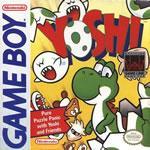
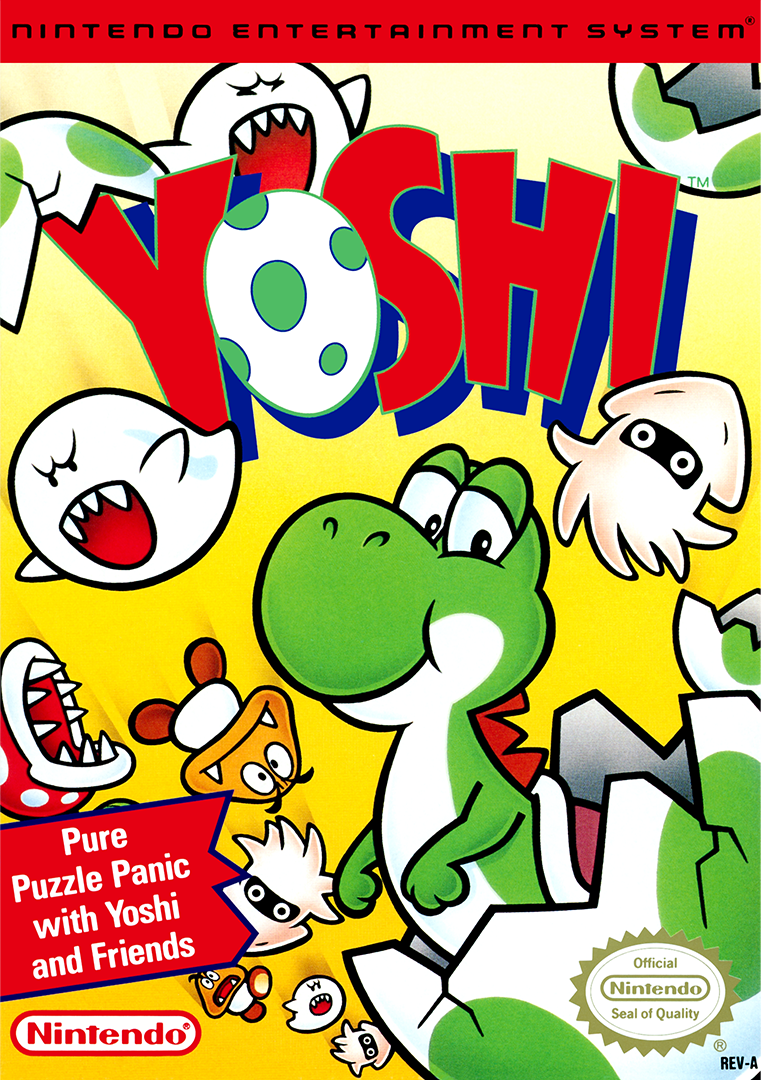
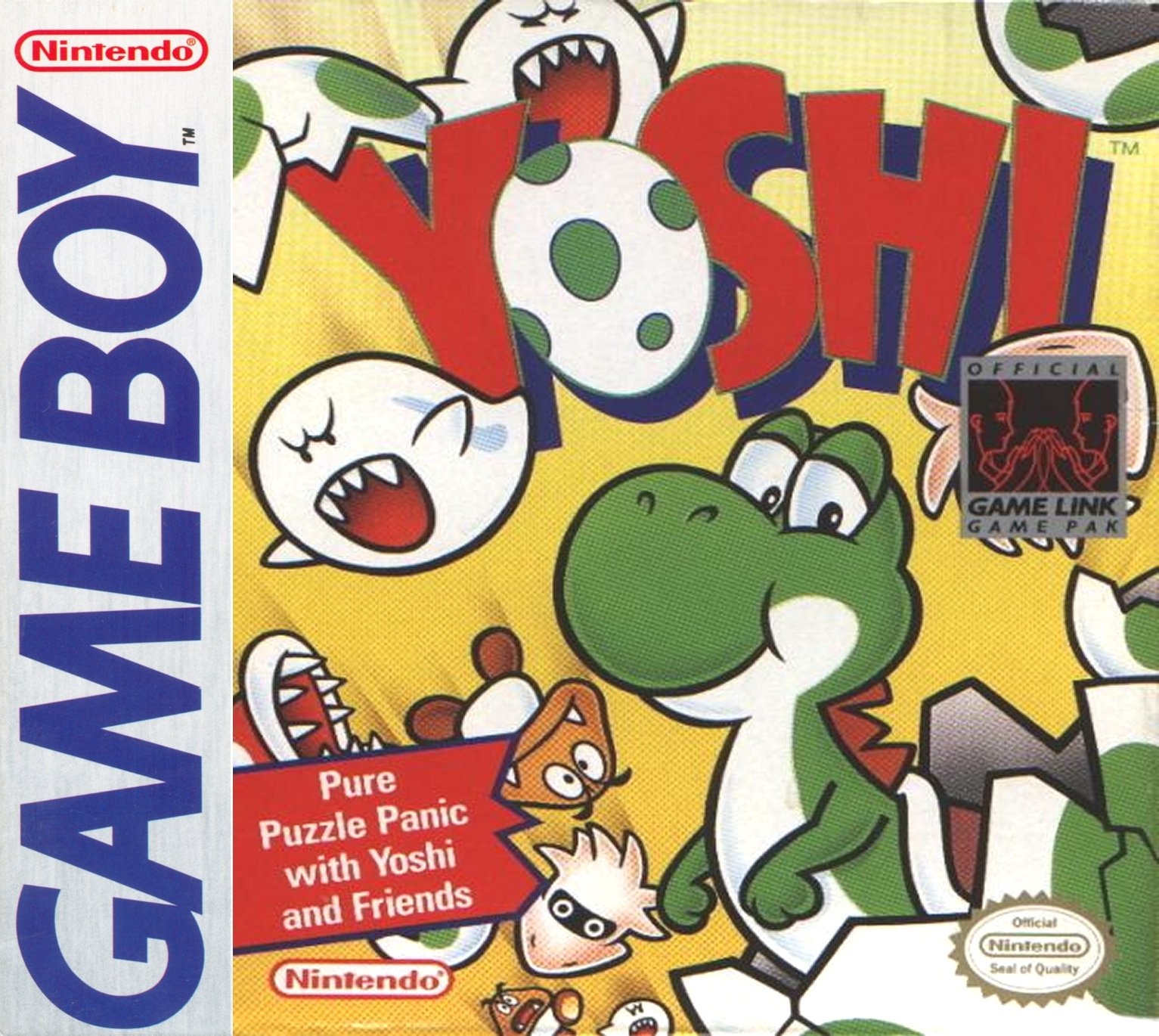
Yoshi (known in Japan as Yoshi no Tamago — ヨッシーのたまご, “Yoshi's Egg” — and as Mario & Yoshi in Europe and most non-American regions) is a falling-blocks puzzle game released by Nintendo in late 1991 / early 1992 across two platforms simultaneously: the Famicom/NES and the Game Boy. The concept was explicitly inspired by Tetris.
The premise is simple: Super Mario enemies fall from the top of the screen onto four plates that Mario (or Luigi in 2-player) holds at the bottom. Stack two identical enemies on top of one another to clear them. Sandwich a stack of enemies between the top and bottom halves of a Yoshi's Egg, and the egg hatches a Yoshi — with the size and value of the Yoshi determined by how many enemies were trapped inside.
It was Mario's sidekick's first starring role in his own game — Yoshi had debuted just a year earlier in Super Mario World (1990), and Nintendo wasted little time turning the popular dinosaur into a franchise vehicle.
The Pokémon Origin Story
Yoshi is the game that funded Pokémon.
This puzzle game was developed by Game Freak — yes, the same Game Freak that would, five years later, release Pokémon Red and Green on the Game Boy and change Nintendo's commercial trajectory forever. At the time of Yoshi's release, Game Freak was a tiny independent developer that had been working on Pocket Monsters (the original Pokémon project) since 1989. The project was burning through budget and Nintendo was on the verge of cancelling it.
Then Yoshi sold 500,000 copies on its first day. Critics may have dismissed it as a Tetris clone, but the commercial success — combined with the follow-up Yoshi's Cookie in 1992 and Game Freak's other puzzle work for Nintendo — gave the studio the runway it needed to finish Pokémon. As MarioWiki puts it: “Despite the negative reviews, the game sold well and helped Game Freak create the first Pokémon games.”
A subtle echo of this lineage: the first few notes of the Pokémon Center theme in Pokémon Red & Blue sound identical to a portion of the Super Star theme in Yoshi — more obvious in the Game Boy version, where the audio palettes are nearly identical.
Game Modes
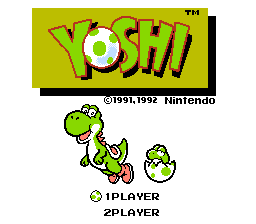
Both versions offer the same core structure. Before each game, the player chooses the game type (A or B), the difficulty, the speed at which enemies fall, and the background music.
Mario stands at the bottom of the screen holding four plates. Using the D-Pad to move left and right, the A and B buttons swap two plates at a time. Enemies fall onto the plates from above. Two matching enemies stacked vertically vanish for 5 points. The trick is the Yoshi egg mechanic: a bottom-half eggshell stays on the board until a top-half lands on the same stack, at which point the entire sandwiched column clears and a Yoshi hatches.
Game Type A — Endless Mode
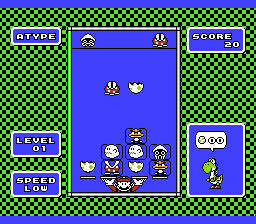
A-Type is the endless point-scoring mode. As the game progresses, enemies fall faster and faster — the game never ends, only your high score. Hatch 10 Yoshi eggs before Game Over and a bonus chance appears: four eggs hatch in succession, and timing the A-button press well awards bonus points. The better your timing, the better the Yoshi.
Every 10 eggs hatched unlocks a new bonus item in the bonus round — but the item changes between platforms.
A-Type Bonus Item Progression
| Eggs Hatched | NES Item | Game Boy Item |
|---|---|---|
| 10 |  Little Goomba Little Goomba |
 Super Mushroom Super Mushroom |
| 20 |  Piranha Plant Piranha Plant |
 Fire Flower Fire Flower |
| 30 |  Boo Buddy Boo Buddy |
 Super Star Super Star |
| 40 |  Bloober Bloober |
Boo Buddy |
| 50 |  Bob-omb Bob-omb |
— |
| 60 |  Cheep Cheep Cheep Cheep |
Bob-omb |
| 70+ |  Super Star Super Star |
Cheep Cheep |
Hatch 100 eggs and Yoshi will dance continuously under the egg counter. On the resulting Game Over screen, the game congratulates you as a “super player”.
Game Type B — Timed Mode
B-Type plays identically to A-Type but with one key change: levels are timed. When the board is cleared, both the score and time are recorded. Between levels, a short cutscene plays — Mario rides Yoshi from the background to the foreground, where Yoshi swallows a reward item for bonus points. The reward escalates as you climb the levels.
B-Type Level Rewards (NES & GB identical)
| Level | Reward | Bonus Points |
|---|---|---|
| 1 | Super Mushroom |
50 |
| 2 | Fire Flower |
100 |
| 3 |  Piranha Plant Piranha Plant |
150 |
| 4 |  Red Shell Red Shell |
200 |
| 5 | Super Star |
250 |
| 6-7 |  Apple Apple |
300 |
| 8-9 |  Strawberry Strawberry |
400 |
| 10-11 |  Melon Melon |
500 |
| 12-13 |  Peach Peach |
600 |
| 14-15 |  Grapes Grapes |
700 |
| 16-18 |  Pineapple Pineapple |
800 |
| 19-21 |  Cherries Cherries |
900 |
| 22-24 |  Key Key |
1,000 |
| 25-27 |  Coin Coin |
1,200 |
| 28+ |  P Switch P Switch |
1,500 |
2-Player Mode
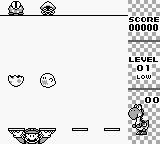
2-Player is exclusive to the NES version — the Game Boy was single-player only at retail (link cable multiplayer was not implemented). On NES, the game uses B-Type rules with a key twist: the board splits in half, with Mario on the left for Player 1 and Luigi on the right for Player 2.
Each player picks their own difficulty level and speed before the match starts. Lose a game and you receive an X; survive to your opponent's Game Over and you receive an O. First player to three Os (tracked by Yoshi eggs at the top of the board) wins the set.
Curiously, the Game Boy version contains an unused multiplayer concept in its code — a counter comparing the number of enemies remaining on each player's screen, with sandwiched enemies sent as garbage blocks to the opponent. This is the system Tetris-style competitive puzzlers would later popularise, but it was cut from the released GB version.
NES vs Game Boy — Version Comparison
Despite shipping simultaneously, the NES and Game Boy versions are not identical ports. Game Freak adjusted the game to suit each platform's strengths and limitations. Here are the headline differences:
NES / Famicom Version
Plate capacity: 8 enemies per plate.
2-Player mode: Split-screen on the same TV — Mario (P1) left, Luigi (P2) right.
Yoshi tier thresholds: 0-1 / 2-4 / 5-6 / 7 enemies in the egg for Little / Regular / Winged / Star.
Music palette: Full NES audio chip with three pulse channels and noise — richer arrangements.
Screen real estate: Full TV display with score, level, and enemy counts all visible at once.
Game Boy Version
Plate capacity: 7 enemies per plate — one less than NES, due to smaller screen.
2-Player mode: Single-player only at retail (an unused garbage-block system exists in code).
Yoshi tier thresholds: 0 / 1-3 / 4-5 / 6 enemies — consistently one lower than NES.
Music palette: GB audio — the Super Star theme more clearly echoes the future Pokémon Center music.
Screen real estate: Compact 160×144px LCD — more vertical-pressure feel.
The A-Type bonus items also diverge significantly between versions (see the A-Type table above) — the Game Boy version uses power-ups (Mushroom, Fire Flower, Super Star) in the lower tiers, while NES uses enemies (Goomba, Piranha, Boo) for the same thresholds. The B-Type level rewards are identical across both versions.
Yoshi Tiers
The Yoshi that hatches depends on how many enemies were sandwiched between the eggshells before the top half landed. Both versions follow the same hierarchy, but the thresholds differ by one across the board:

Little Yoshi

Yoshi

Winged Yoshi

Star Yoshi
Scoring System
Points are awarded for clearing matched pieces, hatching Yoshis, and collecting level rewards in B-Type. Here's the per-enemy breakdown:
Goomba
Piranha Plant
Blooper
Boo Buddy
Little Yoshi
Yoshi
Winged Yoshi
Star Yoshi
- Bottom Eggshells: 5 points each. The key to all Yoshi-hatching combos.
- Top Eggshells: 0 points on their own — but they trigger the column clear and Yoshi hatch when matched with a bottom.
- A-Type Bonus items: 50 points each in the early game, escalating to 300 points later on.
- B-Type Level Bonuses: Range from 50 (Mushroom, Level 1) to 1,500 (P Switch, Level 28+).
Re-Releases
After the 1991 NES + Game Boy debut, Yoshi has been re-released across nearly every Nintendo digital storefront. Most re-releases use the NES/Famicom version; the Game Boy version finally got its worldwide re-release in February 2026 on Nintendo Switch Online.
Wii Virtual Console (NES version)
Nintendo 3DS (Ambassador Programme)
3DS Virtual Console (Full Release)
Wii U Virtual Console
NES — Nintendo Switch Online
Game Boy — Nintendo Switch Online
Adaptations & Print Media
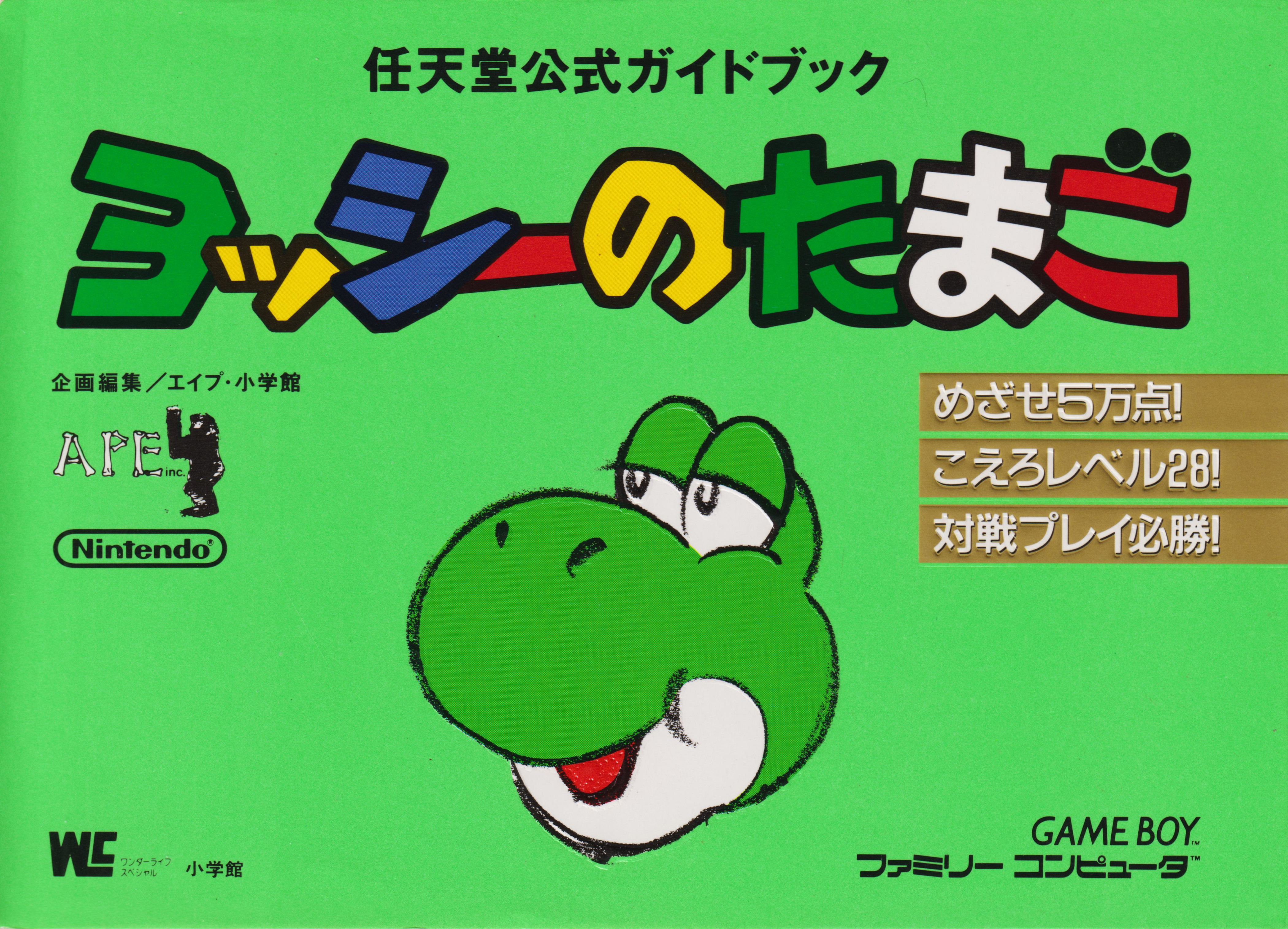
Nintendo Kōshiki Guidebook Yoshi no Tamago (任天堂公式ガイドブック ヨッシーのたまご) is Shogakukan's official Japanese strategy guide. Its dust cover prologue contains a fascinating piece of Yoshi origin lore: in the prehistoric era, a disastrous eruption killed the dinosaurs of the Mushroom Kingdom. Years later, two shells of an egg broken in the eruption were pushed back together by a shooting star, trapping some creatures inside. The star's power cracked the egg again — releasing what it was originally meant to create: a Yoshi. The other dinosaurs were resurrected from fossils the same way.
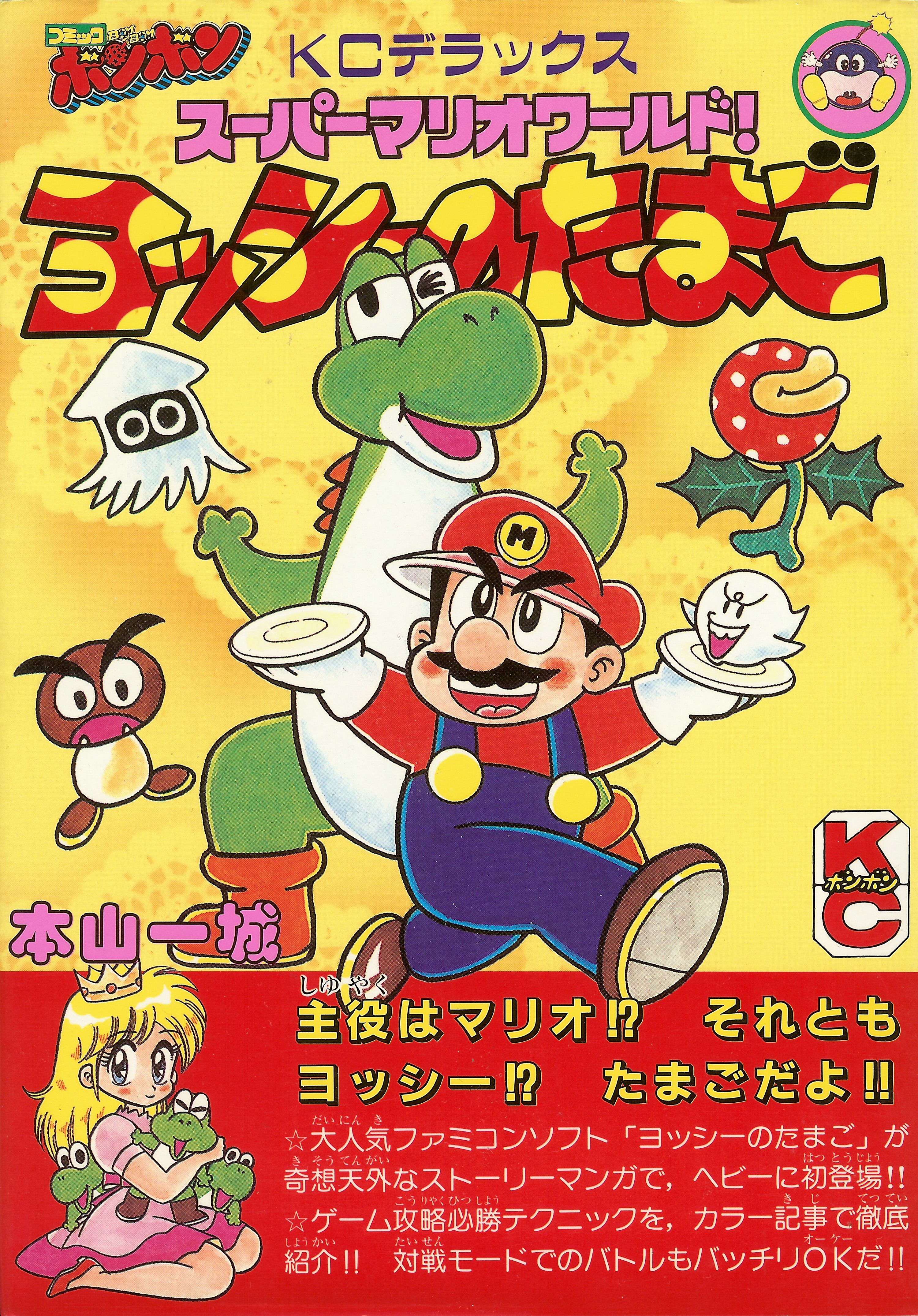
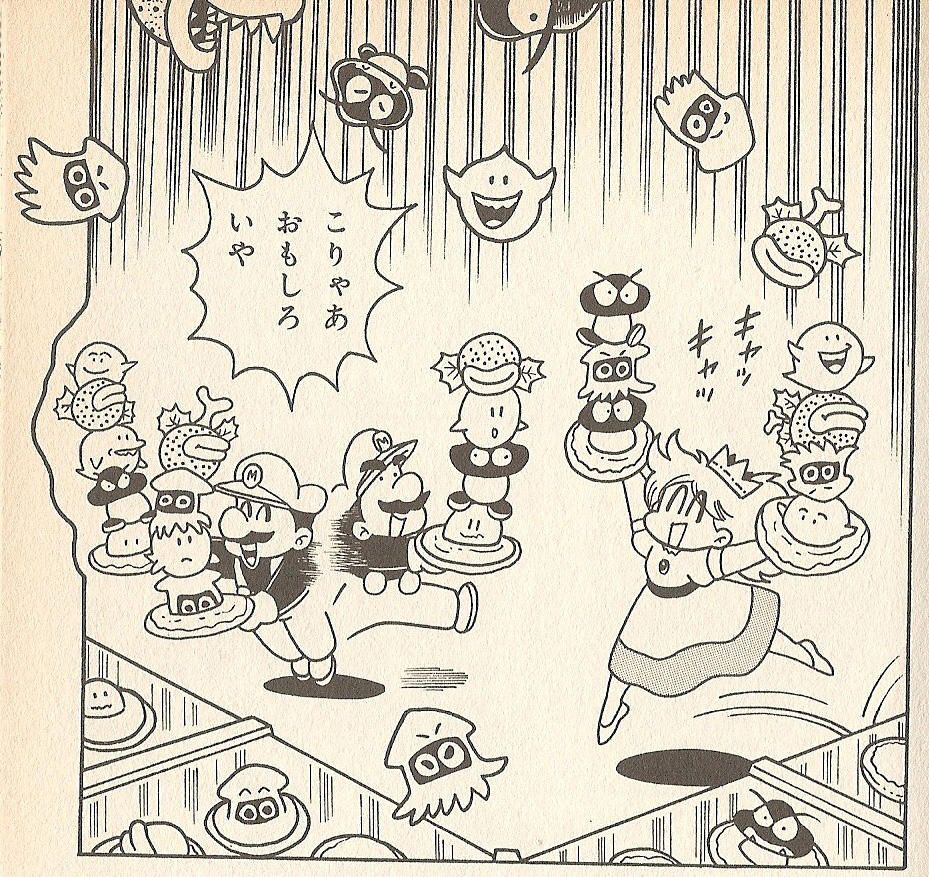
Super Mario World! Yoshi no Tamago is a manga volume in Kodansha's Super Mario KC Deluxe series, written and drawn by Kazuki Motoyama. It contains two stories: in the first, Yoshi opens a restaurant called Yossy's Pizza, which Bowser tries to sabotage; in the second (split into three parts), Yoshi, Mario, Luigi, and Peach embark on a journey to find Mother Yoshi and stop Bowser from awakening the Devil Yoshi.
Other Print Appearances
Super Mario Bros. 4: Super Mario World 6
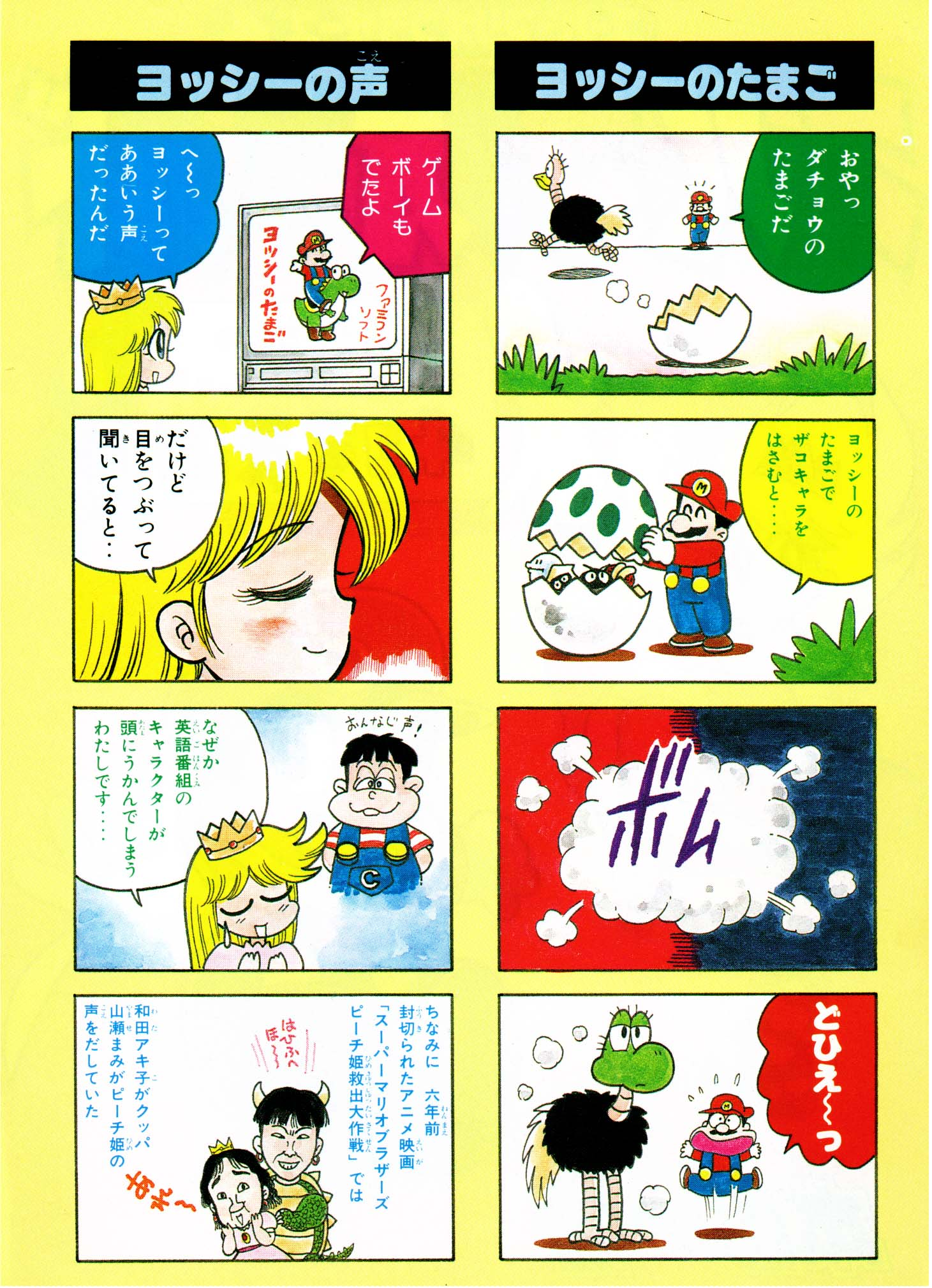
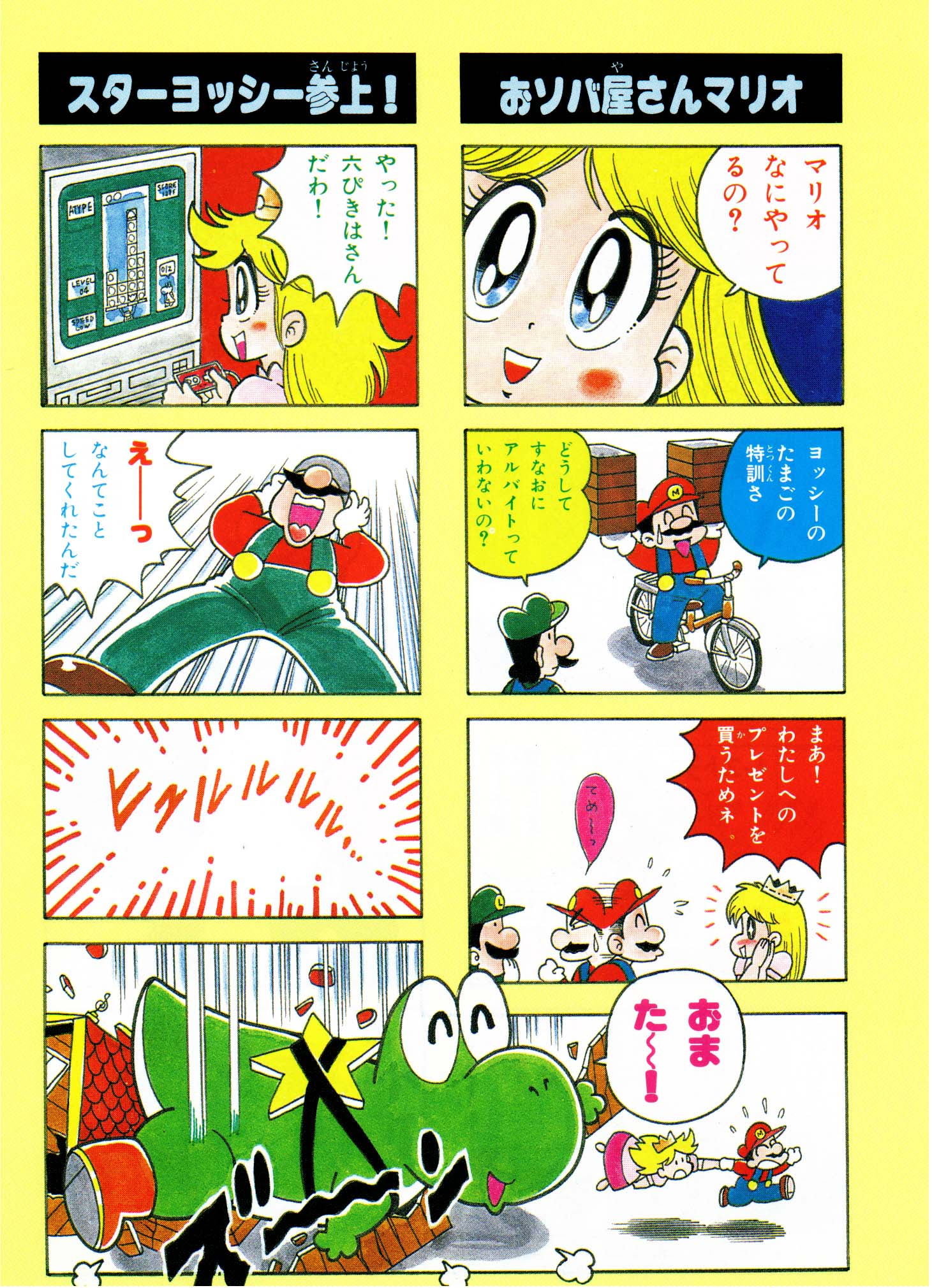
The first skits in the “4-koma Paradise” section of this Japanese-only 4-panel comic anthology are Yoshi-based.
Super Mario-kun
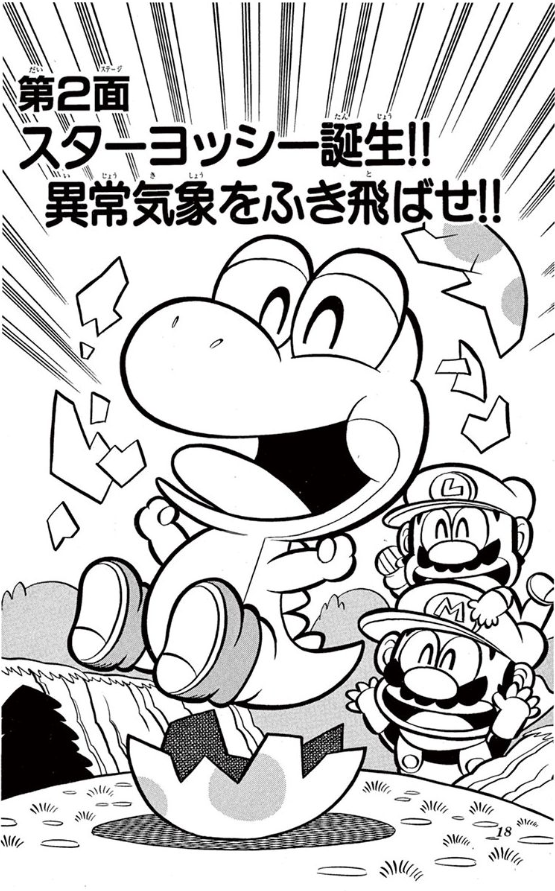
Two chapters reference the game: Volume 5 Stage 2 (Lakitu drops enemies; Yoshi transforms into Star Yoshi to fight back) and Volume 6 Stage 1 (Star Yoshi battles the Mothra-like Battra Hanachan).
4-koma (SMW6) #1
4-koma (SMW6) #2
Super Mario-kun Vol 5
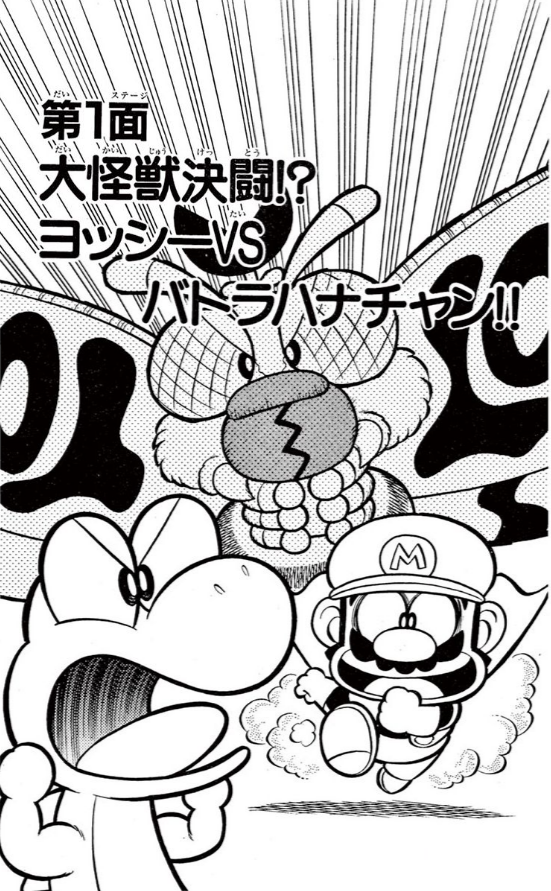
Super Mario-kun Vol 6
Pre-release & Unused Content

Unused NES title graphic. An unused full-body Little Yoshi sprite intended for the title screen sits in the NES version's game files. It was replaced with the simpler design that shipped.

Unused Bullet Bill sprite (Game Boy). The Game Boy version contains a Bullet Bill sprite that goes completely unused in the released game. Suggestive of cut content — possibly a fifth enemy type, possibly a bonus item for the A-Type progression.
The cancelled SNES sequel.
A follow-up titled Super Yoshi no Tamago entered development for the Super Famicom in 1995, but was cancelled. The project resurfaced in an unexpected place: it was ported to the Nintendo DS in 2007 as an internal test during the development of Pokémon Black and White — Game Freak using their own old puzzle game as an engineering benchmark for new Pokémon games. The port was leaked publicly during the October 2024 Game Freak data breach.
Reception
Yoshi received mixed-to-negative reviews from critics at launch. The most common complaint was that it leaned too heavily on Tetris's formula without adding enough new ideas, and that progression depended too much on luck rather than skill. The same criticisms followed every Virtual Console re-release.
Critical Reviews
Allgame — Brett Alan Weiss
Called it a “surprisingly dull game”, noting the controls were unique but the novelty wore off quickly.
N-Force — Buyer's Guide, Jan 1993
4/5 stars. Praised it as “the fun of Tetris, but with color and sound effects”, calling it just as addictive but in short bursts.
GameSpot — Frank Provo
5/10. Cited slow gameplay and cumbersome controls in the Virtual Console re-release.
IGN — Lucas M. Thomas
5/10. Echoed GameSpot's critique of pacing and recommended players save their points.
Nintendo World Report
Said too much depended on luck rather than skill, making play feel unsatisfying.
1UP — Jeremy Parish
Not worth the 500-point Wii Shop price, but conceded it had more relationship to the Mario series than Yoshi's Cookie.
The commercial reality: despite the mixed reception, Yoshi sold 500,000 copies on its first day in Japan — numbers that justified Yoshi's elevation to franchise lead and helped fund the development of the first Pokémon games at Game Freak.
Artwork Gallery
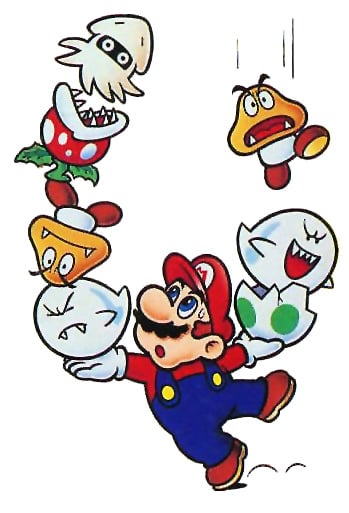
Mario Artwork
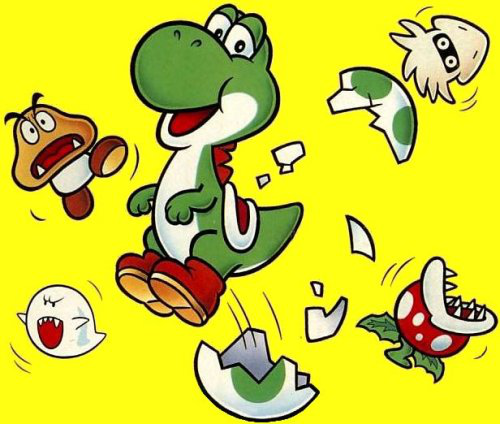
Yoshi Character Art

Yoshi (NES sprite)
Gameplay Video
A gameplay video demonstrating Yoshi in action — showing the falling-enemies mechanic, plate management, and Yoshi-hatching combos that define the game.
Trivia
- Game Freak\u2019s commercial lifeline. The 500,000 first-day sales of Yoshi helped Game Freak survive long enough to finish development of Pokémon Red & Green, which would not ship until 1996.
- The concept of Yoshi was explicitly inspired by Tetris — a Famicom/Game Boy contemporary that had launched Game Boy itself as a global phenomenon two years earlier.
- The Pokémon Center theme in Pokémon Red & Blue uses notes nearly identical to a portion of the Super Star theme in Yoshi — more obvious in the Game Boy version. A direct musical lineage from Game Freak's puzzle era into Pokémon.
- Yoshi\u2019s first solo starring role. Released only one year after his Super Mario World debut, this was the first Mario-franchise title with Yoshi's name in the title.
- The NES version's enemy sprites are reused almost wholesale from Super Mario Bros. 3 (1988) — except for Piranha Plants and Boos, which use their Super Mario World designs. Yoshi's forms are also taken from Super Mario World.
- Mario's sprite from Super Mario Bros. 3 appears on the NES high-score board.
- The cancelled SNES sequel Super Yoshi no Tamago (1995) was discovered as an internal DS test build from 2007, used by Game Freak as a benchmark during Pokémon Black/White development.
- The Toad-and-Yoshi image that appears after hatching a Yoshi in Super Mario Bros. Deluxe (Game Boy Color, 1999) is based on this game's NES title screen.
- A demo of the game is unlocked under “Masterpieces” in Super Smash Bros. for Wii U after beating Classic Mode with Yoshi at Intensity 2.0 or higher.
- European title oddity: the game is called Mario & Yoshi in nearly every non-American region (UK, France, Germany, Italy, Spain, the Netherlands, Portugal) — only North America uses the simple Yoshi name.
- The Chinese box art translates the title as “Mario and the Warrior Dinosaur” (玛利欧及勇士恐龙) — an unusually heroic framing for what is mechanically a falling-blocks puzzler.
- Ratings. ESRB: E (Everyone). PEGI: 3. CERO: A. The game has been rated for all ages across every territory.
- The Smash Bros. for Wii U “Masterpieces” entry incorrectly lists the US release date as 28 May 1992 — the actual NES release was June 1992 and the Game Boy was July 1992.