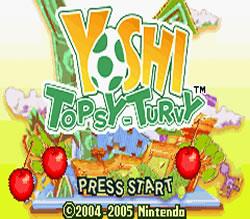
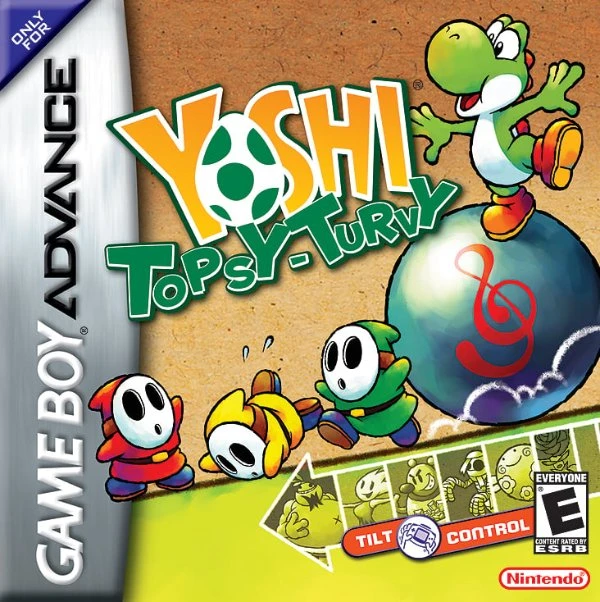
Yoshi Topsy-Turvy
Overview
Yoshi Topsy-Turvy is a 2004 Game Boy Advance platformer developed by Artoon and published by Nintendo. It’s the most mechanically unconventional Yoshi game ever shipped: the cartridge itself contains a built-in tilt sensor, and tilting your GBA left or right physically rotates the game world.
The game launched in Japan on 12 September 2004 as Yoshi no Banyuūin’ryoku (literally “Yoshi’s Universal Gravitation”), with PAL territories receiving it as Yoshi’s Universal Gravitation in May 2005 and North America getting the renamed Yoshi Topsy-Turvy in June 2005. The localised titles aimed to make the gimmick feel approachable to Western audiences who might be put off by the literal Japanese name.
The story is one of the more imaginative in the Yoshi series. The bookbinding spirit Hongo tries to seal Bowser inside his Forbidden Pop-Up Book but accidentally seals all of Yoshi’s Island instead. Yoshi must travel through 8 chapters of the book, each themed around a different spirit (Cuteness, Money, Power, Speed, Kindness, Fright, Surprise), completing 50 courses to convince Hongo to let his island back out.
Critical reception was mixed at launch. IGN gave it 5/10, calling the tilt concept “forcefully clumsy” and the level design “all over the quality spectrum.” GameSpot praised the early novelty but felt fatigue set in quickly. The Topsy-Turvy is now a cult-curiosity title rather than a beloved Yoshi entry, but its hardware experimentation makes it historically significant in Nintendo’s march toward motion-based gaming.
The Story

Bowser and his armies are attacking Yoshi’s Island, causing chaos for the inhabitants. The bookbinding spirit Hongo attempts to seal Bowser and his minions inside his Forbidden Pop-Up Book to end the destruction — but he fails. Instead of trapping just Bowser, Hongo accidentally seals the entire island inside the book.
The Spirit Who Loves Surprises
Yoshi panics, but a small jester-like spirit — the Spirit Who Loves Surprises — explains the situation. He was Hongo’s assistant until he got fired for questioning the decision (and for being terrible at keeping secrets). He tells Yoshi that the only way to free the island is to convince Hongo to release it, because the other spirits aren’t powerful enough to defeat Bowser themselves — the Koopa King is hiding in a cave at the very end of the book in the final chapter, The Tale of Bowser’s Cave.
The Gift of Gravity
As an apology for the chaos, the Spirit Who Loves Surprises gives Yoshi the power to tilt the entire world and explains how to use it. In the explanation cutscene, Yoshi accidentally hits the spirit with a boulder using his new powers — establishing both the game’s comic tone and the gravity-tilt mechanic players will use throughout the adventure.
The Spirits and the Egglings
Hongo agrees to release Yoshi’s Island if Yoshi can perform tasks for each of the seven spirits that govern the book’s chapters — the spirits of Cuteness, Money, Power, Speed, Kindness, Fright, and the Spirit Who Loves Surprises himself. Meanwhile, Bowser has cursed the resident Egglings of Eggland (who he chased to Yoshi’s Island) into Apples. By eating apples scattered across courses, Yoshi rescues Egglings one by one and adds them to his Eggling Book.
The Final Confrontation
The climax takes place in The Tale of Bowser’s Cave, the final chapter. Yoshi must confront Bowser directly. Bowser spits streams of fire at Yoshi and is defeated by throwing the bombs that fall from above at him. After Bowser’s defeat, Hongo restores Yoshi’s Island to normal and the spirits celebrate Yoshi’s success before returning home.
Gameplay

Yoshi Topsy-Turvy is a 2D side-scrolling platformer built entirely around its tilt mechanic. The core gameplay loop blends traditional Yoshi traversal (running, jumping, eating enemies, the Flutter Jump) with gravity-puzzle challenges that require physical hardware manipulation.
Core Loop
- Choose a chapter from the Forbidden Pop-Up Book — the 8 tales each belong to a spirit and contain multiple courses
- Get briefed by a spirit on each course’s objective: collect coins, defeat enemies, rescue Egglings from apples, reach the goal within a time limit, etc.
- Traverse the course using normal Yoshi movement plus tilt-based gravity manipulation
- Touch the star ring to move into the next area (one-way — you can’t go back)
- Touch the large star at the end to win a Happiness Medal and advance
- Gold Happiness Medals are awarded for completing the spirit’s task to a very high standard
Health & Death
- Yoshi has an eight-point health meter in his standard form
- Hearts restore one point; Big Hearts fully refill the meter
- Empty meter = lose a life; out of lives = Game Over
- 100 coins grant an extra life (a Yoshi-series staple)
Yoshi’s Standard Moves
- Run / walk using the D-Pad
- Jump with A
- Flutter Jump by holding A at the apex of a jump
- Eat enemies / apples with the tongue using B
- Transform at specific points into one of 6 alternate Yoshi forms (Balloon, Ship, Ball, Boat, Pirate Ship, Goonie)
The Tilt Sensor

The tilt sensor is the defining feature of Yoshi Topsy-Turvy. It’s built into the cartridge itself — not the GBA hardware — and detects when the player physically angles the handheld left or right.
How It Works
- There are only three levels of tilt: normal (level), tilted left, and tilted right
- There is no fine-tuning — you can’t tilt slightly or partially. The sensor snaps to one of the three states
- When the world is tilted, Yoshi can walk on walls — horizontal surfaces become vertical and vice versa
- Many objects — balls, boulders, enemies like Igashira-kuns — roll downhill in the direction of the tilt
- Continually changing the tilt direction can flip some objects upside-down for puzzle effects
Calibration
The cartridge needed periodic calibration. The game presents a calibration screen at startup and after sleep wake-ups, where players are prompted to hold the GBA level to set the “zero point.” This was necessary because the sensor was sensitive to its starting orientation — holding your GBA on your lap vs. on a desk produced subtly different baselines.
Critical Reception of the Tilt Mechanic
The tilt mechanic was the most polarising aspect of the game on release. IGN’s Craig Harris wrote that the three-state tilt felt “forcefully clumsy” and that many areas seemed designed to test whether players were paying attention to the mechanic rather than to use it for genuine puzzle design. GameSpot’s Justin Calvert said the early novelty of tilting wore off quickly, and that long play sessions became uncomfortable due to the awkward GBA hold positions required.
Despite the criticism, Topsy-Turvy stands as a historically significant Nintendo experiment: a portable tilt-controlled game from 2004, predating the Wii Remote’s motion controls by two years. The same cartridge-sensor technology had appeared in Artoon’s earlier Kirby Tilt ’n’ Tumble (2000) on the Game Boy Color.
Controls
GBA + Tilt Sensor Controls
| Input | Action |
|---|---|
| D-Pad | Move Yoshi left/right |
| A button | Jump / Hold to Flutter Jump at apex |
| B button | Eat enemies / apples / objects with tongue |
| L / R triggers | Various course-specific actions (e.g. switch tilt mode in some modes) |
| Start | Pause menu |
| Select | Quick map / status screen |
| Tilt GBA Left | World rotates counter-clockwise. Balls roll left, gravity pulls objects to the left wall |
| Tilt GBA Right | World rotates clockwise. Balls roll right, gravity pulls objects to the right wall |
| Hold Level | World stays flat. Yoshi walks on standard ground. Objects rest in place |
The tilt sensor responds to physical rotation of the cartridge itself, not the GBA console. Some players found it easier to hold the GBA still and rotate it in their hands than to tilt it on a flat surface.
Characters



Yoshi
The green dinosaur protagonist. His goal is to free Yoshi’s Island from imprisonment in the Forbidden Pop-Up Book while ensuring Bowser and his minions stay trapped within. Yoshi retains his classic abilities (tongue-eating, Flutter Jump) and gains the new power to tilt gravity via the Spirit Who Loves Surprises. He has 6 transformation forms unlockable through the chapters.
Hongo
The great spirit of the Forbidden Pop-Up Book. Powerful but stubborn. Hongo begins the plot by sealing Yoshi’s Island inside the book to contain Bowser — a well-intentioned failure that drives the entire game’s premise. He agrees to release Yoshi’s Island if Yoshi can prove himself worthy to the other spirits.
Spirit Who Loves Surprises
A jester-like tiny book spirit. Hongo’s former assistant, fired for questioning his decision to seal the island and for being incapable of keeping secrets. Befriends Yoshi early in the story, grants him the power to tilt gravity, and provides Bonus Missions throughout the game.
Bowser
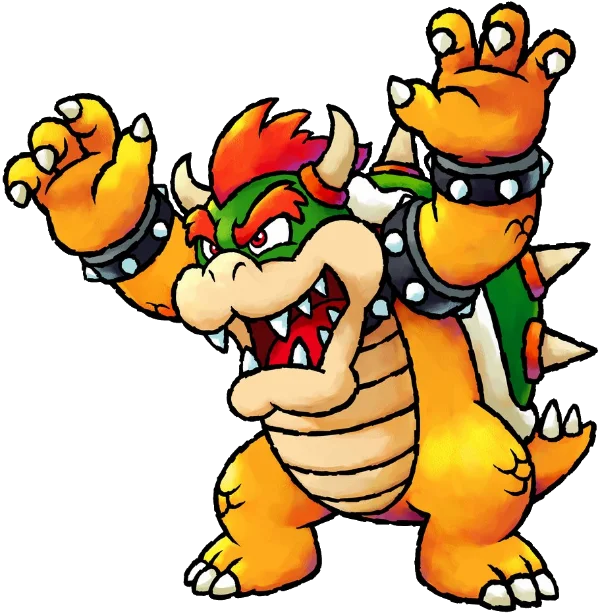
The evil King of Koopas. Attacked Eggland and cursed the resident Egglings into apples, chasing them to Yoshi’s Island. Hongo sealed him in the Forbidden Pop-Up Book where he hides in a cave in the final chapter. Defeated by Yoshi using bombs in the climactic showdown.
The Egglings
Bird-like residents of Eggland cursed by Bowser into apples scattered throughout the courses. Yoshi rescues them by eating apples; each rescue adds an Eggling to the in-game Eggling Book collection.
The 7 Spirits
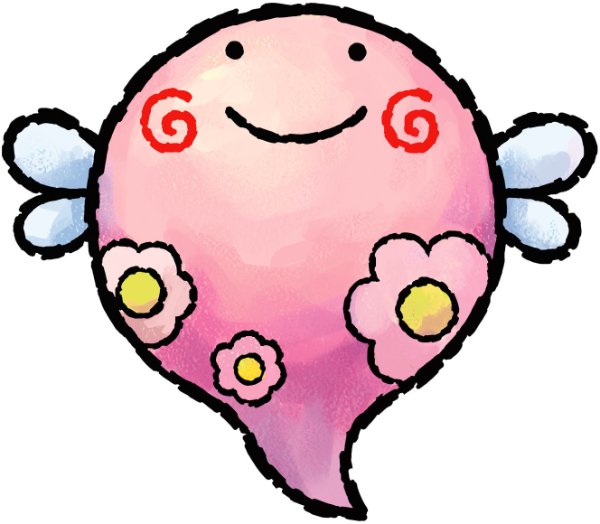
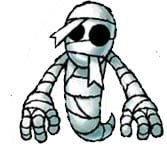
The Forbidden Pop-Up Book is governed by seven spirits. Each spirit owns a chapter (some appear in multiple chapters) and sets Yoshi’s mission objectives in their tales.


Mission Themes
| Spirit | Mission Type | Notes |
|---|---|---|
| Cuteness | Friendly traversal & exploration | The tutorial spirit; her missions teach basic tilt mechanics |
| Money | Coin collection challenges | The most-frequently-appearing spirit; appears in many bonus missions across other chapters |
| Power | Enemy-defeating missions | Aggressive combat-focused tasks |
| Speed | Time-limit challenges | Quick reactions; race the clock through tilted obstacles |
| Kindness | Eggling rescue missions | Saving curse-victims is her primary focus |
| Fright | Spooky / haunted-themed courses | Big Boos, Daruma Otoshi-kuns, dark visuals |
| Surprises | Bonus missions throughout | The Spirit Who Loves Surprises provides optional side challenges |
The 8 Chapters
The Forbidden Pop-Up Book is divided into 8 chapters (“Tales”), each containing multiple courses with their own missions. The total course count is 50 missions, plus the final boss and various bonus content. Each chapter is named after a spirit and reflects that spirit’s thematic focus.
| # | Chapter Title | Theme & Notes |
|---|---|---|
| 1 | Tale of the Spirit of Cuteness | Tutorial chapter. Introduces tilt mechanics through Apples, the Ball, and Rolled-up carpets. Mission 1-2 introduces Cannons and the first enemies (Igashira-kuns). Mission 1-3 features Lifts, Snowballs, and Piranha Plants. 3 courses |
| 2 | Tale of the Spirit of Money | Coin-collection focus. The Money spirit’s tasks dominate. Tile rolling, basket-flipping, and coin-shower missions. 6 courses |
| 3 | Tale of the Spirit of Power | Combat emphasis. Enemy-defeat objectives. Spirit-of-Money side missions interspersed for collection variety. Multi-spirit briefings begin appearing |
| 4 | Tale of the Spirit of Speed | Time-limit challenges. Tilt-driven traversal under the clock. Multi-spirit missions with the Speed + Power spirits combined |
| 5 | Tale of the Spirit of Kindness | Eggling rescues. Apples must be eaten to free trapped Egglings. Heart-warming intermissions reveal the Eggland backstory |
| 6 | Tale of the Spirit of Fright | Haunted-themed missions. Big Boos, Boos, and the spike-covered Daruma Otoshi-kun enemy. Late-game difficulty spike |
| 7 | Tale of Bowser’s Fields | Mid-boss chapter. The Spirit Who Loves Surprises uses a cardboard cutout of Bowser to test Yoshi — it spits fireballs like real Bowser but is later revealed as a fake |
| 8 | Tale of Bowser’s Cave | The final chapter. Yoshi confronts the real Bowser. Defeated by throwing falling bombs at him while dodging fire streams |
Spirit Briefings & Multi-Spirit Missions
While each chapter is named after a primary spirit, individual missions can have different briefing spirits. For example, in The Tale of the Spirit of Money some missions are briefed by Cuteness, and the Speed chapter has Speed+Power dual briefings. The variation keeps the spirit roster present throughout the game rather than siloed by chapter.
Yoshi’s Transformations
Throughout the game, Yoshi can transform into 5 unique vehicle forms plus his standard form. These transformations are obligatory to complete certain areas and collect specific items.
Yoshi (Standard Form)
Yoshi’s default state. Can lick up enemies or apples with his tongue, perform the Flutter Jump by holding A at the apex of a jump, and use the tilt sensor to rotate gravity. Has an 8-point health meter. Loses a life when the meter empties.

Balloon Yoshi
The first transformation encountered. Yoshi becomes a hot-air balloon and slowly floats downward. Tilting the GBA left or right makes him drift in that direction. Coins, spikes and other obstacles are usually positioned in the descent path — the challenge is navigating around them while the slow descent constantly happens.
Ship Yoshi
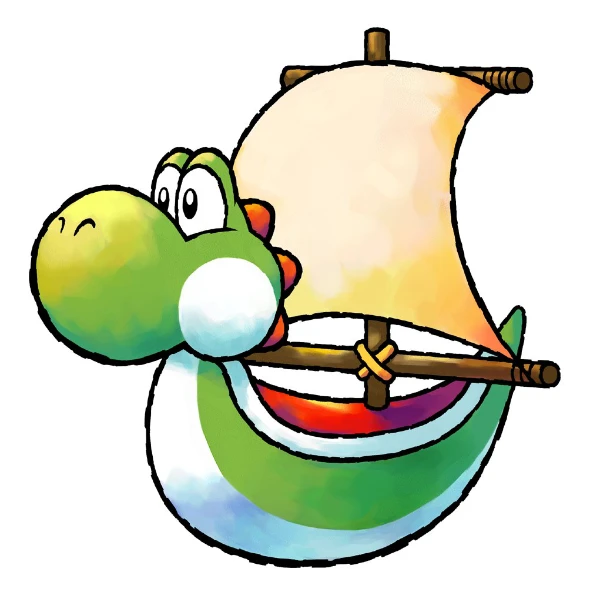
Yoshi floats above water and continually moves forward at fixed speed. The water level itself changes when the GBA is tilted left or right. If Yoshi touches dry ground he can’t move; touching water re-enables motion. The puzzle is managing where the water flows.

Ball Yoshi
Yoshi transforms into a rolling ball. He can no longer jump or eat enemies. Movement comes entirely from the tilt sensor — the ball rolls in the direction the GBA is tilted. Used for racing-style sections and tight gravity puzzles.
Boat Yoshi
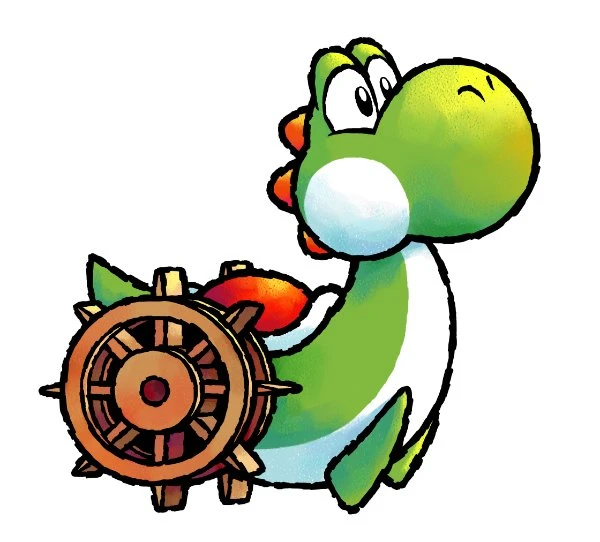
A water-based vessel form that handles differently from Ship Yoshi. The boat moves with the tilt and respects buoyancy physics, allowing Yoshi to navigate fluid-filled chambers and water mazes.

Pirate Ship Yoshi (Shy Guy Ship)
Yoshi commandeers a Shy Guy Ship for action sequences. Used in the Yoshi’s Pirate Battle challenge mode and certain story missions. Combat-oriented with cannon-firing mechanics.
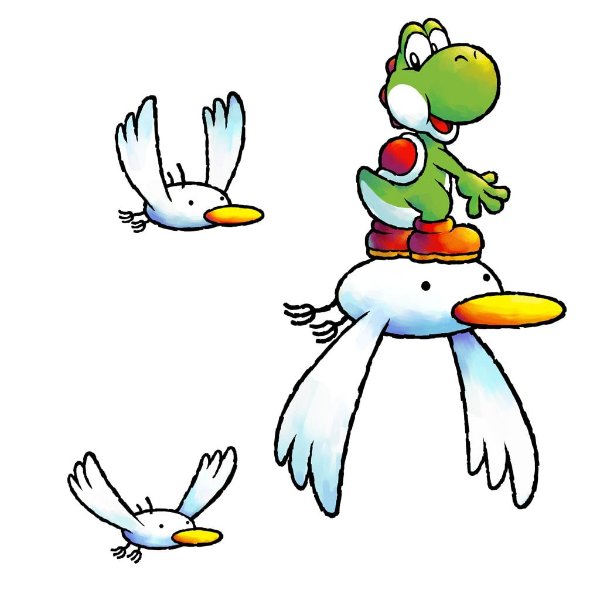
Goonie Yoshi (Riding a Goonie)
Yoshi rides on top of a Goonie bird. The Goonie flies continually forward; tilting causes it to fly upward or downward. Yoshi must time his jumps and avoid environmental hazards while the bird carries him through the course.
Enemies
Yoshi Topsy-Turvy features a relatively small enemy roster of 12 main enemies drawn from the broader Yoshi/Mario universe, plus boss encounters. Most enemies drain Yoshi’s health on contact and can be defeated by eating them or, in some cases, by rolling objects into them via the tilt mechanic.




Full Enemy List
| Enemy | Behaviour | How to Defeat |
|---|---|---|
| Big Boo | Appears in 4 missions. Follows Yoshi when not being looked at; freezes and shields its face when watched | Avoid or eat from behind |
| Boo | Only appears in Mission 6-7. Same behaviour as Big Boos, smaller size | Same as Big Boo |
| Daruma Otoshi-kun | Spiked, invincible enemy. Appears 4 times late in Chapter 6 | Cannot be defeated — avoid only |
| King Debuhō | Larger Fat Guy. Yoshi bounces off when jumping on its head | Cannot be defeated — avoid only |
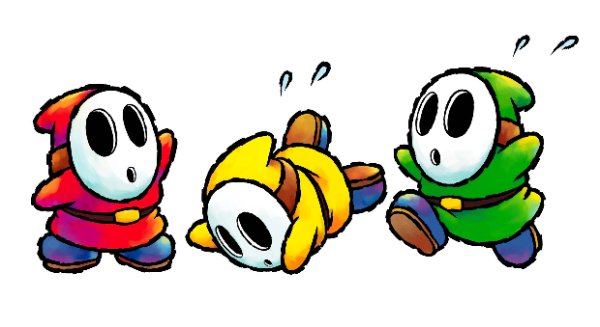
| Fly Guy | Flying Shy Guy with propeller hat. Often holds Coins | Tongue to eat — may drop coin bonus |
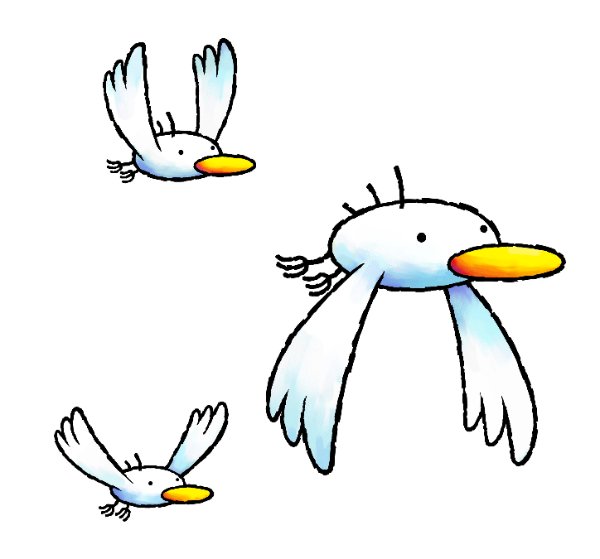
| Goonie | Birds that continually fly forward. Tilting makes them fly up/down | Don’t defeat — jump on head to ride them as a platform |
| Gusty | Ghostly wind-spirit enemy | Tongue to eat |
| Igashira-kun | Spiked spherical enemy. Rolls downhill when world is tilted | Use tilt to roll them away; cannot be eaten due to spikes |
| Mace Guy | Shy Guy with spiked mace ball weapon | Time the swing & tongue from behind |
| Piranha Plant | Rooted plant enemy emerging from pipes | Tongue when retracted; avoid when bloomed |
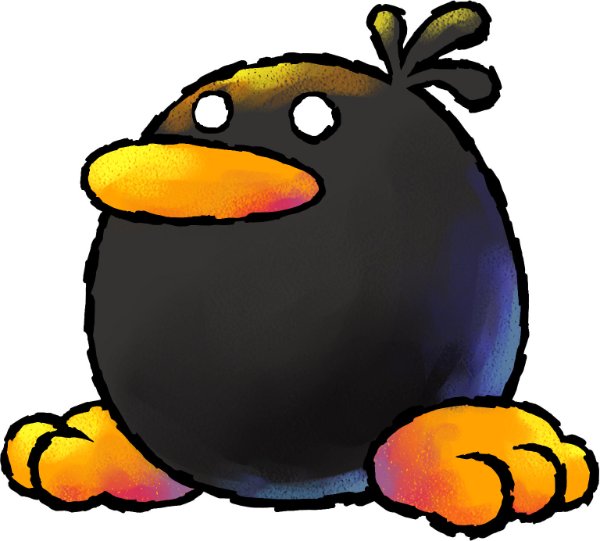
| Raven | Black bird flyer that swoops at Yoshi | Tongue to eat |
| Shy Guy | Standard ground enemy | Tongue to eat — simple kill |
| Tap-Tap | Spiky armored Yoshi-series classic | Cannot be defeated by standard means; tilt to roll away |
Bosses
Yoshi Topsy-Turvy has only two boss encounters in the main story: a fake mid-boss and the real Bowser at the end.
Cardboard Bowser (Spirit Who Loves Surprises)
In The Tale of Bowser’s Fields (Chapter 7), Yoshi faces what appears to be Bowser. He spits fireballs at Yoshi like the real Koopa King — but it’s actually the Spirit Who Loves Surprises manipulating a cardboard cutout of Bowser to test Yoshi. The reveal happens after Yoshi defeats it. Fits the spirit’s established characterisation as a prank-loving trickster.
Bowser
The real final boss appears in The Tale of Bowser’s Cave (Chapter 8). He spits streams of fire at Yoshi from a fixed position, and is defeated by throwing the falling bombs that drop from above the arena at him.
The Boss Mechanic
- During the first phase, several bombs without parachutes fall from above and roll along the ground based on the tilt
- Bombs flash red after a few seconds, then explode shortly after — you must time your throws
- Yoshi must tilt the GBA to roll the bombs toward Bowser, then eat & spit them at the right moment
- Dodging the fire streams while managing rolling bombs is the boss puzzle
- Bowser is defeated after several successful bomb hits
Items
Yoshi can collect a small set of items and pickups throughout the courses, plus the all-important Happiness Medals awarded at level completion.


Full Item List
| Item | Function |
|---|---|
| Coin | Standard collectible. 100 coins grant an extra life. Much more common in Spirit of Money missions |
| Bomb | Often attached to parachutes that float down from above. Tilting affects their fall direction. Once they hit the ground they explode and can damage enemies or Yoshi. During the Bowser fight, parachute-less bombs fall and roll based on tilt |
| Heart | Common pickup. Eating one restores 1 HP |
| Big Heart | Rarer than ordinary Hearts. Fully replenishes Yoshi’s health meter |
| Apple | Cursed Egglings. Eating one rescues an Eggling and adds it to the Eggling Book |
| Happiness Medal (Silver) | Awarded for completing a course’s assigned task. Required to progress |
| Happiness Medal (Gold) | Awarded for completing the task to a very high standard. The collector’s reward |
| Puzzle Piece | Special collectibles hidden in courses; collecting all assembles a complete puzzle image |
| Bonus Wheel | Roulette wheel that appears during Bonus Chance! sections. Winning spaces vary based on Happiness Medal earned |
Objects
The courses are filled with interactive objects designed to be manipulated by the tilt sensor. Below: the recurring objects across the game’s 50 courses.
| Object | Behaviour |
|---|---|
| Abacus Lift | Abacus beads in various sizes and colours. Move along their rails when the GBA is tilted; can be ridden |
| Ball / Chime Ball | Functions like a boulder but plays a rising note when rolling over a xylophone. Tilt to direct it |
| Ball and Chain | Can be used to smash walls. Yoshi tilts to swing the chain |
| Basin | Appears in coin-catching Bonus Missions. Wheeled basins move with the tilt |
| Basket | Green basket containing 5 coins. Coins are collected by tilting back and forth to flip the basket upside-down |
| Bonus Wheel | Roulette wheel during Bonus Chance! sections |
| Boulder | Tilt to roll. Used to cross spike pits safely or knock down enemy lines |
| Cannon | Fires Yoshi to other parts of the level. First appears in Mission 1-2 |
| Drop Lift | Falls under Yoshi’s weight after a delay — a timing platform |
| Ferris Wheel | Multi-cabin rotating platform; ride or stand on it |
| Half-Pipe | Curved skateboard-style ramps used in some tilt-traversal sections |
| Lift / Old Lift | Standard platform lifts. Multiple visual variants |
| Paddle Platform | Pivots on a central axis when Yoshi stands on either side |
| Rising Notes | Musical notes that emerge when balls roll over xylophone surfaces — collectible |
| Shy Guy Ship | Boardable pirate vessel for Pirate Ship Yoshi sections |
| Snowball | Grows larger as it rolls along snowy ground; cycles through size phases |
| Rolled-up Carpet | Unrolls when tilted, creating temporary paths |
| Goal Ring (Star Ring) | Star-pattern ring marking area transitions. One-way only — you cannot return to a previous area |
| Goal Star (Large) | Large star at end of level. Touch to complete the mission and receive a Happiness Medal |
The Eggling Book
The Eggling Book is the in-game collection tracker for the Egglings Yoshi rescues throughout the adventure. The book contains seven pages, each listing the Egglings recovered by species. Each Eggling has its own name and class.
The 18 Eggling Species
Egglings come in 18 different animal-themed species, each with multiple named individuals to rescue. Spirit of Kindness missions are particularly Eggling-rescue-heavy.
| Species | Notable Named Egglings |
|---|---|
| Gold Eggling | Rich |
| Silver Eggling | Glimmer |
| Pearl Eggling | Pearly |
| Zebra Eggling | Safari, Trotter |
| Panda Eggling | Stripes, Ref |
| Squirrel Eggling | Nutter, Squib, Chipper, Cookie, Peanut, Almond, Twigs |
| Tiger Eggling | Bengal, Tigor |
| Leopard Eggling | Coog, Felinus |
| Cow Eggling | Mooch, Muumuu, Chubley, Derry, Hayworth, Jersey, Edder |
| Snake Eggling | Heezy, Boa, Slither, Cobro, Squirm, Ann Conda, Garter |
| Giraffe Eggling | Nicker, Upski |
| Turtle Eggling | Slowmo, Trundle, Molasses, Glue, Plod, Creep, Nogo |
| Bee Eggling | Honey, Syrup, Waxler, Stingle, Buzzo, Bumble, Queenie |
| Deer Eggling | Cocoa, Maple, Caramel, Mocha, Eclair, Cappuccino, Coffee |
| Dove Eggling | Peace, Hope, Feather, Cuckoo, Pigeon, Wings, Wishy |
| Flamingo Eggling | Pinky, Rosa, Mingo, Salmon, Shelly, Sunset, Sunrise |
| Raccoon Eggling | Scrub, Trashcan, Bus… |
Completing the Eggling Book unlocks Yoshi’s Big Jump, one of the five Challenge Mode minigames available after completing the main story.
Story Mode & Challenge Mode
The game offers two main play modes: Story Mode (the main 50-course campaign) and Challenge Mode (5 unlockable minigames after beating the game).
Story Mode
- The main campaign — 8 chapters across the Forbidden Pop-Up Book
- 50 courses in total, plus mid-boss (cardboard Bowser) and final boss (Bowser)
- Each chapter has a presiding spirit who sets the missions
- Missions include collecting coins, defeating enemies, rescuing Egglings from apples, etc.
- 12 different enemy types appear; their damage drains Yoshi’s health
- Hearts (1 HP) and Big Hearts (full HP) restore the meter
- Happiness Medals reward course completion — Gold Medals for top-tier performance
Challenge Mode
Unlocked after completing Story Mode. Contains 5 minigames, each with its own specific unlock condition.
| Minigame | Description | Unlock Condition |
|---|---|---|
| Shuffle Mode | Endless series of random missions and pages. Complete each mission to advance to the next page; minigame ends when Yoshi fails or loses a life | Complete the game |
| Yoshi’s Big Jump | Snowy-mountain skiing minigame. Tilt right to make Yoshi slide; jump at the right moment for maximum distance based on slide speed and jump timing | Complete the Eggling Book |
| Yoshi’s Pirate Battle | Time-limited combat aboard a Shy Guy Ship. Controls a pirate ship variant of Yoshi | Specific Story Mode condition |
| Yoshi’s Eat-em-Up | Tongue-eating challenge against waves of enemies under time pressure | Specific Story Mode condition |
| Yoshi’s Tilt Challenge | Pure-tilt obstacle course — navigating various tilt-based puzzles without standard movement | Specific Story Mode condition |
Bonus Missions
The Spirit Who Loves Surprises provides optional Bonus Missions throughout the chapters — brief tilt-based challenges (catching coins in basins, navigating short obstacle paths) that reward bonus content like puzzle pieces.
Promotional Videos
Three contemporary promotional videos for Yoshi Topsy-Turvy, capturing the marketing approach Nintendo took to introduce the tilt mechanic to global audiences in 2004–05.
Development Staff
Yoshi Topsy-Turvy was developed by Tokyo-based studio Artoon for Nintendo. Artoon was founded by ex-Sega staff in 1999 and specialised in technically experimental handheld titles.
- Developer: Artoon
- Publisher: Nintendo
- Platform: Game Boy Advance
- Directors: Hidetoshi Takeshita, Hiroto Saiki
- Producers: Masaki Tawara (Nintendo), Naoto Ohshima (Artoon co-founder — the original Sonic the Hedgehog character designer at Sega)
- Genre: Tilt-based 2D platformer
- Notable Hardware: First and only Yoshi game to ship with a cartridge-integrated tilt sensor
- Artoon Heritage: Previously developed Kirby Tilt ’n’ Tumble (Game Boy Color, 2000) using the same cartridge-sensor technology. Topsy-Turvy is the GBA evolution of that approach
- Subsequent Yoshi Work: Artoon would also develop Yoshi’s Island DS (2006) and Yoshi’s New Island (2014) under their parent company AQ Interactive (later Marvelous AQL)
Reception & Legacy
Yoshi Topsy-Turvy received mixed-to-poor reviews on release, settling at an overall 6.2/10 on GameRankings based on the review aggregate as of August 2006. The tilt mechanic was praised conceptually but criticised in execution.
Critic Scores at Launch
- IGN (Craig Harris): 5/10 — “Mediocre.” Said the tilting concept makes everything feel “forcefully clumsy,” level design is “all over the quality spectrum,” characters are “irritating,” the storyline is “stupid,” and the gameplay “barely resembled other Yoshi games.” Called it “the worst game Nintendo published on the Game Boy Advance”
- GameSpot (Justin Calvert): Said the adventure was “fun and clever when it began” but after a while the graphics, sound and gameplay became repetitive and tiring. Tilt fatigue was a recurring complaint
- GameRankings Aggregate: 6.2/10 across reviews (as of August 2006)
What Critics Praised
- The technical achievement of the cartridge-integrated tilt sensor
- The visual style and Yoshi-series art direction
- The variety of transformations and missions
- The early-game novelty value of physical tilting
What Critics Criticised
- The three-state tilt (left / level / right with no fine-tuning) felt restrictive and imprecise
- Many areas seemed designed to test whether players were paying attention rather than to create genuine puzzles
- The star-ring one-way progression made some areas feel rigid — some only lasted seconds
- Tilt fatigue from holding the GBA at awkward angles for extended sessions
- Story and characters felt disconnected from the broader Yoshi/Mario universe
Retrospective Position
Yoshi Topsy-Turvy has settled into cult curiosity status within the Yoshi fanbase. It’s remembered fondly for its technical ambition (a cartridge tilt sensor in 2004 was a remarkable engineering choice) and historical position as one of Nintendo’s pre-Wii motion-control experiments. The IGN comparison “worst Nintendo GBA published title” has aged into a much-quoted retrospective; many Yoshi fans now see it as misunderstood rather than bad. The game has not received any modern re-release; it has not appeared on Virtual Console or Nintendo Switch Online due to the tilt sensor hardware not being emulatable.
Trivia
- Cartridge-integrated tilt sensor. One of only a handful of GBA games to ship with sensor hardware embedded in the cartridge itself — not in the console. The same technology was used in Kirby Tilt ’n’ Tumble (2000) by the same developer Artoon
- Three different regional titles. Japan: ヨッシーの万有引力 (Yoshi no Banyuūin’ryoku, “Yoshi’s Universal Gravitation”); Europe/Australia: Yoshi’s Universal Gravitation; North America: Yoshi Topsy-Turvy. The literal Japanese name was deemed too academic for Western audiences
- Cannot be emulated faithfully. The tilt sensor is built into the physical cartridge, meaning standard ROM emulation strips the core mechanic. This is one major reason why the game has not appeared on Virtual Console, Nintendo Switch Online, or any other modern re-release platform
- Naoto Ohshima produced it. Ohshima is famous as the original Sonic the Hedgehog character designer at Sega in 1990. By 2004 he had co-founded Artoon and produced multiple Yoshi GBA/DS titles
- IGN called it “the worst Mario-universe game Nintendo ever published on GBA.” Craig Harris’s 5/10 review remains one of the harshest mainline-Nintendo published-Mario-series reviews of the era
- Predated the Wii Remote by two years. The tilt sensor in Topsy-Turvy is widely regarded as a precursor experiment that influenced Nintendo’s motion-control philosophy. The Wii launched in November 2006
- Yoshi’s short-sleeved Sunshine-style shirt does not appear here. Yoshi retains his standard Yoshi-series design throughout
- No Mario in this game. Despite being a Mario-universe title, Mario does not appear — Yoshi handles the entire adventure alone, much like the Yoshi’s Island lineage
- The Spirit Who Loves Surprises is the only spirit named with a sentence-fragment title rather than an abstract concept like “Cuteness” or “Power.” His backstory as Hongo’s fired-then-friend assistant is one of the more developed character arcs in the game
- Bowser cursed the Egglings into Apples. The lore connection here makes Apples — normally a regular Yoshi-series collectible — narratively significant for the first time in the series
- 50 courses + final boss = roughly 6-10 hours of gameplay for an experienced player. Completion-focused players targeting all Gold Happiness Medals plus the full Eggling Book run closer to 15-20 hours
- Artoon would return to Yoshi for two more titles: Yoshi’s Island DS (2006) and Yoshi’s New Island (2014, by which point the company had been absorbed into Marvelous AQL)
- The Eggling Book contains ~18 species with multiple named individuals each. Total Egglings to rescue is significantly higher than 18 — closer to 50-60 named ones
- Gold Happiness Medals require performing each mission’s task to a very high standard — not just completing it. They unlock Challenge Mode minigames and the “true” completion percentage
- The game has Tap-Tap enemies — the spike-armored, slow-walking Yoshi-series enemy from Yoshi’s Island. Unusually for Topsy-Turvy, Tap-Taps are completely invincible: there is no way to defeat them, only avoid or roll them with tilt
- Boos act inversely: the standard Yoshi/Mario Boo behavior is reversed in this game. Big Boos and Boos here move when Yoshi isn’t looking at them, freezing and shielding their faces when watched — the opposite of Mario series Boo behavior
- Challenge Mode unlock structure requires both Story Mode completion AND specific sub-goals (Eggling Book, etc.). This was novel for a Yoshi GBA title
- The game’s logo features Yoshi physically tilting on a hill — a literal representation of the gameplay’s defining mechanic
Reference / Information
Sub-pages, guides, and walkthroughs for Yoshi Topsy-Turvy.
Media / Downloads
Box art gallery and screenshots for Yoshi Topsy-Turvy.
Regional Logos