
Mario Kart Wii
32 tracks, 24 characters, 36 vehicles — the biggest Mario Kart ever made
Overview
Mario Kart Wii is the sixth mainline entry in the Mario Kart series and the most ambitious to that point. Bundled in the box with the Wii Wheel — a plastic steering wheel housing for the Wii Remote — it made racing feel genuinely physical and accessible to new players while delivering the deepest feature set the series had ever seen.
The game launched to enormous commercial success, eventually selling over 37 million copies worldwide — making it the best-selling Mario Kart game until Mario Kart 8 Deluxe surpassed it, and still one of the best-selling Wii games of all time. It introduced bikes alongside karts for the first time, added aerial tricks, expanded the roster to 24 characters and delivered 32 tracks — 16 brand new and 16 remade classics from across the series’ history.

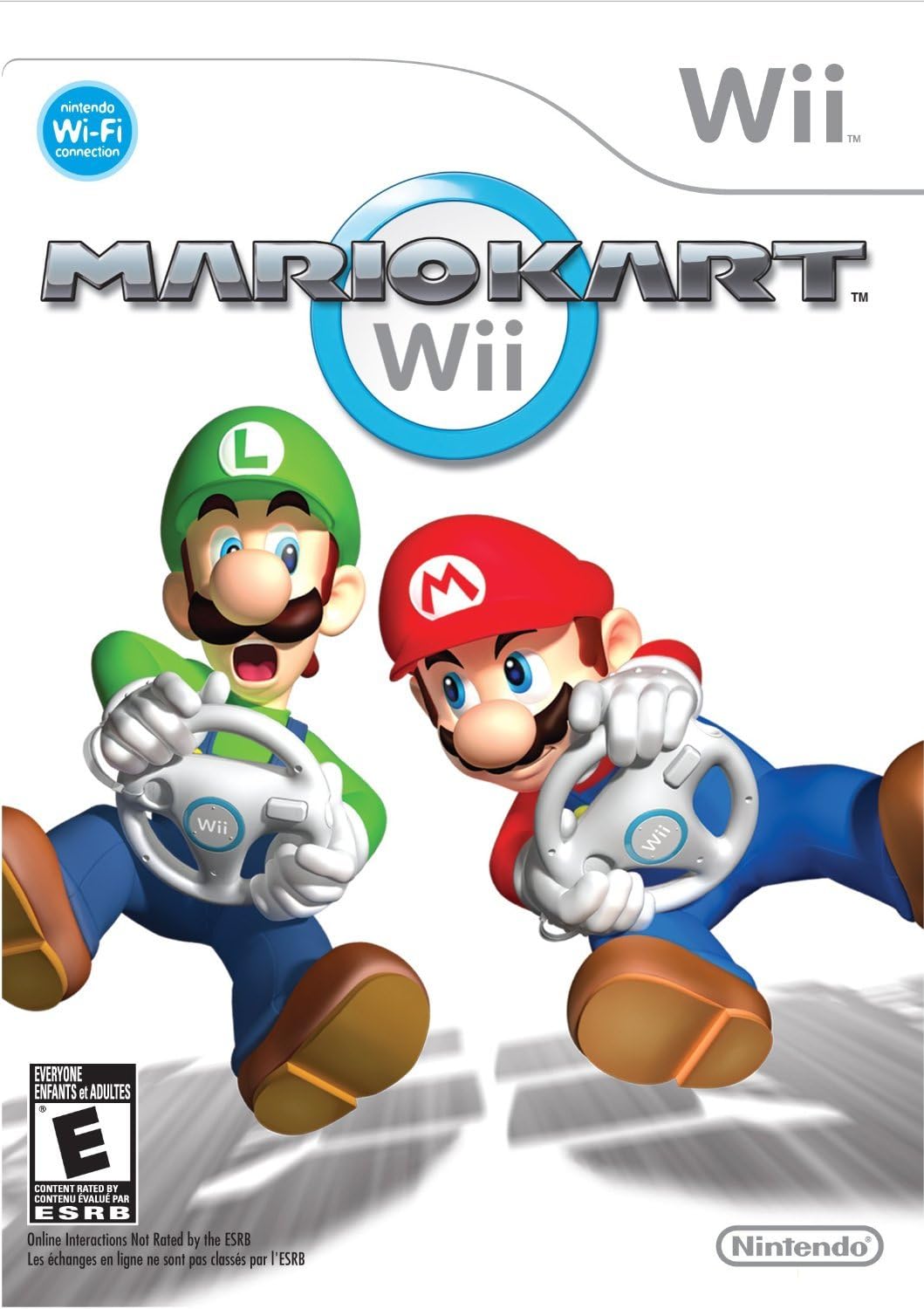
The title screen — changes once you’ve gold-starred every cup in every class
New features for Wii: Motorbikes with wheelie mechanics, aerial stunts off ramps, 12-player online races, the Mario Kart Channel for tournament downloads, Mii characters as playable racers, and a Licence system replacing save files. The three weight classes return — Small, Medium and Large — each with six karts and six bikes available.
The title screen is a secret reward: It defaults to Mario and Luigi with Wii Wheels. But get first place on every cup in every class including Mirror Mode and it changes to individual portraits of Mario, Luigi, Peach or Bowser — a subtle but satisfying acknowledgement of your achievement.

The full character select screen — 24 playable characters, 12 starters and 12 unlockables
Controls
Mario Kart Wii supports four different control configurations — more than any other entry in the series. The Wii Wheel (included in the box) is the most iconic, but experienced players often prefer the Classic Controller for precision:

Wii Wheel
The Wii Remote slotted into the bundled plastic wheel. Tilt to steer. Shake for tricks off ramps. The most natural feel for casual players — but less precise than analogue stick alternatives.
Wii Remote + Nunchuk
Tilt the Wii Remote sideways to steer while using the Nunchuk stick. More precise than the Wheel. Shake the Wii Remote for stunts.
Classic Controller
Full analogue stick control — the preferred setup for competitive players. No motion controls required. Works with the Classic Controller Pro too.
GameCube Controller
Full analogue stick support via the Wii’s GameCube ports. Familiar layout for veterans of Double Dash and earlier entries.
Advanced techniques
Several techniques separate competitive players from casual ones:
- Tricks/Stunts — shake the Wii Remote (or flick the stick) while going off a ramp for a mini-boost on landing
- Wheelies (bikes only) — flick the Wii Remote up to pop a wheelie, increasing top speed at the cost of handling
- Drifting — hold drift around corners to build up a Mini-Turbo boost. Blue sparks then orange = stronger boost
- Slipstreaming — draft closely behind another racer for two seconds to trigger a speed boost
- Rocket Start — hold the accelerator when the 2 fades during the countdown for a turbo launch off the start line
Game modes
Mario Kart Wii features six core modes, all available via Nintendo Wi-Fi Connection for online play:
Grand Prix
Race through four cups of four courses each at 50cc, 100cc, 150cc or Mirror Mode. Place first overall across all four tracks to earn trophies and unlock content. The main single-player mode.
Time Trial
Race alone against the clock to set the fastest possible time. Complete a course to get a Staff Ghost — beat it to unlock an Expert Staff Ghost for the hardest time trials in the game. Ghost data is shareable via WFC.
VS Race
Multiplayer racing with custom rules — choose your preferred tracks, item frequency, team settings and CPU difficulty.
Battle
Two battle modes: Balloon Battle (pop opponent balloons) and Coin Runners (collect the most coins). Four players locally or online.
Ghost Race
Race against downloaded ghost data from other players via WFC. The main way to benchmark yourself against the world’s best times.
Tournaments
Nintendo-run special events downloaded via the Mario Kart Channel. Limited-time challenges with unique objectives and leaderboards.
Licences
Mario Kart Wii replaces the traditional save file with a Licence system — each Licence stores an individual player’s records, rankings, Wi-Fi friend roster and ghost data. The Wii supports multiple Licences so the whole family can have their own profile. As you progress and win trophies, your Licence visually upgrades to reflect your achievements.
Characters — Small class
Small characters get the lightest vehicles with the best acceleration, handling and off-road performance — ideal for tight, technical tracks. They sacrifice top speed and weight to larger classes:

HNDDFT

HNDDFT

HNDDFT

HNDDFT
HNDDFT
🔒 8 Expert Staff Ghosts / 3,150 races / 100 WFC ghosts
HNDDFT
🔒 1★ all 50cc Retro cups / 1,950 races
HNDDFT
🔒 Unlock 4 Expert Staff Ghosts / 1,050 races
HNDDFT
🔒 Win 100cc Leaf Cup / 1,350 races
Characters — Medium class
Medium characters strike the best all-round balance. Most of the main Mario cast falls here — familiar faces with well-rounded stats across speed, acceleration and handling:

HNDDFT

HNDDFT

HNDDFT

HNDDFT

HNDDFT
🔒 1★ all 50cc cups / 16 online races / 1,350 races

HNDDFT
🔒 1★ all 50cc cups / 450 races
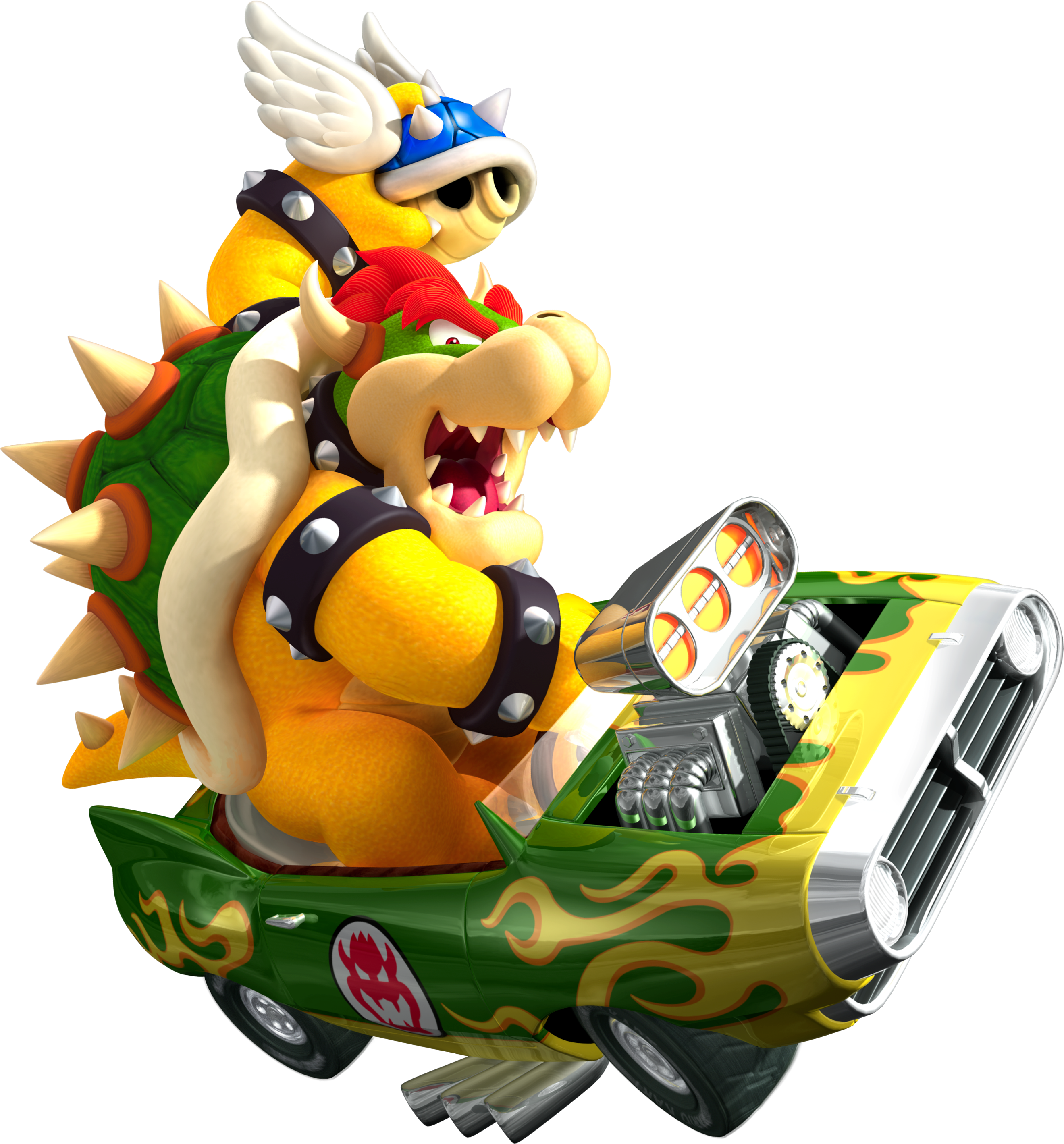
HNDDFT
🔒 1★ all 100cc Retro cups / 3,750 races
HNDDFT
🔒 Win 150cc Special Cup / 2,850 races
HNDDFT
🔒 Unlock at least 1 Expert Staff Ghost / 1,950 races
Characters — Large class
Large characters bring the highest top speeds and heaviest weights — they’re harder to spin out and have excellent raw pace on straight tracks, but wider hitboxes mean more contact from shells. Funky Kong is particularly famous among competitive players for his outstanding stat bonuses:

HNDDFT

HNDDFT
HNDDFT

HNDDFT
🔒 Win 50cc Star Cup / 750 races

HNDDFT
🔒 1★ all Mirror cups / 4,950 races / 50 races with SMG save

HNDDFT
🔒 4 Expert Staff Ghosts / 2,250 races / 25 WFC ghosts
HNDDFT
🔒 1★ all 150cc Wii cups / 4,350 races
HNDDFT
🔒 Win 100cc Special Cup / 1,650 races
HNDDFT
🔒 All 32 Expert Staff Ghosts / 5,100 races / 5,000 WFC ghosts
Vehicles
Mario Kart Wii features 36 vehicles — 18 karts and 18 bikes, divided equally across the three weight classes. Each vehicle has 7 stats that display during character selection: Speed, Weight, Acceleration, Handling, Drift, Off-Road and Mini-Turbo. Half the vehicles are available from the start; the other 18 must be unlocked through racing.
How bikes differ from karts
Bikes are a genuine strategic alternative rather than just aesthetic variety. The key differences: bikes can perform wheelies for a top-speed boost (at the cost of handling); bikes can perform sharper inside drift whereas karts use outside drift; bikes tend to have higher top speed but less Mini-Turbo potential. Expert players often favour bikes on straight-heavy tracks and karts on technical ones.


Notable vehicles include the Bullet Bike (fastest Small bike), Flame Flyer (Large kart with exceptional speed), Sneakster (speed-focused Medium bike) and the Offroader (massive Large kart with high off-road stat). Funky Kong on the Flame Runner became an infamous meta combination in competitive play — the combination of Funky Kong’s +4 speed bonus and the Flame Runner’s own speed stats made it the fastest possible setup in the game.
Items
Mario Kart Wii features 18 items — the largest roster in the series at the time. Three debut here: the Mega Mushroom, POW Block and Thunder Cloud. All three were removed in Mario Kart 7 and Mario Kart 8.


New courses — Wii Grand Prix
Sixteen brand new courses across four cups — all three laps, full Wii-era design with tricks, ramps and shortcuts:
Mushroom Cup


Flower Cup


Star Cup
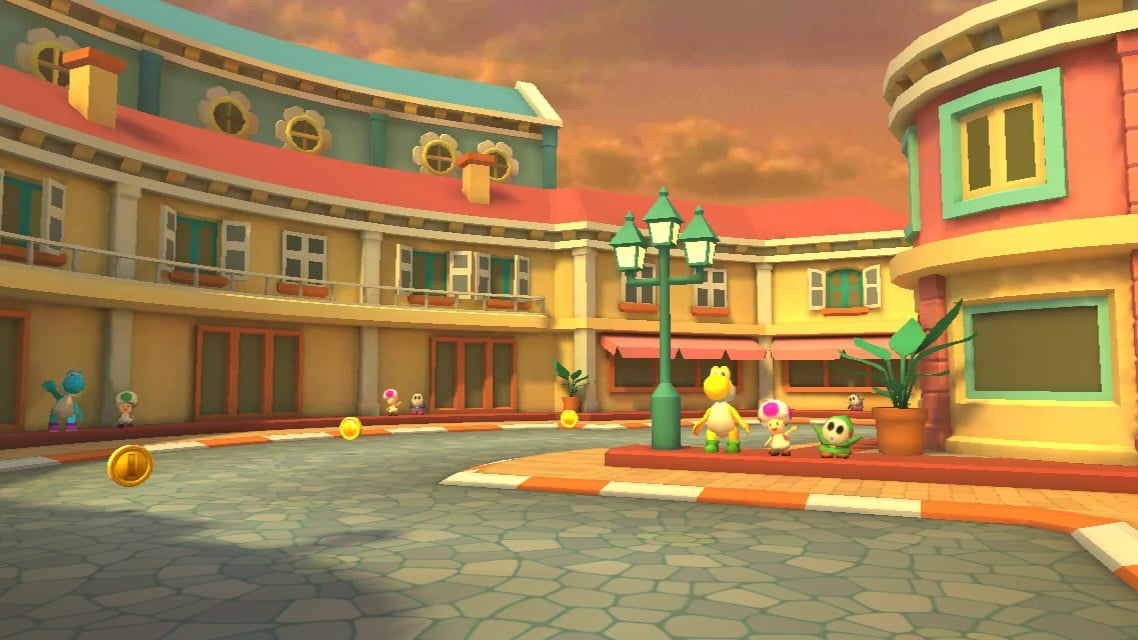


Special Cup


Retro courses
Sixteen classic courses from across the series — all graphically updated with new ramps, shortcuts and enhanced details. Two each from the SNES and GBA; four each from the N64, GameCube and DS:
Shell Cup


Banana Cup


Leaf Cup


Lightning Cup


Battle stages
Ten battle stages — five new and five retro — for Balloon Battle and Coin Runners:
New stages

3D block maze — the signature new battle stage with multiple levels.
Flood-prone docks from Isle Delfino — the water rises and falls during battle.
Circular arena with rampaging Chain Chomps loose in the middle.
Desert floor with Thwomps crashing down from above at intervals.
Retro stages

The classic SNES arena — simple and clean.
GBA fan favourite brought back in style.
Sweet-themed Double Dash stage — cheerful and chaotic.
Spooky DS mansion stage — atmospheric and tricky to navigate.
Online play
Mario Kart Wii was groundbreaking for Nintendo’s online ambitions. Via Nintendo Wi-Fi Connection, up to 12 players could race simultaneously — still among the biggest online player counts of any console Mario Kart. All tracks and modes are available online, including Balloon Battle and Coin Runners.

The WFC friend roster — exchange friend codes to race people you know
Mario Kart Channel
The Mario Kart Channel was a dedicated WiiWare channel installed on the Wii home menu — a first for the series. It let you check global rankings, download time trial ghost data from the world’s fastest players, see when friends were online and download Nintendo’s official tournament data. Tournaments ran periodically with unique rule sets and global leaderboards.
WFC options
Two online configurations: up to 12 players all playing from separate Wiis, or up to 10 online players with two playing locally on the same Wii. Ghost racing against downloaded ghosts didn’t count against your race total but earned ranking points.
Videos
Four videos from our collection covering Mario Kart Wii — gameplay, commercials and more:
Gameplay video
Commercial
Online gameplay
More gameplay
Interesting facts
- Mario Kart Wii sold over 37 million copies worldwide — making it the best-selling console Mario Kart for over a decade, until Mario Kart 8 Deluxe surpassed it
- Motorbikes were introduced to the Mario Kart series for the first time — with unique wheelie mechanics and inside drift distinguishing them from karts
- The game includes 24 playable characters — the largest roster in the series at the time, including debuts for Baby Daisy, Rosalina, Funky Kong and Dry Bowser
- Every copy comes bundled with the Wii Wheel — a plastic steering wheel housing for the Wii Remote
- Up to 12 players can race simultaneously online — one of the highest player counts of any console Mario Kart
- Mii characters are fully playable — your personalised Wii avatar can race with stat bonuses dependent on their outfit
- The game was known internally as “Mario Kart X” during development
- The title screen changes after getting first on every cup at every engine class including Mirror Mode — a hidden reward few players ever see
- Rainbow Road in Mario Kart Wii uses scenery from Super Mario Galaxy — stars, planets and the observatory are visible throughout
- On Daisy Circuit, the Daisy Cruiser from Mario Kart: Double Dash can be seen in the background harbour
- The game introduces the Mega Mushroom, POW Block and Thunder Cloud — three items removed from all subsequent entries in the series
- Funky Kong on the Flame Runner became the dominant competitive meta — the combination of stat bonuses made it objectively the fastest setup available
- The Mario Kart Channel was the first time a Mario Kart game had its own dedicated Wii channel for rankings and tournament downloads
- Retro courses from every previous entry are represented — SNES, N64, GBA, GameCube and DS all contribute tracks
- While being developed the game had the working title “Mario Kart X” and the promotional slogan was “Get Behind the Wheel”
Reference and downloads