
 |
Character fact sheetName: Wart (Mamu in Japanese) First Appearance: Yume Kojo: Doki Doki Panic (FDS, 1987) / Super Mario Bros. 2 (NES, 1988) Home: Subcon, the dream-world kingdom Voiced by: Wordless croak vocalizations across all appearances Associates: The Dream Machine (his bubble-spewing weapon), Mouser, Tryclyde, Fryguy, Birdo, Clawgrip (the Subcon villain hierarchy) |
General profile
Wart, known in Japan as Mamu, is the principal antagonist of Super Mario Bros. 2 (NES, 1988) and the most thematically distinctive of the major Mario series final bosses. A large, grumpy, green-skinned frog-king from the dream-world kingdom of Subcon, Wart wears a regal golden crown and presides over a sprawling villain hierarchy of dream-themed minions. His appearance is striking: a corpulent amphibian body with sleepy half-closed eyes, exposed pink belly, comically oversized webbed feet, a sharp-toothed perpetual sneer, and the aforementioned crown that signals his kingly status. He stands roughly twice Mario’s height and has the bulky physique of a creature that takes its meals seriously.
Wart’s defining feature in Super Mario Bros. 2 is his bizarre vulnerability to vegetables. The final boss fight has him perched atop the Dream Machine, a bubble-spewing contraption that spits constant projectile threats. Mario, Luigi, Peach, or Toad must pull vegetables from the ground around the arena and throw them into Wart’s mouth when he opens it to laugh between attacks. Seven vegetable hits defeat him, an unusual and memorable final-boss mechanic that fits with the dream-world fairy-tale absurdity of the entire SMB2 setting. The mechanic has been preserved unchanged across every re-release of the game from 1988 through the present.
Wart’s broader role in the Mario universe is unusual: despite being the antagonist of one of the best-selling NES games of all time, he has had remarkably few subsequent appearances. His original Doki Doki Panic origin (a Fuji Television cross-promotional game that Nintendo re-skinned for Western SMB2) makes his canonical status in the Mario series slightly ambiguous, and Nintendo has historically chosen Bowser over Wart for major spinoff villain roles. His occasional cameos in Mario and Luigi: Superstar Saga (where he sells music to Mario) and his cameo in The Legend of Zelda: Link’s Awakening (where he appears as Mamu, the original Japanese name) are the most notable post-1988 appearances. The Super Mario Galaxy Movie (April 2026) is set to feature him in a significantly expanded role.
Quotes
Enemies
Wart’s primary enemies are Mario, Luigi, Princess Peach, and Toad, the four playable characters of Super Mario Bros. 2. The dream-world setting of the game means his conflict with the heroes occurs in a fairy-tale realm rather than the standard Mushroom Kingdom geography. Beyond the SMB2 protagonists, Wart has had relatively limited enemy interactions across the broader Mario series, his role as a recurring villain has not been developed in the way that Bowser, King Boo, or Cackletta have been. His appearance in The Legend of Zelda: Link’s Awakening (as Mamu) places him in opposition to Link rather than the Mario cast.
Friends
Wart’s closest associates are his Subcon villain hierarchy: Mouser (the bomb-tossing rat boss of multiple SMB2 worlds), Tryclyde (the three-headed snake boss), Fryguy (the fire-breathing flame creature), Birdo (the egg-spitting recurring sub-boss who has since reformed and joined Mario’s side), and Clawgrip (the giant crab boss exclusive to the Western SMB2 release). Wart presides over this villain coalition as Subcon’s king. He has no romantic interest or family established in canon. His relationship with Bowser, the other major Mario series villain, has never been canonically defined, though both characters have been depicted as fellow members of the broader Mario villain community in various supplementary materials.
Appearances
Yume Kojo: Doki Doki Panic (FDS, 1987)
Wart debuted in Yume Kojo: Doki Doki Panic for the Famicom Disk System (July 1987), a Fuji Television cross-promotional game developed by Nintendo R&D4. The game was created to tie in with the Yume Kojo (Dream Factory) cultural event hosted by Fuji TV. Wart serves as the principal antagonist of Doki Doki Panic, kidnapping the children of the four playable characters and forcing them into the dream world. The character was designed by Nintendo R&D4 led by Kensuke Tanabe.
Super Mario Bros. 2 (NES, 1988)
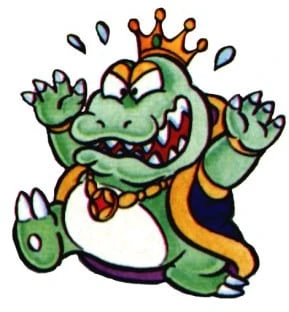 When Nintendo of America re-skinned Doki Doki Panic for Western release as Super Mario Bros. 2 (October 1988), Wart was retained essentially unchanged from his Doki Doki Panic role. He serves as the final boss of SMB2, confronted at the end of World 7 after Mario’s party has defeated his various sub-bosses across the previous six worlds. The vegetable-throwing boss mechanic was preserved from Doki Doki Panic.
Wart Solo Artwork (1988)
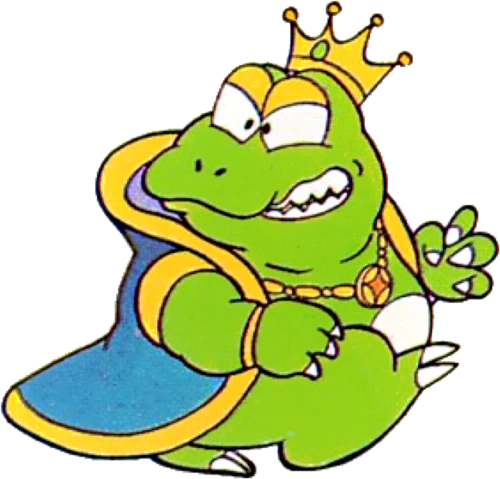 Wart’s solo artwork from Super Mario Bros. 2 (1988) became one of the most iconic Mario series villain portraits of the NES era. The artwork depicts him in a regal pose with his crown and his exposed pink belly, capturing the strange combination of villain-king dignity and bizarre amphibian-monster physicality that defines the character.
The Wart Boss Fight (1988)
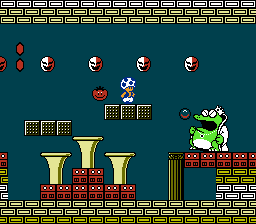 The Wart boss fight occurs at the end of World 7-2 in Super Mario Bros. 2. Wart is perched atop the Dream Machine, a bubble-spewing contraption that produces constant projectile threats. The player must pull vegetables from the ground at the bottom of the arena and throw them into Wart’s mouth when he opens it to laugh between attacks. Seven vegetable hits defeat him. The fight’s unusual mechanics have been preserved unchanged across every re-release of the game from 1988 through the present.
Super Mario All-Stars (SNES, 1993)
Wart returned in the 1993 SNES compilation Super Mario All-Stars, which featured a remastered version of Super Mario Bros. 2 with updated 16-bit graphics. His character art was redrawn for the SNES release, and the more detailed All-Stars Wart design has been the canonical visual reference for the character ever since.
The Legend of Zelda: Link’s Awakening (1993)
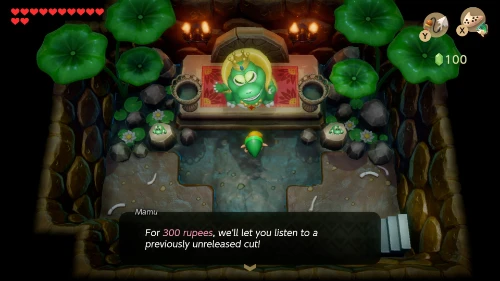 Wart appears as Mamu, his original Japanese name, in The Legend of Zelda: Link’s Awakening for Game Boy (1993). The cameo is one of the most-discussed Easter eggs in early Zelda series history. Mamu sings the legendary Frog Song of Soul for Link, a major plot beat in the Link’s Awakening narrative. The character returns in the 2019 Nintendo Switch remake of Link’s Awakening with updated 3D graphics.
Mario and Luigi: Superstar Saga (GBA, 2003)
Wart makes a brief cameo appearance in Mario and Luigi: Superstar Saga for Game Boy Advance (2003). He appears as the proprietor of a music shop in the game’s Beanbean Kingdom, selling sheet music to the Mario brothers. The cameo confirms his canonical status in the broader Mario series beyond just the original 1988 SMB2 game.
The Super Mario Galaxy Movie (2026)
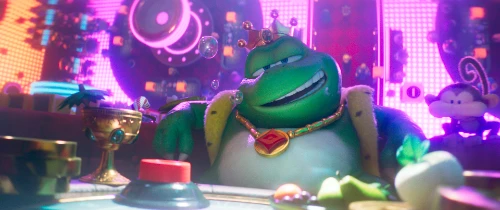 Wart is set to appear in The Super Mario Galaxy Movie (April 2026) in a significantly expanded role. Pre-release marketing has shown him in promotional artwork alongside other Mario series villains, suggesting that his role in the film will be substantially larger than any of his post-1988 game appearances. The film’s adaptation has been treated as Wart’s long-awaited return to mainstream Mario series presence.
Trivia & Official Sources
- Wart was designed by Nintendo R&D4 led by Kensuke Tanabe for Yume Kojo: Doki Doki Panic (1987). The character’s frog-king design was a deliberate creative choice to fit the fairy-tale dream-world aesthetic of the Doki Doki Panic setting.
- The Japanese name Mamu has been preserved across the original 1987 Doki Doki Panic, the 1988 SMB2 release, and the character’s cameo appearances in The Legend of Zelda: Link’s Awakening and Mario and Luigi: Superstar Saga. The Western name “Wart” was created for the 1988 SMB2 localisation.
- Wart is the only Mario series final boss with a vegetable-based weakness. The unusual mechanic, throwing vegetables into his mouth to defeat him, has been preserved unchanged across every re-release of Super Mario Bros. 2 from 1988 through the present.
- Super Mario Bros. 2 (NES, 1988) sold approximately 7.46 million copies worldwide, making it one of the best-selling NES games. Wart’s role as the final boss has nonetheless not translated into substantial post-1988 appearances in the Mario series.
- The Pix’n Love Encyclopedia Super Mario Bros. (2018) describes Wart as “the frog-king of the dream-world kingdom of Subcon, principal antagonist of Super Mario Bros. 2.”
- Wart’s Doki Doki Panic origin has historically been cited as a reason for his limited Mario series presence. The Doki Doki Panic intellectual property was a Fuji Television cross-promotional asset, and Nintendo has been deliberately cautious about treating the Doki Doki Panic-derived elements as core Mario canon.
- The Legend of Zelda: Link’s Awakening cameo (1993) is one of the most-discussed Easter eggs in early Nintendo series cross-pollination. Mamu in Link’s Awakening sings the legendary Frog Song of Soul for Link, a major plot beat in the Link’s Awakening narrative.
- Wart’s Subcon villain hierarchy, Mouser, Tryclyde, Fryguy, Birdo, and Clawgrip, all originated as Doki Doki Panic bosses and were retained for the 1988 SMB2 Western release. Birdo has subsequently reformed and become one of Mario’s longest-running supporting allies; the other Subcon bosses have rarely been featured outside the original game.
- Wart’s Dream Machine, the bubble-spewing contraption he sits atop during his SMB2 boss fight, has never been featured in any subsequent Mario series entry. The unique boss-environment design has remained exclusive to the 1988 game.
- The character’s in-universe height has never been canonically established. He is depicted as roughly twice Mario’s height in his various artwork and sprite work, making him one of the larger Mario series final bosses.
- Wart has not appeared as a playable character or Mii Fighter costume in any Super Smash Bros. entry as of late 2025. He is one of the most-requested classic Mario series villains for inclusion as a future Smash addition.
- Wart amiibo figures have not been released as of late 2025. The character was not included in the 2017 Mario Sports Superstars amiibo line nor in subsequent Mario series amiibo waves.
- The character’s upcoming appearance in The Super Mario Galaxy Movie (April 2026) has been treated as Wart’s long-awaited return to mainstream Mario series presence. Pre-release marketing has shown him in promotional artwork alongside other Mario series villains.
- The Subcon dream-world setting of Super Mario Bros. 2 has not been revisited in any subsequent Mario series mainline platformer. Wart’s kingdom remains exclusive to the 1988 game and its various re-releases.
- Wart’s cameo in Mario and Luigi: Superstar Saga (2003) confirms his canonical status in the broader Mario series. The cameo establishes that he runs a music shop in the Beanbean Kingdom, an unexpected post-villain career path that has been treated as canonical by Nintendo.
- The character has been continuously available through Nintendo’s digital re-release programs since the Wii Virtual Console launch in 2007. Super Mario Bros. 2 is available on Nintendo Switch Online’s NES library as of late 2025.